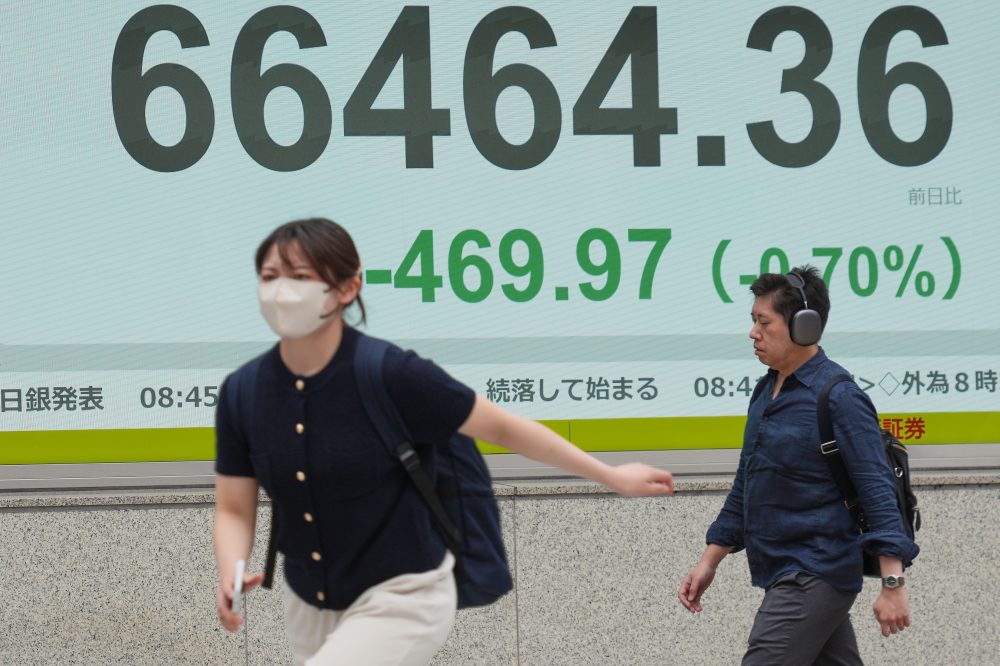

TOKYO (AP) — Stock markets throughout Asia fell on Tuesday as fresh military confrontations between the United States and Iran raised concerns about the stability of their ceasefire agreement.
American market futures also dropped.
Japan’s primary Nikkei 225 index fell 1.6% to close at 65,833.49, while South Korea’s Kospi index declined 1.7% to finish at 8,642.82.
Hong Kong’s Hang Seng bucked the trend, rising 1.2% to 25,698.75, though China’s Shanghai Composite edged down less than 0.1% to 4,056.56.
The S&P/ASX 200 in Australia dropped 0.4% to 8,692.20.
Wall Street saw continued gains on Monday, with U.S. markets reaching new record highs.
The S&P 500 climbed 0.3% to finish at 7,599.96, while the Dow Jones Industrial Average increased 0.1% to 51,078.88. The technology-heavy Nasdaq composite advanced 0.4% to 27,086.81.
Treasury bond yields saw volatility, with the 10-year yield temporarily nearing 4.52% before pulling back to 4.46%, higher than Friday’s close of 4.45%.
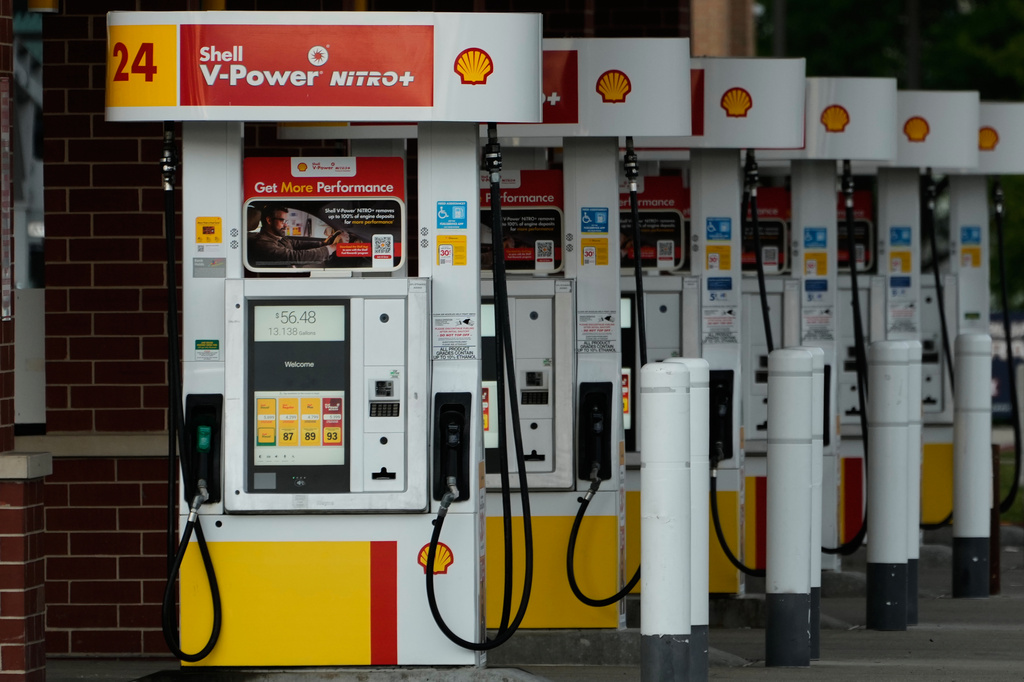
Airlines faced pressure as oil prices surged, with United Airlines declining 2.6% and Alaska Air Group dropping 3.3% following overnight increases in Brent crude prices.
During Tuesday’s Asian session, U.S. crude oil fell 39 cents to $91.77 per barrel, while Brent crude decreased 28 cents to $94.70 per barrel. These prices remain significantly above pre-war levels of approximately $70.
Market stability largely depends on whether Washington and Tehran can negotiate an agreement to reopen the Strait of Hormuz, which would restore Persian Gulf oil shipments and reduce inflationary pressures.
Countries like Japan, which relies on imports for nearly all its petroleum needs, have managed to limit price impacts through strategic reserve releases, though this buffer may not last indefinitely.
“Crude shortages have already forced refiners across Asia and Europe to aggressively reduce runs,” said analyst Stephen Innes. “The result is that the squeeze is no longer confined to crude inventories. It is spreading into the fuels that actually power economies: gasoline, diesel, jet fuel, LPG, and naphtha.”
Military tensions escalated Monday when the United States conducted airstrikes on Iranian radar installations and drone facilities following Iran’s downing of an American unmanned aircraft. Iran responded by launching missiles at U.S. personnel in Kuwait, which American forces reportedly intercepted.
Despite these developments, U.S. President Donald Trump announced that Israel and Hezbollah had agreed to reduce hostilities after his discussions with Israeli Prime Minister Benjamin Netanyahu and indirect communications with the Lebanon-based militant organization.
Technology giant Nvidia provided the biggest boost to Wall Street, surging 6.2% after CEO Jensen Huang revealed multiple product announcements at an industry conference. Nvidia’s performance carries outsized influence on broader market movements due to its position as the largest company by market capitalization.
Currency markets saw the dollar strengthen to 159.70 Japanese yen from 159.66 yen, while the euro held steady at $1.1631.