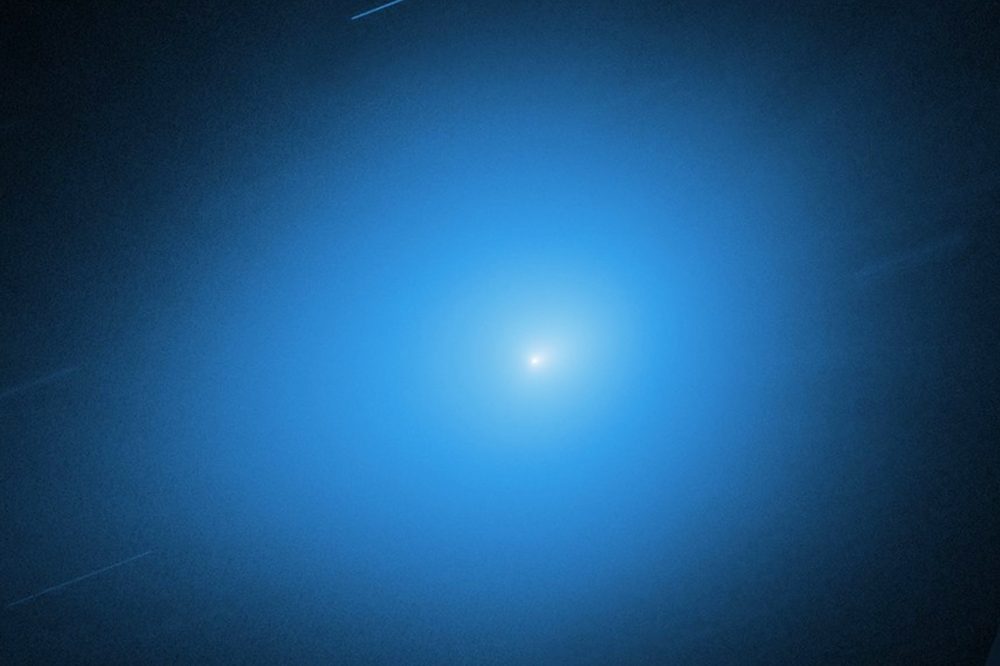

Astronomers have determined that an interstellar comet which passed through our solar system in 2023 likely came from an extremely frigid and remote area of the Milky Way galaxy that never developed into its own star system, according to research published Thursday.
The cosmic wanderer, designated Comet 3I/Atlas, represents just the third confirmed visitor from beyond our solar system and may be the most ancient object ever studied. Researchers believe it could date back as far as 11 billion years, making it more than double the age of our sun.
Using the ALMA telescope facility located in Chile’s Atacama Desert, a research group from the University of Michigan analyzed the comet during the autumn months. The harmless ice ball was first identified last summer, providing NASA and European Space Agency scientists ample opportunity to study it with various space-based instruments as it traveled past Mars in October and reached its nearest point to Earth in December. The comet has now moved beyond Jupiter and is departing our solar system permanently, remaining visible only through professional equipment.
Researchers discovered unusually elevated levels of deuterium, a form of heavy hydrogen, within the comet’s water composition. This finding indicates the object formed in an environment far colder than our local cosmic region, existing before our solar system’s star had even come into being, explained University of Michigan’s Teresa Paneque-Carreno.
Unlike our sun, which likely developed alongside other newly formed stars, this comet’s original stellar environment may have been more isolated, resulting in reduced heating and much colder temperatures, she added.
The research findings appeared in Nature Astronomy journal.
Scientists remain uncertain about the comet’s exact birthplace. Hubble Space Telescope observations indicate its core measures between a quarter-mile and 3.5 miles across. The object is traveling away from us at approximately 137,000 miles per hour.
Connecting these various “puzzle pieces together may give an idea to how the planet-forming conditions were at these early times,” Paneque-Carreno said in an email.
The initial confirmed interstellar object to enter our cosmic vicinity was Oumuamua, identified by a Hawaiian telescope in 2017. Comet 2I/Borisov was discovered in 2019 and bears the name of the Crimean amateur astronomer who first observed it.