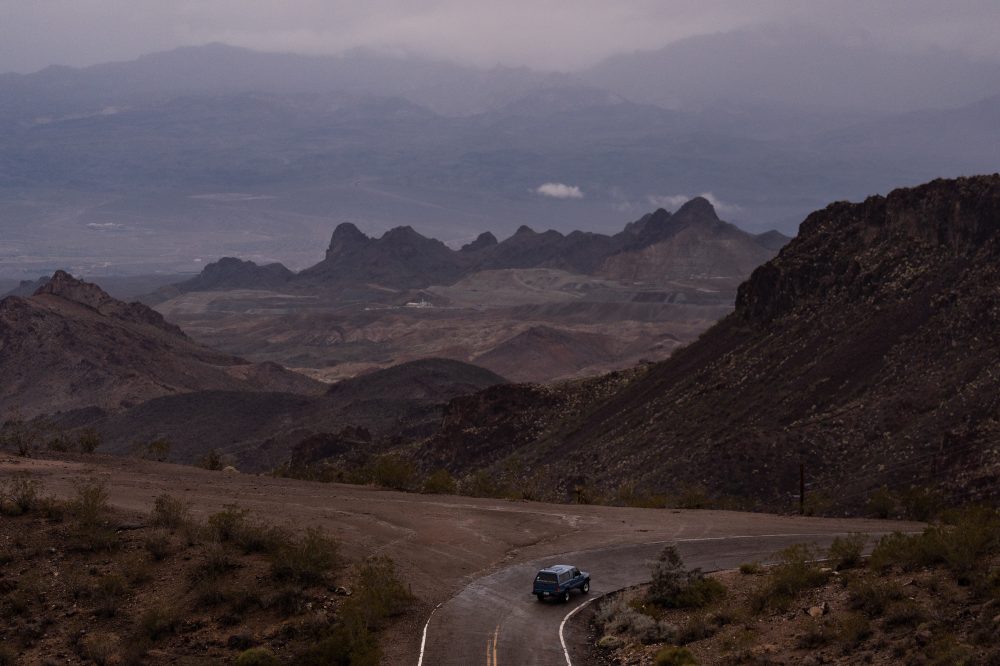

ALBUQUERQUE, N.M. — While faster routes exist between Chicago and Los Angeles, no highway matches the legendary appeal and cultural significance of Route 66.
Author John Steinbeck called it the Mother Road that guided struggling farmers away from Dust Bowl hardships toward California’s promise. For Native American communities along its path, the highway brought economic opportunities alongside lasting challenges. Black motorists found refuge during segregation’s dark era. Music lovers discovered where to truly get their kicks.
The famous highway celebrates its centennial anniversary in 2024. Though it lost federal designation as a major transportation corridor years ago, international visitors continue traveling this iconic stretch to experience America’s most legendary road trip, complete with glowing neon signs, vintage motels, and unique roadside cuisine.
Every community offers distinct stories and charm, according to Sebastiaan de Boorder, a Dutch business owner who revitalized The Aztec Motel in Seligman, Arizona, alongside his wife.
“It’s an essential part of American culture and history,” he said of the highway. “The historical aspect is just a very big important part of American culture, with its influence and its character.”
Spanning approximately 2,400 miles from Chicago through Missouri, Kansas, Oklahoma, Texas, New Mexico and Arizona before reaching Santa Monica, California, Route 66 was assembled a century ago from existing Native American trade paths and unpaved rural roads, designed to connect the industrial Midwest with the Pacific Coast.
Oklahoma entrepreneur Cyrus Avery, dubbed the Father of Route 66, envisioned more than efficient cross-country transportation. He saw opportunities to unite rural communities and establish new business centers.
Avery recognized that the number 66 would capture public imagination and stick in drivers’ memories, and his prediction proved accurate: Route 66 achieved legendary status through Hollywood films, literature including Steinbeck’s “The Grapes of Wrath” and Jack Kerouac’s “On the Road,” plus songs like Bobby Troup’s “(Get Your Kicks on) Route 66,” which became synonymous with post-World War II optimism and freedom of movement.
Following its November 1926 establishment as an original numbered federal highway, America’s former Main Street represented the promise of economic prosperity.
The route became a lifeline for families fleeing drought-stricken farmland and poverty during the 1930s Dust Bowl and Great Depression. Throughout World War II, it transported military personnel, supplies and defense workers westward.
Route 66 reached its golden age during the postwar prosperity of the 1940s and 1950s, emerging as a favored vacation destination. Automobile ownership expanded, household incomes grew, and Americans embraced the romance of open-road travel.
“People generally have a sense of adventure, a sense curiosity. And you can find that on Route 66. This is the road of dreams,” author and historian Jim Hinckley said.
Roadside restaurants and motor lodges flourished as creative business owners developed attractions to capture motorists’ attention and spending. Visitors encountered snake exhibits, towering totem poles, Native American trading centers, caves allegedly used by Wild West outlaws, and architectural wonders like St. Louis’ shining steel gateway arch.
Massive barn advertisements, eye-catching billboards promoting local destinations, and brilliant neon displays lined the highway.
The ultimate attraction? Regional cuisine.
Establishments offered both quick takeout options and comfortable dining experiences featuring hometown specialties. The Cozy Dog Drive In — renowned for its battered hot dogs on sticks — has served both purposes since 1949. Within the restaurant’s dining area in Springfield, Illinois, travelers share highway adventures.
“The road wouldn’t be alive without the stories of all the places along it that kept it going from town to town,” third-generation owner Josh Waldmire said. “We just survive off each other. The road feeds us, and as long as we put our feelings and love back into the road, it will reverberate with the travelers and the stories of the people.”
The highway provided economic benefits for Native American communities along its corridor. However, while tourism increased, the road also created problems through forced land acquisition and cultural stereotyping.
Over half the highway passed through tribal territories, and business signage frequently featured generic references to tepees and feathered headwear — easily commercialized symbols that didn’t accurately represent the diverse cultures found throughout the region.
Near Laguna Pueblo west of Albuquerque, dining establishments and gas stations emerged, many operated by pueblo military veterans skilled at repairing everything from punctured tires to damaged engines.
Pueblo women also adapted, transforming practical pottery into decorative pieces sought by tourists. Fresh-baked bread and homemade pies completed the appeal.
Laguna leadership has historically viewed the highway — called he-ya-nhee’ in their Keres language — as “the corridor of commerce,” explained businessman and tribal member Ron Solimon. Leveraging this potential, the tribe has developed a multimillion-dollar network of gaming facilities, restaurants and additional enterprises.
The route also presented hazards, especially during Jim Crow segregation when Black travelers depended on resources like the Green Book to locate safe accommodations and services.
“Especially for long-distance travel, segregation was a fact of life,” said Matthew Pearce, state historian for the Oklahoma Historical Society. “And so Black motorists needed to know a safe place to go.”
The Threatt Filling Station near Luther in central Oklahoma wasn’t featured in the Green Book, yet it provided sanctuary between two sundown communities where non-white visitors had to depart before evening. The station served barbecue and hosted baseball games.
Edward Threatt, whose grandparents established the station around 1933, remembered a television show about travelers enjoying Route 66. “By and large, the Black traveler didn’t get a lot of kicks on Route 66,” he said. “And if they got some kicks, it wasn’t the kind you would think of.”
President Dwight Eisenhower’s interstate highway system ultimately resulted in Route 66 losing federal status in 1985. Some communities along the route withered, leaving local authorities, state preservation groups, and private enterprises to maintain their portions of the historic roadway.
Angel Delgadillo, a barber who convinced Arizona’s Legislature to recognize the road as a historic highway, led preservation efforts. He prevented Seligman from becoming abandoned and established standards for conservation efforts elsewhere.
New Mexico has maintained original neon sign designs, displays numerous Route 66-themed murals, and Albuquerque developers have restored motor lodges along the longest remaining urban section.
Over 90% of the California portion remains accessible to drivers. Cadillac Ranch in the Texas Panhandle allows visitors to spray-paint half-buried automobiles. At the Mississippi River, people can walk or bicycle across the historic Chain of Rocks Bridge.
More than 250 buildings, districts and road segments from the route appear on the National Register of Historic Places. Yet the continuing fascination extends beyond physical structures and pavement.
“Some of the most interesting and fun things that happen to people when they travel the route is running into somebody they know or some happenstance thing that comes totally unexpected,” said author and historian Jim Ross. “And that’s a great part of the Route 66 experience.”