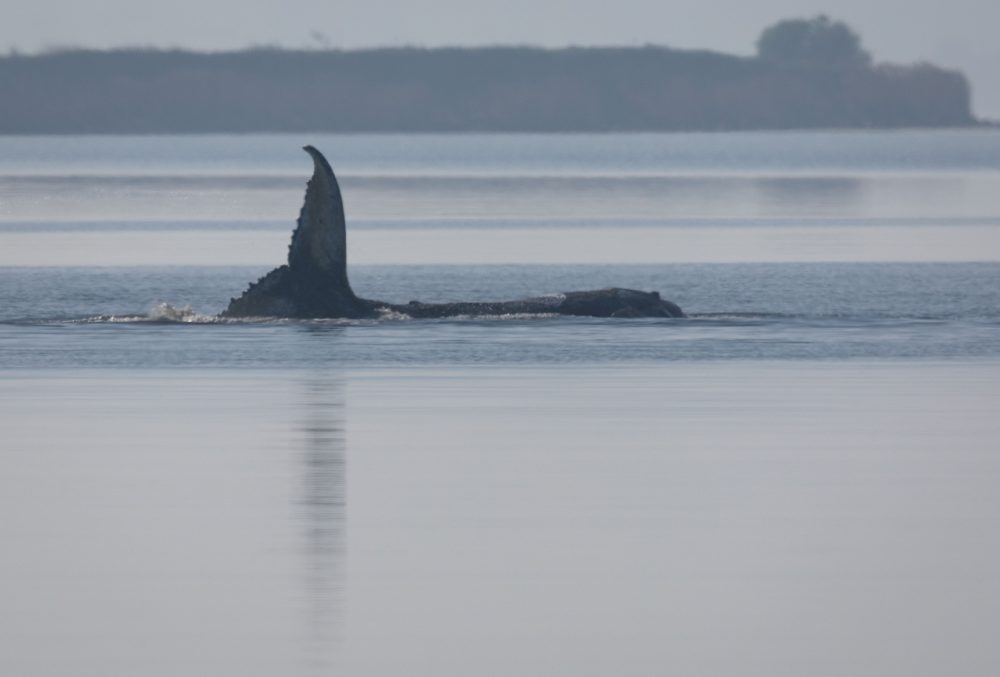

A humpback whale’s struggle for survival in Germany’s Baltic Sea has captured worldwide attention through continuous livestreams, as numerous rescue attempts have been unsuccessful in guiding the deteriorating animal back to deeper ocean waters.
Local news outlets have given the whale the name ‘Timmy,’ and many observers worry the marine mammal may perish in the shallow Baltic waters close to Wismar, an eastern German coastal town.
The creature confronts overwhelming challenges in navigating back to the North Sea, requiring a trek spanning hundreds of kilometers, before ultimately reaching the Atlantic Ocean.
The whale was initially observed in the area on March 3. The reason behind the animal’s entry into the Baltic Sea, so distant from its Atlantic Ocean home waters, remains unknown. Several marine experts suggest the creature may have become disoriented while pursuing a school of herring or during its seasonal migration.
Following its arrival, the mammal has repeatedly become stuck in shallow areas. The whale displays obvious signs of distress, including erratic breathing patterns and remaining nearly motionless for extended periods.
Timmy also suffers from severe skin deterioration caused by the Baltic Sea’s reduced salt levels, prompting rescue teams to treat the animal with substantial amounts of zinc-based ointment.
Adding to these complications, when the whale does attempt to swim, it consistently heads in the incorrect direction.
News organizations have broadcast continuous live coverage to satisfy intense public interest surrounding the whale’s condition. Digital news platforms have sent urgent notifications for even minor updates regarding Timmy’s status.
Demonstrators have gathered on Wismar’s shoreline demanding the animal’s rescue, while social media personalities have sparked discussions about whether allowing the whale to die peacefully or continuing rescue operations would be more humane.
Public fascination has grown so intense that law enforcement established a 500-meter safety perimeter to prevent onlookers from approaching and further distressing the stranded animal.
Even with these protective measures, a 67-year-old woman leaped from a vessel over the weekend attempting to reach the whale before being intercepted.
Rescue operations involving police vessels, heavy machinery, and inflatable craft had briefly succeeded in freeing the creature. However, the whale, measuring between 12 to 15 meters in length and weighing 12 metric tons, has never managed to locate its route back to the North Sea.
Marine specialists then developed an elaborate rescue plan involving air cushions to raise the animal onto a large tarp, which would be supported by two floating platforms and pulled by a tugboat. Government authorities gave permission for this private rescue mission, but the whale began swimming again Monday when high tide arrived. Watercraft tried to direct the mammal toward the proper course, though some rescuers have abandoned hope.
Thilo Maack, a marine biologist with Greenpeace, shared with The Associated Press that the rescue attempts are actually inflicting significant stress on the animal.
“I believe the whale will die very soon now. And I would also like to raise the question: What is actually so bad about that?” he said. “Yes, animals live, animals die. This animal is really, really very, very, very sick. And it has decided to seek rest.”