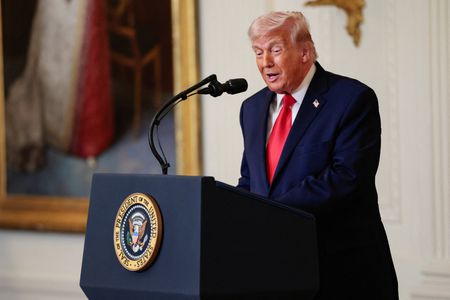

A historic $14 billion military aid package for Taiwan sits on President Donald Trump’s desk awaiting final approval, with sources indicating the deal could move forward once Trump completes his scheduled visit to China later this month.
The weapons package would mark the largest arms sale in history to the democratically-governed island, which continues to face mounting military threats from China.
According to administration insiders who spoke with reporters, the deal is being kept confidential until after Trump’s March 31-April 2 diplomatic meetings with Chinese President Xi Jinping in Beijing. However, an announcement could come shortly after the president’s return to Washington.
During February discussions, Xi Jinping urged Trump to approach Taiwan arms sales with “prudence,” as Beijing maintains its territorial claims over the island.
Some foreign policy experts have expressed worry that Trump’s focus on securing favorable trade agreements with China might lead to reduced American military assistance for Taiwan. However, this pending arms approval indicates the administration intends to maintain or potentially expand its support.
Such a move would likely provide reassurance to officials in Taipei.
The military package primarily features PAC-3 and NASAMS air defense missile systems, according to one informed source.
“As soon as the president gives the thumbs up, those are ready to be officially announced. Everything is done,” stated the source, who requested anonymity due to the sensitive nature of the discussions.
An additional $6 billion worth of “asymmetric” defense equipment also awaits presidential approval and could be revealed in connected or follow-up announcements, the same source noted. However, they declined to detail what specific capabilities would be included.
Trump’s National Security Strategy, released in recent months, identifies preventing Taiwan conflict as a Washington priority, “ideally by preserving military overmatch.”
Despite this, Trump’s public statements, including February comments to media that he was “talking” with Xi about Taiwan weapons sales, have generated questions about whether he might reduce America’s traditional practice of supplying Taiwan with defensive capabilities – a commitment codified in federal law.
Even so, Trump’s arms sale authorizations to Taiwan during his current term have already exceeded the total amount approved by former President Joe Biden across four years, including an $11 billion package approved in December covering various missiles, drones, artillery systems, and aircraft components.
Foreign policy analysts note that American administrations spanning multiple decades have strategically scheduled Taiwan weapons approvals around delicate diplomatic engagements with Beijing.
China’s foreign ministry responded to questions by stating that the government’s “opposition to U.S. arms sales to China’s Taiwan region is consistent and unequivocal.”
Chinese officials regularly call on the United States to halt weapons sales to what Beijing considers its own territory.
When asked for comment, a senior White House official acknowledged that additional weapons approvals were being processed.
“Arms sales are working their way through the process. There is no change to our policy with respect to Taiwan,” the official stated.
Two sources with knowledge of the situation in Taiwan reported that Washington has consistently provided assurances of continued support.
However, the approaching summit has created some uncertainty.
Beijing has been working to postpone American arms sales to Taiwan and attempting to improve diplomatic conditions before the summit, including by reducing military pressure on the island, another Taiwan source familiar with the matter explained.
“We have confidence in Trump, though. Beijing has underestimated the strategic vision of the White House,” the source said.
Taiwan’s defense ministry confirmed to reporters that its weapons procurement projects have finished “preliminary coordination” with American counterparts, and the U.S. Defense Security Cooperation Agency has shared information regarding items for purchase and delivery timelines.
In January, Taiwan’s defense ministry announced that an arms agreement with the United States covering four categories was forthcoming, though officials said they could not provide specifics before presenting details to the U.S. Congress, which is the standard approval process for such sales.
The State Department has expressed support for increased defense investment by the island. Raymond Greene, America’s senior diplomatic representative in Taiwan, said in January that the U.S. remained “fully committed to delivering critical systems as quickly as possible.”