
FIFA’s top refereeing official says the organization’s new rules aimed at eliminating time-wasting during the World Cup have been a resounding success.
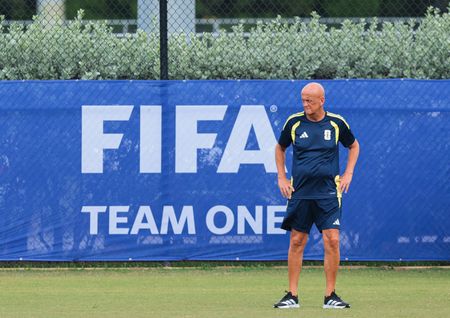
Chief Refereeing Officer Pierluigi Collina made the announcement Tuesday, saying the updated laws of the game — including five-second limits on goal kicks and throw-ins, along with a strict 10-second deadline for substituted players to exit the field — have noticeably quickened the tempo of play.
“These measures have all been very effective and unanimously considered as very positive innovations,” Collina said in a statement. He revealed that across 72 group-stage matches, only one substituted player failed to leave the field within the required 10 seconds.
Collina noted that players being substituted have actually been sprinting toward the sideline to get off the field quickly, even when their team was winning. Under the new rules, if a departing player does not exit within 10 seconds, the incoming substitute must wait until the first stoppage after a full minute has passed following the restart.
The five-second rule was violated 15 times in total — four violations came on goal kicks that resulted in corner kicks being awarded to the opposing team, while 11 came on throw-ins where possession was handed to the other side.
Collina also highlighted that the new rule requiring injured players who need medical attention to temporarily leave the pitch for one minute after play resumes has led to a reduction in injuries.
“The number of players’ injuries has dramatically decreased and there have been very few cases where the intervention of medical staff has been requested,” he said.
Collina added that player and coach conduct has largely been positive. “Also, general behaviour has been very good so far, with two cautions for dissent over a referee’s decision for players and two for coaches,” he said.
He noted that six of the 10 red cards issued during the tournament were for denying a clear goal-scoring opportunity, while only one was for covering a player’s mouth during a confrontation with an opponent.
Paraguay’s Miguel Almiron became the first player at the tournament to receive a red card for covering his mouth during an on-field confrontation, earning a one-game suspension as a result.
Collina also took time to explain the VAR decision that wiped out Jonathan Tah’s extra-time goal for Germany. The goal was ruled out after Waldemar Anton was judged to have fouled Paraguay goalkeeper Orlando Gill in the lead-up to the score. Germany head coach Julian Nagelsmann was visibly furious on the sideline and received a yellow card for his protests, but Collina emphasized that coaches had been briefed on the new guidelines.
“When an attacking player is not interested in the ball and deliberately moves, even marginally, with the clear intention of obstructing opponents’ movement and prevents him from defending, then referees, and VAR when needed, should carefully analyse the incident and intervene,” Collina explained.
“This is especially the case when the tactic aims to prevent the opposing goalkeeper from being able to defend the goal,” he continued. “Coaches and players were informed, so it should come as no surprise that referees will punish these fouls.”