
This World Cup has sparked plenty of questions — some we can answer, and some we simply cannot. Can anyone stop Messi? Does Merlin the duck actually enjoy wearing that jersey? What happens if Congo’s statue-holding superfan needs to sneeze? Those remain mysteries.
But if you’re watching soccer for the first time and feeling a little lost, we’ve got you covered. Free kicks, stoppage time, hydration breaks — there’s a lot going on. We gathered the most common questions from viewers and fans, and we’re breaking them all down below.
What exactly is offside?
First, note the correct spelling: it’s “offside,” according to the AP Stylebook. It’s also one of the most-asked questions in soccer — and knowing the answer will make you sound like a seasoned fan. In simple terms, a player is offside when they are closer to the opponent’s goal line than both the ball and the second-to-last opposing player (usually the goalkeeper is the last defender) at the moment a teammate passes the ball. There are exceptions — you can’t be offside in your own half of the field, for instance — but that’s the core rule. It’s a frequent source of confusion and heated debate.
Why does the clock keep running even after the ball goes out of play?
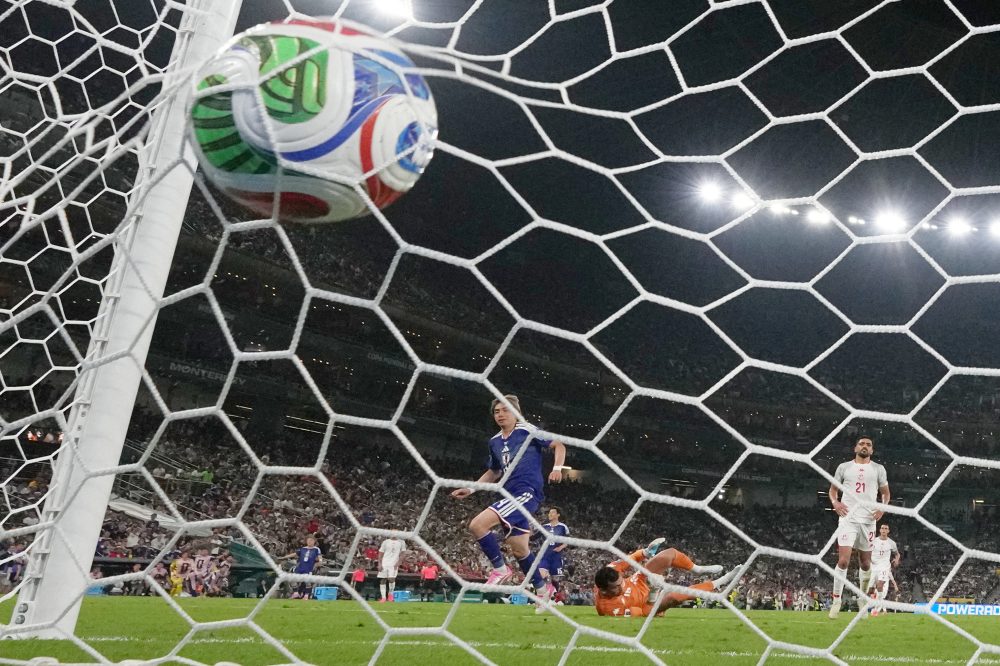
Unlike American football, basketball, or hockey, the clock in soccer never stops. When time is lost due to injuries, deliberate time-wasting, or goal celebrations, those lost minutes are tacked on at the end of each half in what’s called “stoppage time.” This World Cup has added another wrinkle: hydration breaks. These three-minute pauses in the middle of each half were introduced to help players cope with the summer heat across the United States, Canada, and Mexico — and they also happen to provide a handy window for additional TV commercials. Those three-minute breaks must be factored into stoppage time as well, meaning most halves in this tournament feature at least five extra minutes of play.
What’s the difference between a penalty kick and a free kick?
Both are awarded after fouls and involve a stopped ball, but the location of the foul is what sets them apart. A penalty kick is given when a foul occurs inside the penalty area — the large rectangle near the opposing team’s goal. The kick is taken from a designated spot 12 yards (11 meters) out, and only the goalkeeper can attempt to stop it. A free kick, on the other hand, is awarded for fouls that happen outside the penalty area, and the entire opposing team can set up a defensive wall to block the attempt. The kick is taken from the spot where the foul occurred.
How are tiebreakers decided when teams finish level on points?
This is worth paying close attention to, especially in tight group standings. Starting with this World Cup, the first tiebreaker between teams level on points is now head-to-head results — a change from the previous format, which used overall goal difference first. After that, the second tiebreaker is goal difference in the matches played between the tied teams, followed by the most goals scored in those same matches. Overall goal difference only becomes a factor as the fourth tiebreaker.
What’s the five-second countdown referees are using for throw-ins?
This is another new rule introduced at this World Cup aimed at keeping the game moving and cutting down on time-wasting. If a referee decides a player is dragging their feet on a throw-in, they can begin a visible five-second countdown. If the player hasn’t thrown the ball in by the time the count reaches five, possession is handed to the other team. It’s already happened in the tournament — Bosnia-Herzegovina defender Sead Kolašinac lost a throw-in to Canada for taking too long.
Why are the logos on condiment bottles taped over inside stadiums?
Sharp-eyed reporters and fans have spotted tape covering brand logos on items like Heinz ketchup bottles inside World Cup venues. This comes down to FIFA, soccer’s global governing body, which goes to great lengths to protect the exclusive visibility of its official sponsors. Any brand that isn’t an official FIFA partner gets covered up. The same principle applies to stadium names — venues named after non-partner sponsors, like Gillette Stadium near Boston, have been given generic names by FIFA for the duration of the tournament.
How do European fans afford to take so many weeks off for the World Cup?
It’s a fair question. European workers generally receive far more guaranteed paid vacation time than their American counterparts. In the United Kingdom, most employees are entitled to at least 28 days of paid annual leave each year. French workers receive a minimum of 30 working days off. In Spain, the minimum is 22 days. With this expanded tournament on the calendar for years, many fans had plenty of time to plan and save up their vacation days.