
When wildfires break out, the smoke they produce doesn’t stay put — it can drift across hundreds of miles, reaching communities far from the actual fire and creating real health hazards for the people who live there.
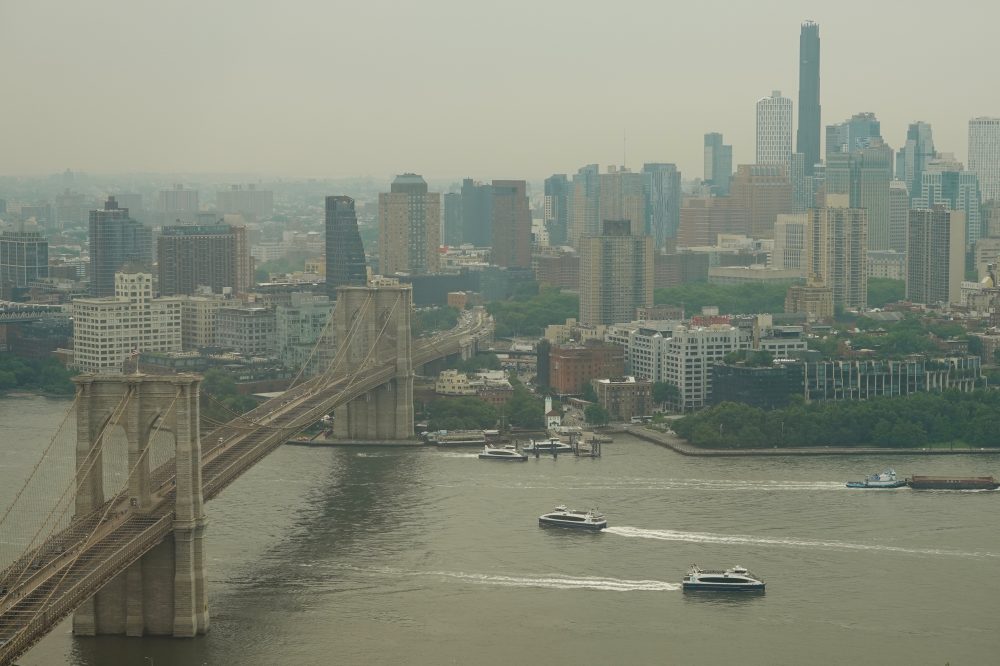
Fires in one state can worsen air quality several states over, and blazes in Canada have been known to push smoke deep into American cities.
So what can you do to keep yourself and your family safe when wildfire smoke threatens your air? Here’s a breakdown of what experts recommend.
The Environmental Protection Agency uses something called the Air Quality Index to measure pollution levels. It combines all pollutants into one easy-to-read number — and the lower that number, the better the air.
A reading under 50 means the air is healthy. Between 50 and 100 is considered moderate. From 100 to 150, the air becomes unhealthy for sensitive groups, and anything above 150 is considered dangerous for everyone.
Who counts as a sensitive group? Dr. Sanjay Sethi, who leads the division of pulmonary, critical care and sleep medicine at the University at Buffalo medical school, says that includes people living with asthma, lung disease, or chronic obstructive pulmonary disease.
“If you have heart or lung problems, then you’ve got to be definitely more careful,” Sethi said. “I would either avoid going outside or wear an N95 or at least a dust mask.”
Keep in mind that smoke isn’t always visible or detectable by smell — even when you can’t see or sense it, the air may still be harmful to breathe.
The EPA operates a website where you can check up-to-date air quality conditions in your region. A company called PurpleAir, which makes air quality sensors and shares live data publicly, also offers a detailed map showing readings street by street through a network of citizen monitors.
For checking the air inside your home, Joseph Allen, who directs Harvard University’s Healthy Buildings Program, recommends purchasing an indoor air quality monitor.
“You can find these low-cost, indoor air quality monitors just about everywhere online now. They don’t cost all that much anymore,” Allen said.
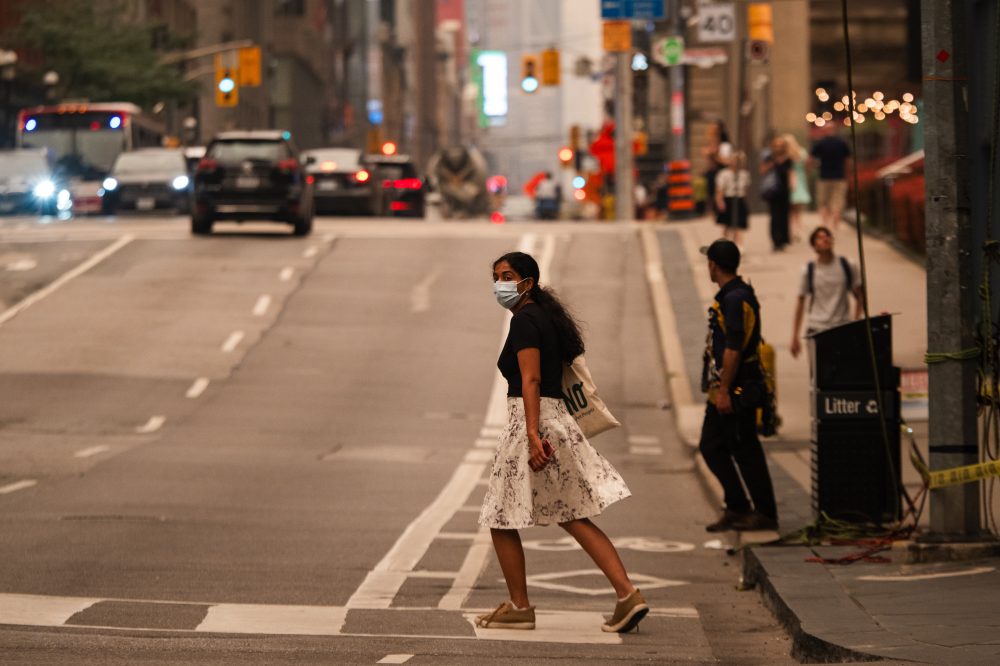
If you need to head outside briefly, Dr. Sethi says a short trip is unlikely to cause lasting harm for most healthy people. However, wearing an N95 mask — which many became familiar with during the coronavirus pandemic — can significantly cut down on the particles you inhale.
“N95 is going to get rid of 90-95% of the particles,” said Jennifer Stowell, a research scientist at Boston University’s Center for Climate and Health. “If you have access to a mask that has a respirator-type attachment to it, then that’s the very best.”
If you’re outside and start feeling symptoms, experts say you should go back indoors or find somewhere with cleaner air as quickly as possible — even if you’re generally in good health.
“If you start wheezing, which is like this whistling sound of the chest, or if you’re feeling short of breath, that’s definitely more concerning,” Sethi said.
Inside your home, close the windows and run your air conditioner on the indoor circulation setting rather than pulling in outside air. You can also use blankets or towels to block gaps where outdoor air might seep in, like the space under doors.
Swapping out your air conditioner’s filter for a MERV 13 filter can provide added protection — just make sure it’s installed properly so air doesn’t bypass it.
“If you happen to have access to an air purifier, even if it’s just a room air purifier, try to keep it running and in the room that you’re doing most of your activities in,” Stowell advised.