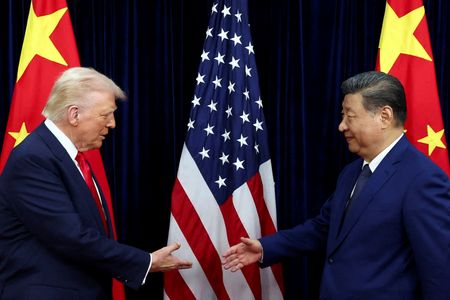

The White House announced Monday that President Donald Trump’s upcoming summit with Chinese President Xi Jinping may face postponement as Trump dedicates his attention to ongoing military operations involving Iran.
The potential delay of Trump’s planned March 31 to April 2 visit to China threatens to heighten diplomatic friction between Washington and Beijing, particularly as the Iran conflict adds another layer of complexity to already strained relations over trade and Taiwan disputes between the world’s largest economies.
Following joint military strikes by the United States and Israel, Iran has issued warnings about attacking ships navigating through critical waterways, despite Iranian vessels continuing to pass through at typical volumes. Trump has appealed to multiple countries, including China, for assistance in ensuring safe passage through the strategically vital Strait of Hormuz, which handles roughly 20% of global daily oil shipments.
So far, Trump’s appeals for help have met with limited response. China, which brought in approximately 12 million barrels of oil per day during the opening months of 2026 – more than any other nation – has yet to formally address Trump’s assistance request.
White House spokeswoman Karoline Leavitt addressed reporters about the situation: “The president looks forward to visiting China. The dates may be moved. As commander-in-chief, it’s his number-one priority right now to ensure the continued success of this operation, Epic Fury. So we’ll keep you posted on the dates as soon as we can.”
In a Sunday interview with the Financial Times, Trump indicated he might delay the China meeting if Beijing refuses to assist with resolving the Strait of Hormuz situation.
During an appearance on Fox News’ “Fox & Friends,” Leavitt clarified the administration’s position: “I don’t think the meeting is in jeopardy, but it’s quite possible the meeting could be delayed.”
Shipping data analyzed by Reuters reveals that Iranian oil continues moving through the Strait of Hormuz at nearly regular levels, although broader Middle Eastern exports have plummeted by over 60% since hostilities began. According to U.S. Energy Department statistics, China receives the majority of Iran’s oil exports.
Treasury Secretary Scott Bessent explained Monday that any trip postponement stems from war coordination responsibilities rather than disagreements over China’s strait assistance or trade issues.
“The President wants to remain in DC to coordinate the war effort,” Bessent stated. “Traveling abroad at a time like this may not be optimal.”
Chinese foreign ministry officials have not yet responded to requests for comment. Beijing typically doesn’t announce specific dates for Trump’s visit or reveal Xi’s schedule details well in advance.
Despite uncertainty about timing, summit preparations continue moving forward. White House staff maintained logistical planning for the trip Monday, while Bessent conducted discussions in Paris with Chinese Vice Premier He Lifeng to establish potential trade and other agreements for the Trump-Xi meeting in Beijing.
These Paris negotiations, which started Sunday, saw Chinese representatives express willingness to consider additional purchases of American agricultural products, including poultry, beef, and various non-soybean crops, according to one source ahead of the second day of meetings. The discussions also covered rare earth mineral supplies predominantly controlled by China and new strategies for managing bilateral trade and investment.
Both Treasury Department and U.S. Trade Representative office spokespeople declined to provide details about the ongoing talks.
Chinese foreign ministry spokesperson Lin Jian addressed Trump’s comments during a routine press briefing: “Head of state diplomacy plays an irreplaceable role in providing strategic guidance to China-U.S. relations.” Lin confirmed that both nations are maintaining communication regarding the visit arrangements.