
NEW YORK (AP) — What elements create an unforgettable World Cup anthem? Should it mirror the hosting nations’ culture? Must it be a worldwide hit featuring various languages and musical styles? Or is a singable chorus the most important factor?
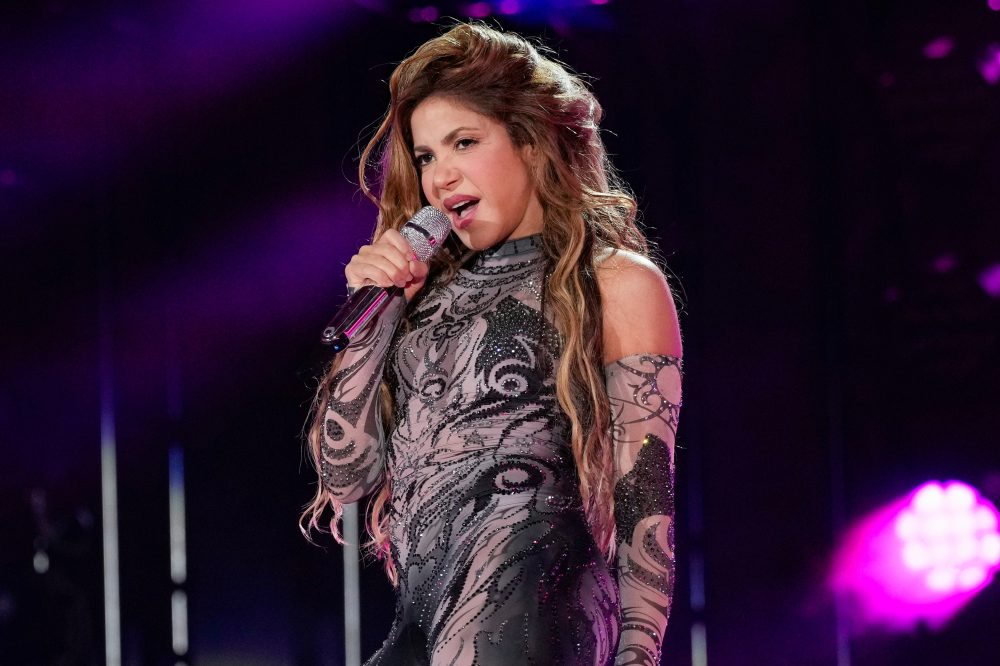
Each approach has merit — possibly all of them together. In preparation for the 2026 FIFA World Cup, The Associated Press spoke with several artists who have created World Cup songs throughout the years. The group features Shakira — who partnered with Afrobeats artist Burna Boy for the official 2026 FIFA World Cup song “Dai Dai” — along with Colombian performer J Balvin, Wyclef Jean and rising star Nora Fatehi.
Prior to “Dai Dai,” the Colombian music icon helped write and sang “Waka Waka (This Time for Africa)” with Freshlyground, which served as the official song for the 2010 FIFA World Cup in South Africa.
“Fútbol is a thing that unites so many cultures and people of different walks of life,” she told the AP. “The big responsibility of making a World Cup song is that you’ve got to make a song that represents people’s feelings, emotions, and passion.”
“So you’ve got to write that song, in a way, understanding that it has to be global. It has to encompass so many cultures and represent so many in one tune,” Shakira continued. “That, in a way, has helped me craft those songs in the past.”
Beyond these broader concepts, Shakira offers particular musical recommendations too.
“I feel like a good World Cup song needs to definitely have rhythm. It has to be rhythmic. It has to make people want to dance. And it has to be an anthem as well. It has to make people want to sing along in unison, sing out loud at the top of their lungs. It also has that kind of energy,” she says. “That’s a must.”
Colombian artist J Balvin contributed to Coca-Cola’s official FIFA World Cup 2026 track, a fresh take on Van Halen’s “Jump” that includes drummer Travis Barker, pop/R&B performer Amber Mark and guitarist Steve Vai. He believes any track — not exclusively a World Cup theme — needs to capture listeners immediately.
“Nowadays, with the music and every type of music — it doesn’t matter if it’s the World Cup, if it is a reggaeton or hip-hop (song) — you know, people’s attention (span) is only like five seconds. And that’s the reality. I’m not judging — you’ve just got to do it with all the love,” he says.
For a World Cup theme particularly? It needs to mirror soccer’s intensity. “Fútbol brings us together, with all different highs and lows,” he says. “All these different emotions happen in one game.” The track needs matching power.
The Canadian Moroccan artist Nora Fatehi appears on the official 2026 FIFA World Cup collection with “Siir, Siir,” working alongside French musician Vegedream and Bangladeshi American DJ Sanjoy.
“It needs a great beat because we’re here to dance and we need to celebrate,” she says regarding World Cup themes.
Beyond rhythm, Fatehi, recognized primarily for Bollywood film work, explains that upon hearing it, “You feel like you’re winning, or you’re gonna win, or you won. That’s the emotion it needs to evoke.”
Regarding “Siir, Siir,” she explains, “what we were after was finding an emotion. So, the minute you hear that song, it should make you feel like you’ve conquered the world. It should make you feel motivated. It should be aspirational. That’s what it should feel like.”
Wyclef Jean, the versatile Fugees member, helped create and performed “Dar um Jeito (We Will Find a Way)” for Brazil’s 2014 FIFA World Cup, collaborating with guitar legend Santana, the late electronic music pioneer Avicii and Brazil’s cherished artist Alexandre Pires.
“The topline? It has to electrify the stadium,” Jean says. “You literally have to feel the entire stadium shaking.” Without that effect — the song fails.
“I don’t know any World Cup song that don’t have amazing rhythm and amazing movement,” he says.
While his track’s collaborators represent multiple countries — Brazil, Sweden, Haiti, Mexico and the U.S. — Jean believes he doesn’t “think like necessarily you need to have five different artists to make a global anthem.”
“Whether they come from the Middle East, Africa, Europe, America, any part of the world, the Caribbean — people gravitate towards culture,” he says. “And what I love best about World Cup is that before it has a language, it has an energy and a vibe. It has absolutely nothing to do with a language.”
An effective hook, a powerful melody for universal singing — those elements matter most.
However, “Dar um Jeito” delivers a powerful unity message, enhancing its anthem status. “Resilience is a very important word,” he says about the track’s theme. Jean explains it targeted “boys and girls all over the world,” especially those in remote communities.
The goal resembled Bob Marley’s “Get Up, Stand Up,” “where the messaging in the song is not being preachy, but it’s a message of hope,” he says. “If you keep fighting the good fight, you’re gonna get to that stadium. And ain’t nobody gonna stop you.”