
BEIT AWA, West Bank — Palestinian residents of the occupied West Bank had largely watched from the sidelines as Israel and Iran traded missile strikes over nearly three weeks of conflict. That changed Wednesday when four women lost their lives in a tragic attack.
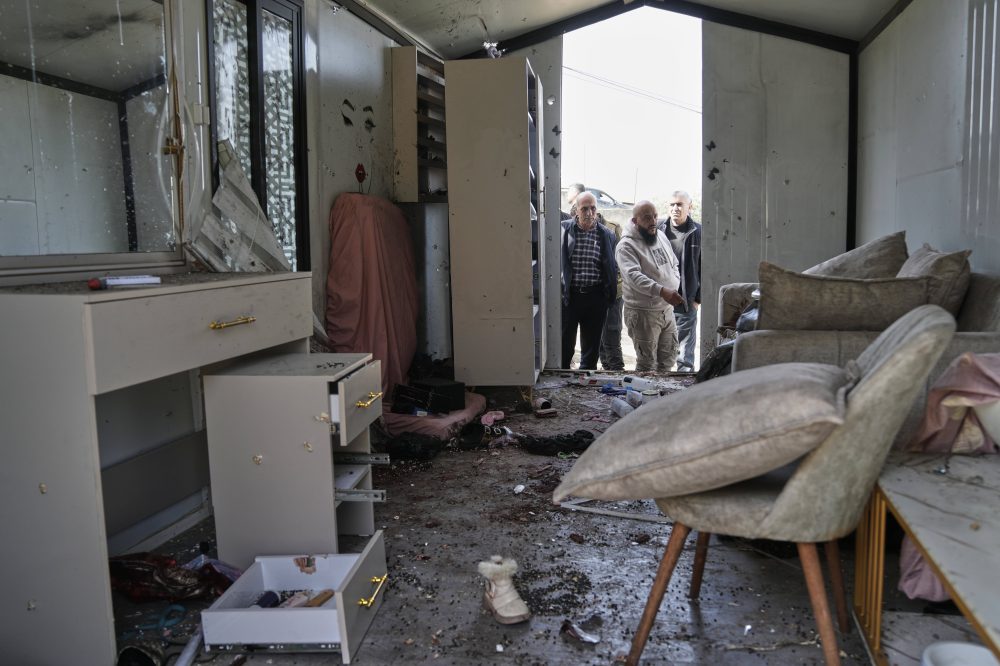
The victims were gathered inside a small beauty parlor in Beit Awa when an Iranian missile hit just outside the establishment, launching deadly shrapnel through the walls and across shelves filled with nail supplies and colorful polish bottles.
Over a dozen people suffered injuries while four died, including an expectant mother in her sixth month of pregnancy and her daughter, according to the Palestinian Red Crescent and witnesses at the scene.
The day following the attack, the aftermath was devastating — hundreds of coffee cups and artificial nails were strewn across floors stained with blood. The salon, operated from a metal shipping container in a residential yard, was riddled with holes and surrounded by debris near a small impact crater.
Business owner Hadeel Masalmeh mourned the loss of friends and her business partner, Sahera Atileh. She recalled hearing warning sirens from the Israeli settlement of Negohot, located approximately 2 miles away. “We didn’t pay much attention and didn’t expect any shrapnel or anything like that to fall on us,” she said.
Israeli communities have organized their daily routines around such warning systems since hostilities began, with residents frequently rushing to protective shelters multiple times each day. However, Palestinians have continued their normal activities throughout the past three weeks, rarely reacting when distant alarms sound or occasional phones with Israeli networks issue emergency notifications.
Emergency responders faced significant obstacles reaching the wounded. What should have been a 10-minute journey to Beit Awa extended to 25 minutes, depriving victims of critical medical attention, explained Abedullraziq Almasalmeh. He described hearing rockets pass overhead before impact, feeling his home shake as he called for ambulances after 10 p.m.
The Palestinian Red Crescent blamed the delays on Israeli checkpoints surrounding Beit Awa that forced emergency vehicles to use longer alternate paths.
These Wednesday casualties represent the first Palestinian deaths in the West Bank since the current Iran conflict started. The Red Crescent had previously warned that hundreds of newly installed Israeli barriers and checkpoints throughout the region were increasingly blocking their access to Palestinians requiring urgent medical care. Qusai Jabr, who manages the organization’s disaster risk management division, told The Associated Press that during the war’s opening week, delays affected women giving birth, elderly stroke victims, and those injured in escalating Israeli settler violence.
“This forced closure caused significant delays, compelling ambulances to take long, rugged alternative routes, which critically impacted the ‘golden hour’ essential for life-saving interventions,” the Palestinian Red Crescent stated.
Israeli officials have not implemented the comprehensive lockdowns seen during last year’s 12-day Iran conflict. Nevertheless, emergency services like the Palestinian Red Crescent report that travel conditions have not improved, with ambulance crews finding many barriers frequently sealed. Jabr noted that checkpoint numbers increased from roughly 800 during the previous year’s war to approximately 1,100 today, including both staffed and automated installations.
The beauty salon incident highlighted how Palestinians living close enough to view Israel from their neighborhoods lack the protective shelters and emergency medical support that have successfully reduced Israeli casualties and injuries during nearly three weeks of Iranian missile attacks.
Israel maintains an extensive network of warning sirens and mobile alerts that guide citizens to reinforced shelters capable of protecting against incoming projectiles or fragments that fall after interception by Israel’s defensive systems. While shelter access varies across Israel, particularly in Arab-majority communities, construction regulations have mandated them in residential buildings since the first Gulf War, with public facilities available for those without private protection.
Palestinians throughout the occupied West Bank — in both dense urban centers and remote villages — do not have access to such safeguards. Although the West Bank is not an Iranian military objective, the area has previously been struck by shrapnel fragments and falling debris.
The exact nature of Wednesday’s strike remained uncertain. Israeli military officials characterized it as a direct impact rather than intercepted debris from their air defense network, identifying it as a submunition from a cluster weapon. These missiles can detonate in midair and scatter smaller explosive devices over broad areas, sacrificing accuracy for wider coverage.