
Virginia’s structured hunting organizations trace their roots back over 150 years, with fox hunting groups being the first to establish formal competitive events through organized associations. In modern times, deer hunting organizations and their members oversee the majority of private hunting grounds across Virginia. Given that more than 95 percent of the state’s territory remains in private hands and whitetail deer stands as the primary big game species, these hunting organizations represent the vast majority of the deer hunting population.
The crisp November and December dawns continue to transport me back to the weekend mornings and holiday excursions I experienced as a young hunter in the late 1950s and early 1960s. During those formative years, I accompanied my Uncle Dickie and participated with his Chesterfield County Oakland Hunt Club.
Throughout that period, hunting with hounds in eastern Virginia was our standard approach, and most of rural Chesterfield County’s countryside remained accessible for hunting, with minimal posted restrictions. Property owners frequently welcomed a holiday ham or turkey as appreciation, and providing a deer hindquarter from animals harvested on their land was deeply valued. Club members owned the hunting dogs, and rather than formal membership fees, regular hat-passing for contributions was the customary funding method.
Following my high school graduation in 1968, I became a member of Spears Hunt Club located in the Skinquarter area of Western Chesterfield County. At the time, I was employed part-time at Vepco (currently known as Dominion Energy) while pursuing studies at John Tyler Community College. My colleague Bobby Moore became a close friend and facilitated my club membership. The yearly membership cost upon joining was $25.
During this time, formal hunting agreements with private property owners and hunting organizations began gaining popularity. When I assumed one of the club leadership positions, I would meet with area landowners prior to season opening to establish these agreements. The property owners from that era, similar to those I encounter currently, provided tremendous support.
Among my initial experiences as an organized hunt club member involved actively participating in the hunting process. Coordinating drives with the hounds and ensuring hunting stands were positioned in secure locations were responsibilities handled with utmost seriousness.
Nevertheless, the most meaningful aspect of hunt club membership has been developing relationships with fellow hunters who share similar interests and the positive experiences we create together.
Over the years, I have participated in two separate hunt clubs and maintained active involvement in both organizations. Previously, I authored a piece called “Safety Should Always Be The #1 Priority,” which highlighted the senior member of my Amelia Springs Hunt Club, who suffered an 11-foot fall from his elevated hunting structure in 2023, resulting in fractures to both legs.
Walter Link celebrated his 89th birthday on December 13, 2023. Following three surgical procedures and extensive prayers for his healing, our fellow hunter returned to club activities on the opening day of general firearm season. Walter represents not only a lifelong hunting enthusiast but also a skilled heavy equipment specialist. Throughout our club’s existence, he has operated bulldozers and backhoes for major projects under his supervision. Walter has consistently been dependable, and following his accident, the club decided to honor him with something meaningful.
Understanding his hunting structure’s deteriorated state, we proposed providing him with a Red Neck Elevated Blind. However, he preferred restoring his existing structure. When he expressed this preference, Allen Wells and Jack Bergman assumed responsibility for the renovation. With over $1,500 in supplies and multiple days of labor, the old hunting house was completely renewed.
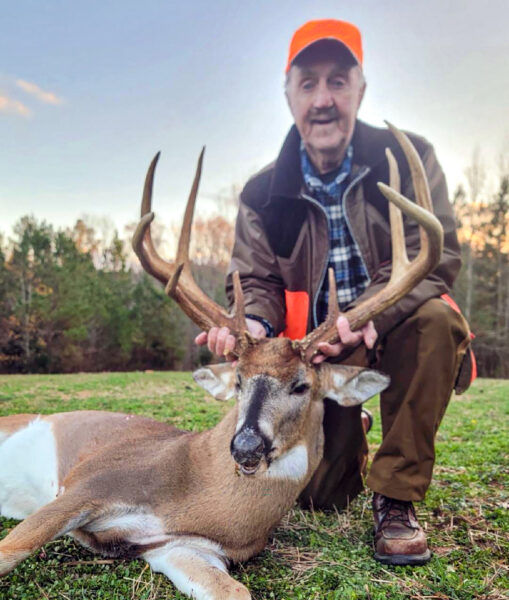
The concluding portion of this extraordinary story occurred on the Friday after Thanksgiving Day. Walter harvested the largest buck taken on club property that season from the identical hunting structure he had fallen from the previous year. This became the highlight of the club’s 2024-2025 season, and we arranged for the buck to be mounted for display in the clubhouse dining area.
We maintain awareness of everyone’s hunting locations through our property map and magnets displaying club members’ names indicating their positions. Shane Rudd, who was hunting near Walter that afternoon, explained, “When I heard him shoot, I went straight to him to see if he needed any help.” This demonstrates how we care for one another and establish an example we can take pride in.
Membership Costs and Property Agreements
Circumstances have dramatically transformed since I joined a hunt club over 57 years ago and paid $25 in membership fees. Current membership costs frequently depend on the total number of club participants and overall acreage to be leased. I observe that some organizations’ membership fees begin at $500, while others exceed $2,000. Certain clubs organize fundraising events to help reduce expenses and support projects beyond what membership dues can cover. Hunt Club participants who collaborate effectively maintain strong unity.
Virginia hunting lease expenses can vary significantly, influenced by property size, game quality, and additional factors. Limited partnerships, corporations, timber companies, along with farms and family-owned properties, supply the hunting agreements for these clubs. Private landowners serve as the foundation of hunting and the opportunities we all appreciate.
Wildlife Management
When I began deer hunting, the statewide regulation established a two-buck maximum, and antlerless deer harvesting was gradually developing. “Traditional” deer hunting involved harvesting any legally antlered buck, which characterized my early hunting experience. Hunt club leadership during that period opposed shooting does, and this perspective persisted.
Currently, deer management goals have shifted toward population control and stabilization throughout much of Virginia. The transformation in deer management approach—from establishing and permitting herd growth to controlling population expansion—has been guided by cultural carrying capacity. Hunt clubs serve a significant function in achieving these goals.
The Department of Wildlife Resources (DWR) has over 700 clubs and landowners participating in the Deer Management Assistance Program (DMAP). Many of these hunting organizations implement Quality Deer Management by allowing young bucks to mature. These same clubs harvest more does to establish improved herd balance. DMAP was established in 1988, and the program has been essential in contemporary deer management for hunt clubs.
Hunt Club Brotherhood and Community Support
When hunt clubs assemble during and following hunting seasons, the fellowship creates the genuine spirit of brotherhood. Those days spent around the processing area, exchanging stories and celebrating others’ achievements, make all the effort and preparation worthwhile. The special club gatherings that include family, friends, and landowners create memorable occasions we can all appreciate.
I have discovered that membership in a respected hunt club proves extremely rewarding. When hunt clubs extend their reach beyond their organization to the community and those in need, it establishes a standard we can be proud of. The Hunters for the Hungry Program depends on hunt clubs for this assistance, which provides another opportunity to support the less fortunate. Clubs maintaining these standards receive recognition in public perception, and the organizations setting this example represent our values.
I have encountered hunters who maintain strong friendships, yet during hunting season would seldom communicate. Envy has no role in a hunt club. I am happy to report that the clubs I have participated with believe that harvesting a quality buck represents an achievement that all members value. Sharing the success with fellow club members truly unites a group of hunters and establishes the foundation for a solid, meaningful organization.
Participation in an established hunt club provides a very positive experience and has developed into year-round involvement. From pre-season and post-season scouting to constructing and maintaining food plots—these represent labors of love. The satisfaction of assisting another member in recovering and transporting their trophy buck to the processing area creates the enjoyment upon which memories are formed.
Virginia has never experienced a greater need for organized hunt clubs, and the support of our private landowners represents what we value most. With the backing of ethical, safety-conscious hunters who adhere to fair chase principles, this enduring tradition maintains a bright future!
Recommended Guidelines for Effective Hunt Clubs
Club participants and visitors must comply with all club regulations and state hunting laws; Members and visitors must maintain proper hunter ethics and safety practices; Members must share work responsibilities and club activities; Members will cooperate and avoid creating disputes; Members will support youth and guests for hunting’s future; Members and visitors will adhere to the club’s management protocols; Members and visitors will be prohibited from alcohol consumption while hunting; Members will assist fellow hunters with deer transportation and recovery; Members must ensure another club member knows their hunting location for emergency purposes; Members should consistently show courtesy to participating landowners and neighboring hunt clubs. Remember that hunting private land represents a privilege and each hunter bears the responsibility to protect those rights.