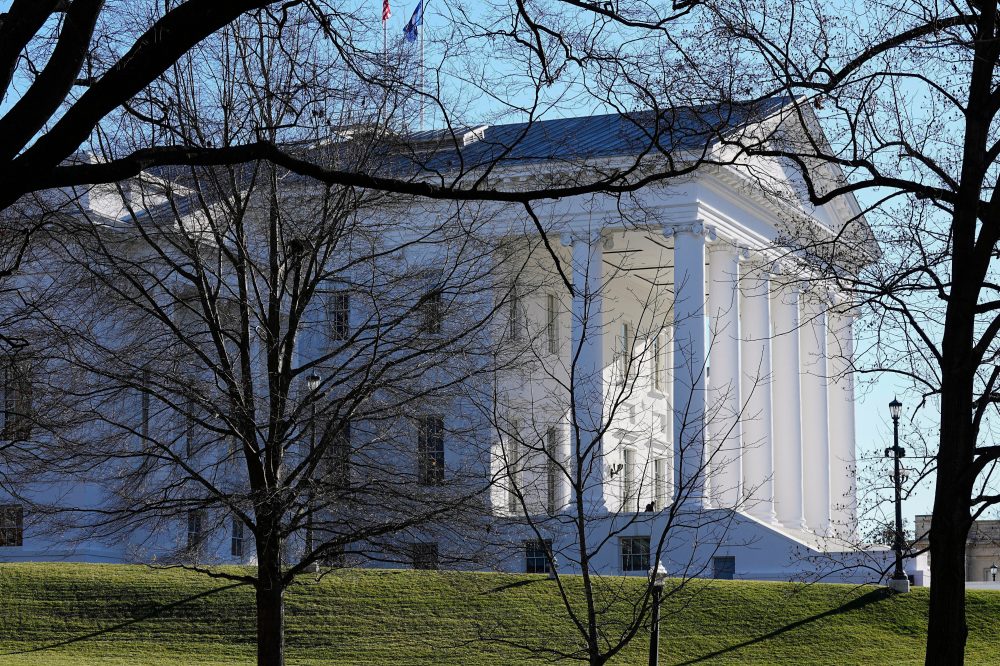

RICHMOND, Va. — Virginia’s Democratic-controlled legislature approved new congressional district boundaries on Friday, strategically designed to help their party secure four additional U.S. House seats in the ongoing national redistricting fight. While the move demonstrates state Democrats’ legislative strength, significant obstacles stand between them and implementing more favorable district lines for this year’s midterm contests.
A judge in Tazewell, located in conservative Southwest Virginia, has temporarily halted a planned April 21 voter referendum on the redistrict maps by issuing a restraining order on Thursday.
Democratic leaders are challenging both this decision and an earlier ruling from the same judge, who determined last month that Democrats unlawfully expedited the planned public vote on their constitutional amendment enabling the redistricting effort. Virginia’s Supreme Court has accepted the party’s appeal of the initial decision.
Should Democrats succeed in holding their referendum, citizens would decide whether to temporarily implement new congressional boundaries before reverting to Virginia’s standard redistricting procedures following the 2030 census. Democratic officials sought to release the new map prior to the April election.
Former President Donald Trump initiated an uncommon mid-decade redistricting fight last year by urging Republican leaders in Texas to redraw their districts to boost GOP representation. The strategy aimed to help Republicans maintain their slim House majority despite political challenges that typically benefit the opposition party during midterm cycles.
This action sparked a nationwide redistricting competition. Currently, Republicans anticipate gaining nine additional House seats across Texas, Missouri, North Carolina and Ohio. Democrats project winning six more seats in California and Utah, while hoping to offset the remaining three-seat difference in Virginia.
Virginia Democratic lawmakers have characterized their redistricting efforts as a necessary response to Trump’s actions.
“The president of the United States, who apparently only one half of this chamber knows how to stand up to, basically directed states to grab power,” stated Virginia’s Democratic Senate Majority Leader Scott Surovell in February. “To basically maintain his power indefinitely — to rig the game, rig the system.”
Republican officials have expressed outrage at the proposal. House Minority Leader Terry Kilgore characterized the redistricting as an attempt by liberals from northern Virginia’s Arlington, Fairfax and Prince William counties to control the entire state.
“In southwest Virginia, we have this saying … They say, ‘Terry, you do a good job up there, but you know, Virginia stops at Roanoke,’” Kilgore explained, referencing how residents across Virginia’s Appalachian region feel underrepresented in state government. “That’s not going to be the same saying anymore, because Virginia is now going to stop just a little bit west of Prince William County.”
Virginia currently sends six Democrats and five Republicans to the U.S. House, representing districts established by a court after a bipartisan legislative commission couldn’t reach agreement on boundaries following the 2020 census.
The legislation implementing Democrats’ more partisan map, contingent on voter approval, now awaits the signature of Democratic Gov. Abigail Spanberger, who has signaled her support.
“Virginia has the opportunity and responsibility to be responsive in the face of efforts across the country to change maps,” Spanberger declared while endorsing the referendum.
Democratic hopefuls are already positioning themselves for potential opportunities. “Dopesick” author Beth Macy and former U.S. Rep. Tom Perriello have announced campaigns in traditionally Republican areas that would shift into districts with higher Democratic registration.
Virginia Del. Dan Helmer and former federal prosecutor J.P. Cooney, who participated in Trump investigations before being dismissed by him, have launched campaigns in a previously rural district that would now primarily encompass voters near the nation’s capital. Additionally, former Democratic congresswoman Elaine Luria is attempting a comeback against Republican Rep. Jen Kiggans, who defeated her in 2022, in a competitive district the new map would make slightly more Democratic-friendly.