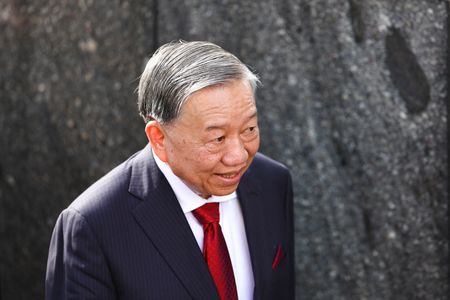

HANOI, March 23 – The Communist Party of Vietnam launched a seven-day assembly on Monday focused on selecting key government officials, according to government officials.
Political observers anticipate the gathering will choose candidates for the nation’s highest offices during the upcoming five-year period, encompassing the roles of prime minister, state president, and National Assembly chairperson. Current Party leader To Lam appears positioned to receive the state president nomination, which would allow him to serve in both capacities.
In his introductory remarks, Lam stated, “The plenum will review personnel matters for leadership positions in state agencies for the 2026–2031 term,” as reported in an official government release.
Whether the party will reveal its selected candidates before the assembly concludes on Friday remains uncertain. The country’s Parliament must ratify these nominations during their upcoming session beginning April 6.
The gathering will also address the party’s ongoing efforts to combat corruption and examine Vietnam’s economic development strategy for 2026–2031, according to the official statement.
Lam emphasized that “These issues are particularly important and of fundamental significance… as they directly relate to the quality of leadership and governance, as well as the country’s fast and sustainable development.”
The Southeast Asian nation has established ambitious economic expansion goals exceeding 10% annually from 2026-2030. Lam identified managing the effects of international conflicts and potential worldwide economic downturns as pressing challenges.
“The global and regional situation continues to change very rapidly, very strongly, and is very difficult to predict,” Lam observed.
He noted that competition between world powers continues intensifying, with disputes involving geopolitics, economics, technology, energy resources, supply networks, information, and commerce significantly altering how countries develop.
The nation has experienced dramatic fuel cost increases following the U.S.-Israel conflict with Iran, seeing gasoline prices jump 50% while diesel costs have climbed 70%.