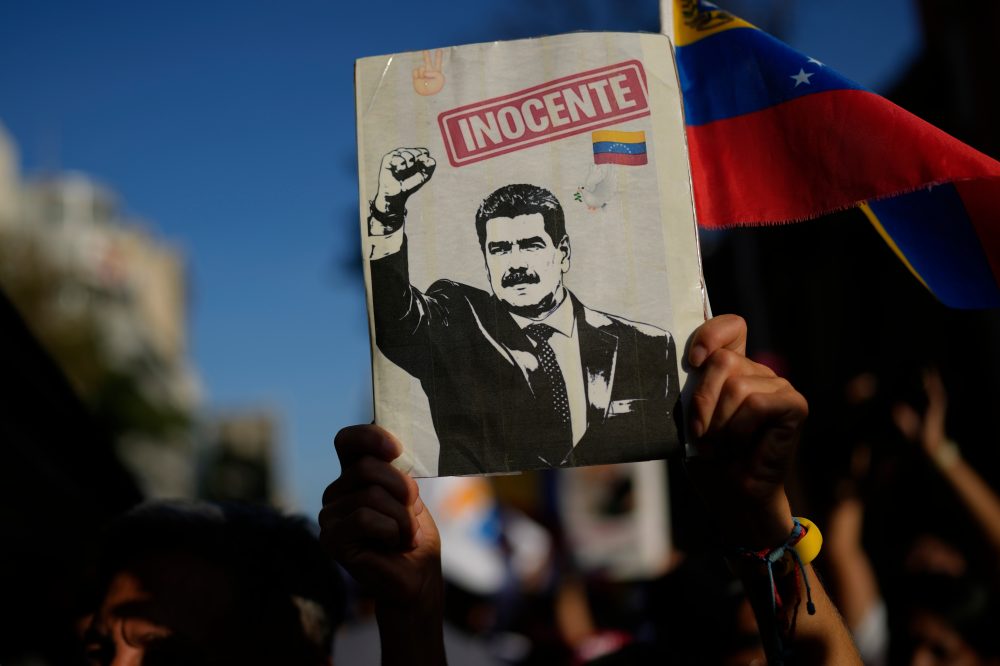

The Trump administration is preventing Venezuela from covering legal defense expenses for their former leader Nicolás Maduro, who faces drug trafficking charges in New York, according to his attorney who argues this could violate his constitutional right to legal representation.
Defense lawyer Barry Pollack informed a federal judge in Manhattan through an email last week that the U.S. Treasury Department had prevented authorization for legal fees that Venezuela’s government is obligated to cover for Maduro and First Lady Cilia Flores according to their nation’s laws and traditions. This correspondence became part of the public court file on Wednesday.
Both Maduro and his spouse have been detained in New York without the possibility of bail since their capture from their Venezuelan residence on January 3 during a covert nighttime operation conducted by U.S. military personnel. Both individuals have entered not guilty pleas.
This dramatic arrest, which came after months of military preparation in the Caribbean region, has enabled the Trump administration to wield significant control over Maduro’s successor, Vice President and current acting President Delcy Rodriguez. Facing U.S. pressure, Rodriguez has quickly moved to welcome American investment in Venezuela’s petroleum sector, release political detainees, and restore direct diplomatic contact with Washington — a relationship that had been severed when the first Trump administration closed the U.S. embassy in Caracas during 2019.
According to Pollack’s email, the Treasury Department’s Office of Foreign Assets Control, which oversees Venezuela-related sanctions, had initially approved payment of legal expenses by the Venezuelan government on January 9.
However, the Trump administration withdrew this approval in under three hours “without explanation,” while maintaining authorization for the first lady’s legal representation costs, Pollack stated.
This legal fee controversy is directly connected to American foreign policy objectives. The initial Trump administration severed diplomatic relations with Maduro in 2019, instead recognizing the opposition leader of the National Assembly as Venezuela’s rightful president. The Biden administration followed a similar approach.
Nonetheless, permitting Rodriguez’s administration to fund Maduro’s defense could undermine prosecutors’ courtroom efforts to challenge the former leader’s claims that his arrest was unlawful and that he enjoys immunity from U.S. prosecution as a foreign head of state under domestic and international law.
A 25-page criminal indictment charges Maduro and co-conspirators with collaborating alongside drug cartels and military officials to enable the transportation of thousands of tons of cocaine into the United States. Both defendants could receive life sentences upon conviction.
The alleged conspiracy included Maduro and his wife ordering kidnappings, physical assaults, and murders of individuals who owed drug money, according to the indictment. This reportedly included executing a local drug leader in Caracas.
The Treasury Department, White House, and Justice Department did not respond to requests for comment.
Pollack indicated he requested the Office of Foreign Assets Control on February 11 to restore the original authorization and allow Venezuela to fulfill its responsibility for Maduro’s defense expenses.
The attorney noted that Maduro “cannot otherwise afford counsel” and will seek judicial assistance to fund his defense.
Pollack argued the United States was “interfering with Mr. Maduro’s ability to retain counsel and, therefore, his right under the Sixth Amendment to counsel of his choice.”