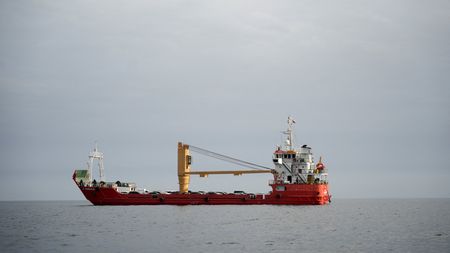

The United States military announced plans to implement a comprehensive naval blockade of Iranian ports starting Monday morning, following the collapse of weekend diplomatic negotiations aimed at ending ongoing hostilities between the two nations.
The high-stakes discussions held in Islamabad from Saturday through early Sunday marked the first face-to-face meeting between American and Iranian officials in over ten years, representing the most significant diplomatic engagement since Iran’s 1979 Islamic Revolution. These negotiations occurred during a delicate two-week ceasefire that began Tuesday, designed to halt six weeks of combat that has resulted in thousands of casualties throughout the Gulf region, disrupted critical energy supplies, and raised concerns about broader regional warfare.
According to U.S. Central Command, the maritime blockade will commence at 10 a.m. Eastern Time Monday and will be “enforced impartially against vessels of all nations entering or departing Iranian ports and coastal areas, including all Iranian ports on the Arabian Gulf and Gulf of Oman.”
Military officials clarified that ships traveling through the Strait of Hormuz to reach non-Iranian destinations will not face interference. Commercial shipping companies will receive formal notification with additional details before the blockade takes effect.
On Sunday, President Donald Trump announced that American forces would also stop any vessel in international waters that has paid fees to Iran. “No one who pays an illegal toll will have safe passage on the high seas,” Trump posted on social media, adding: “Any Iranian who fires at us, or at peaceful vessels, will be BLOWN TO HELL!”
Trump also stated that the U.S. Navy would begin clearing mines that Iran had placed in the Strait of Hormuz, a critical passage for approximately 20% of the world’s energy supplies.
While shipping records indicate three oil-laden supertankers successfully passed through the Strait on Saturday, tanker vessels began avoiding the waterway Monday in anticipation of the American blockade.
Global crude oil prices jumped more than 7% to exceed $100 per barrel during Monday morning Asian trading, while the dollar strengthened and U.S. stock futures declined following the blockade announcement.
“Trump wants a quick fix,” commented Dana Stroul, a former senior Pentagon official during the Biden administration who now works at The Washington Institute for Near East Policy. “The reality is, this mission is difficult to execute alone and likely unsustainable over the medium to long-term.”
Following Trump’s Sunday statements, Iran’s Islamic Revolutionary Guards issued a warning that any military vessels approaching the strait would be viewed as violating the ceasefire and would face severe and decisive response, highlighting the potential for dangerous escalation.
A U.S. official revealed that Iran declined Washington’s demands to halt all uranium enrichment activities, dismantle major enrichment facilities, and transfer highly enriched uranium materials.
Tehran also rejected American requirements to stop financial support for Hamas, Hezbollah and the Houthis, while refusing to fully reopen the Strait of Hormuz, the official stated.
Iranian media reported that negotiators found common ground on several matters, but the strait’s status and Iran’s nuclear program remained major obstacles.
Iranian Foreign Minister Abbas Araqchi said Iran faced “maximalism, shifting goalposts, and blockade” when very close to achieving an “Islamabad MoU.”
“Zero lessons learned,” he stated. “Good will begets good will. Enmity begets enmity.”
Even if the ceasefire continues, many experts anticipate that energy shipments through the Gulf will take considerable time to normalize, resulting in elevated fuel costs and increased global inflation.
Trump acknowledged to Fox News’ “Sunday Briefing” program that oil and gasoline prices may stay elevated through November’s midterm elections, representing an unusual admission of potential political consequences from the conflict.
Iran’s Qalibaf shared a map showing Washington-area gasoline prices on social media with the message: “Enjoy the current pump figures. With the so-called ‘blockade’. Soon you’ll be nostalgic for $4–$5 gas.”
Trump expressed belief that Iran would continue diplomatic efforts and described the Islamabad talks as “very friendly.”
“I do believe they’re going to come to the table on this, because nobody can be so stupid as to say, ‘We want nuclear weapons,’ and they have no cards,” he stated.
However, hours later, the president said he was indifferent about whether a “desperate” Iran would resume negotiations.
“If they don’t come back, I’m fine,” Trump told reporters Sunday evening after returning to the Washington area from an overnight trip to Florida.
Qalibaf criticized the U.S. for failing to earn Tehran’s confidence, despite his team presenting “forward-looking initiatives.” Iran’s President Masoud Pezeshkian, who discussed the negotiations in a conversation with Russian President Vladimir Putin, said Tehran sought “a balanced and fair agreement.”
“If the United States returns to the framework of international law, reaching an agreement is not far off,” he told Putin, according to Iranian state media.