
A Hong Kong-listed pharmaceutical company says artificial intelligence is dramatically speeding up how quickly new drugs can be developed, cutting a process that once took years down to about 12 months.
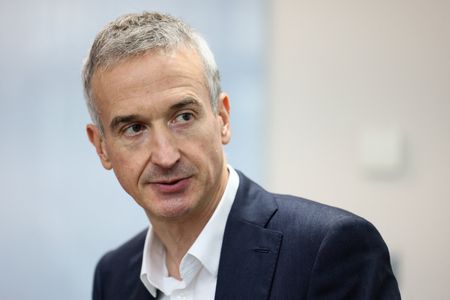
Insilico Medicine’s CEO made the claim in a recent interview at the company’s research and development facility in Shanghai, explaining how combining advanced AI tools with China’s research infrastructure has given the firm a major competitive edge over traditional Western drugmakers.
“It usually takes about 4.5 years to get to a drug developmental candidate using the traditional approach. But if a pharma company has a research lab in China … they cut two years of time,” CEO Alex Zhavoronkov told Reuters.
“When you combine frontier AI that is proven to work experimentally with the power of China, you can significantly accelerate that. Now our record is nine months to a developmental candidate, with a typical timeline of 13 months,” he added.
China has undergone a dramatic transformation in the pharmaceutical world. Once seen mainly as a low-cost producer of generic drug ingredients, the country has become a major center for developing next-generation medicines, driven by lower research costs and a more streamlined regulatory environment.
A senior executive at Pfizer noted last month that clinical development in China can move three times faster and at roughly half the cost compared to Europe. Meanwhile, the United States has also been taking steps to accelerate its own drug research in response to China’s growing biotech sector.
On average, it takes five to seven years to bring a drug candidate to market in China, compared to at least eight to ten years in Western countries.
“We now compete with Chinese pharmaceutical companies on timelines, and with traditional biotechnology companies in the West on novelty,” Zhavoronkov said. His Shanghai lab has automated much of the biological sampling and screening process.
Insilico has formed research and development partnerships with major pharmaceutical companies including Eli Lilly and Japan’s Takeda. Just last week, the company announced a deal with Taiwan’s Bora Pharmaceuticals that could be worth more than $2.5 billion. However, none of the experimental drugs it is working on have yet received approval for sale.
The U.S.-founded startup was an early leader in applying generative AI to drug discovery. Its first AI-developed drug, Rentosertib, has progressed to Phase II clinical trials. Over the past six years, AI has helped the company produce 31 developmental drug candidates — a critical step on the road to preclinical testing and human trials.
The company conducts its advanced AI research in Montreal and Abu Dhabi, while drug validation and scaling work happens in China. It customizes and fine-tunes foundational AI models using its own proprietary benchmarks designed specifically for drug discovery.
Despite having a significant presence in China, Zhavoronkov said more than 90% of the company’s revenue comes from Western pharmaceutical firms. He declined to break down China-specific revenue figures, noting that China’s lower national insurance reimbursement rates for highly novel drugs make licensing deals with Western companies far more financially attractive.
He also said the company largely avoids selling its software in China due to potential geopolitical concerns, though it does plan to expand its Shanghai research operations in the future.
Zhavoronkov also sounded a cautionary note about what broader AI adoption could mean for workers across the biotech industry, as more research and software functions become automated.
“In my organization with 400 people, I can probably displace 40% easily on the software side,” he said, noting that laboratory scientists and software engineers at the company are being retrained to work with AI benchmarks and robotics systems.