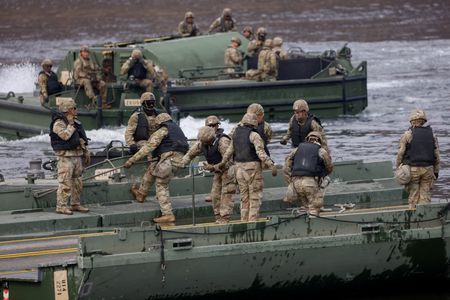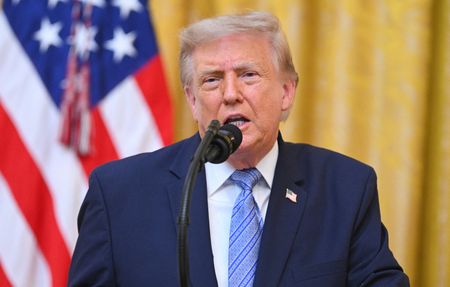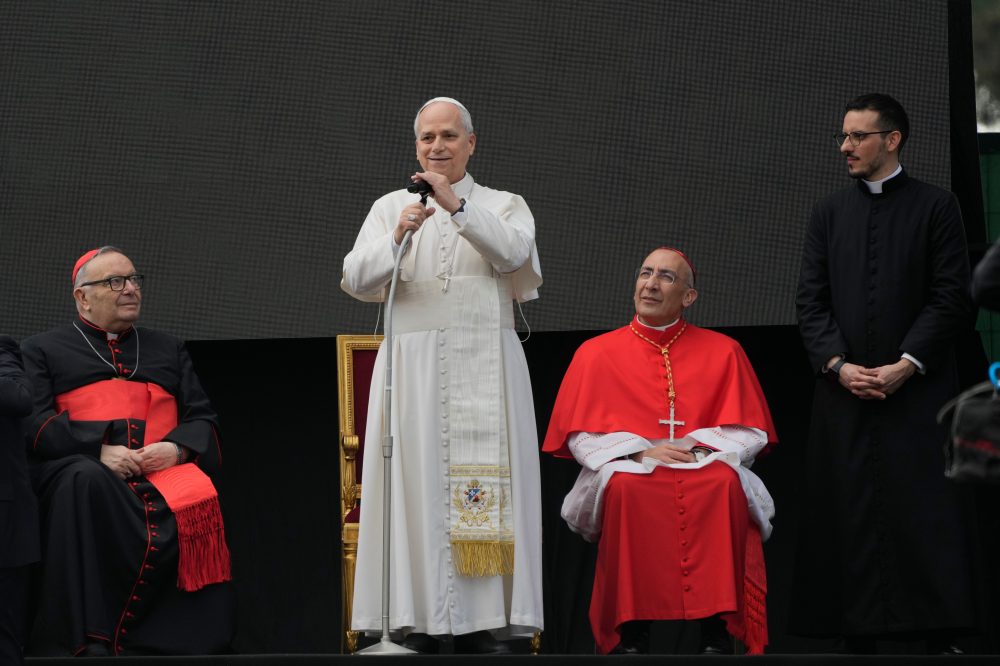

ROME (AP) — Pope Leo XIV issued another restrained plea Monday for peace in the ongoing U.S.-Israel military conflict in Iran, while two prominent American cardinals strongly criticized the war and denounced its justification along with its “video game” presentation to the public.
Vatican spokesperson Matteo Bruni released a statement Monday evening expressing Leo’s “deep sorrow” following the death of Maronite Catholic priest Rev. Pierre El Raii in southern Lebanon. According to Vatican News, Raii, who served as pastor in Qlayaa, died in a bombing while attempting to help an injured member of his congregation.
The pontiff offered prayers for all victims of the violence, with particular concern for children who have lost their lives.
“He is following events with concern and prays for an end to hostilities as soon as possible,” Bruni stated in the evening announcement.
Since hostilities began a week ago, Leo has made several careful appeals for peaceful dialogue, apparently trying to avoid inflaming tensions further.
Italian publication La Repubblica highlighted an irony in Monday’s coverage: while the pope speaks in secular language about dialogue and diplomatic solutions, political figures invoke religious justifications and biblical references to support the military action.
Though Leo has avoided directly condemning the conflict, several bishops under his leadership have taken stronger stances.
Cardinal Robert McElroy, who leads the Washington archdiocese, declared that the United States and Israel have not satisfied basic moral requirements for justified warfare. He explained that legitimate military action requires responding to immediate danger, clear statements of objectives, and ensuring benefits exceed potential harm.
“Lebanon may fall into civil war. The world’s oil supply is under great strain. The potential disintegration of Iran could well produce new and dangerous realities. And the possibility of immense casualties on all sides is immense,” McElroy explained to his diocesan publication. “For all of these reasons, Catholic teaching leads to the conclusion that our entry into this war was not morally legitimate.”
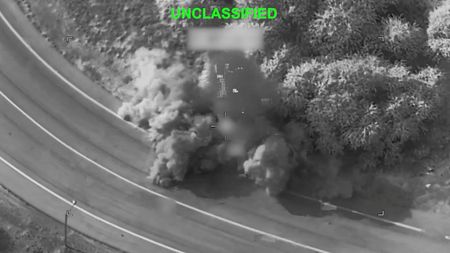
Cardinal Blase Cupich, who oversees Leo’s native Chicago archdiocese, condemned the White House’s social media strategy of combining Hollywood action sequences with actual combat footage.
“A real war with real death and real suffering being treated like it’s a video game — it’s sickening,” Cupich declared in a weekend statement that Vatican Media later republished. “Our government is treating the suffering of the Iranian people as a backdrop for our own entertainment, as if it’s just another piece of content to be swiped through while we’re waiting in line at the grocery store.”
Both Cupich and McElroy received their appointments from Pope Francis and have previously challenged Trump administration immigration policies. They joined Newark Cardinal Joseph Tobin earlier this year in urging the Trump White House to pursue ethical foreign policy instead of causing global suffering.
Their concerns extend beyond American leadership. Filipino Cardinal Pablo Virgilio David, who serves as vice president of the Federation of Asian Bishops’ Conferences, expressed similar concerns about how modern warfare is becoming disconnected from human consequences.
“From distant command centers, military operators stare at screens where maps, radar signals and algorithm-generated targets move like icons in a computer game. A cursor moves. A coordinate is selected. A click is made. And a missile is launched,” David observed in remarks carried by Vatican News.
While the Holy See maintains traditional diplomatic neutrality, Vatican leadership has rejected the Trump administration’s rationale for preemptive strikes against Iran.
“If states were to be recognized as having a right to ‘preventive war,’ according to their own criteria and without a supranational legal framework, the whole world would risk being set ablaze,” Vatican secretary of state Cardinal Pietro Parolin told Vatican Media last week.
The Vatican’s newly appointed U.S. ambassador, Archbishop Gabriele Caccia, will soon need to navigate these complex positions. Caccia received his appointment this weekend to a role that demands balancing Holy See relationships with both American bishops and the White House.
Massimo Faggioli, a Vatican observer and Trinity College Dublin professor, noted on social media that Caccia must handle fresh diplomatic challenges “between the Vatican of Leo XIV, the first pope from the USA, and this USA of Trump now at the head of a war fueled by a national-religious rhetoric.”