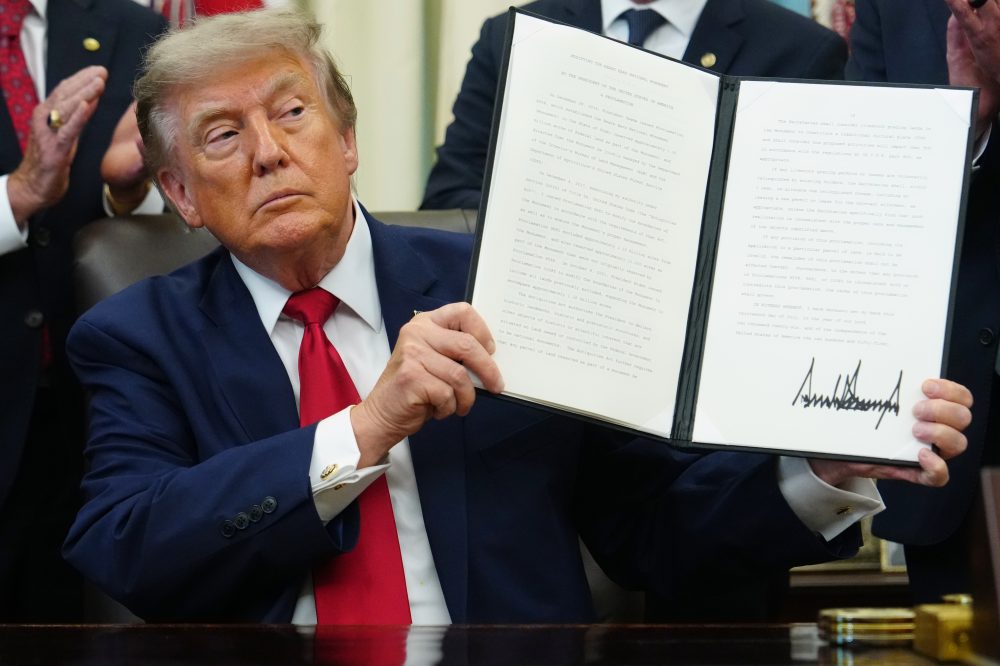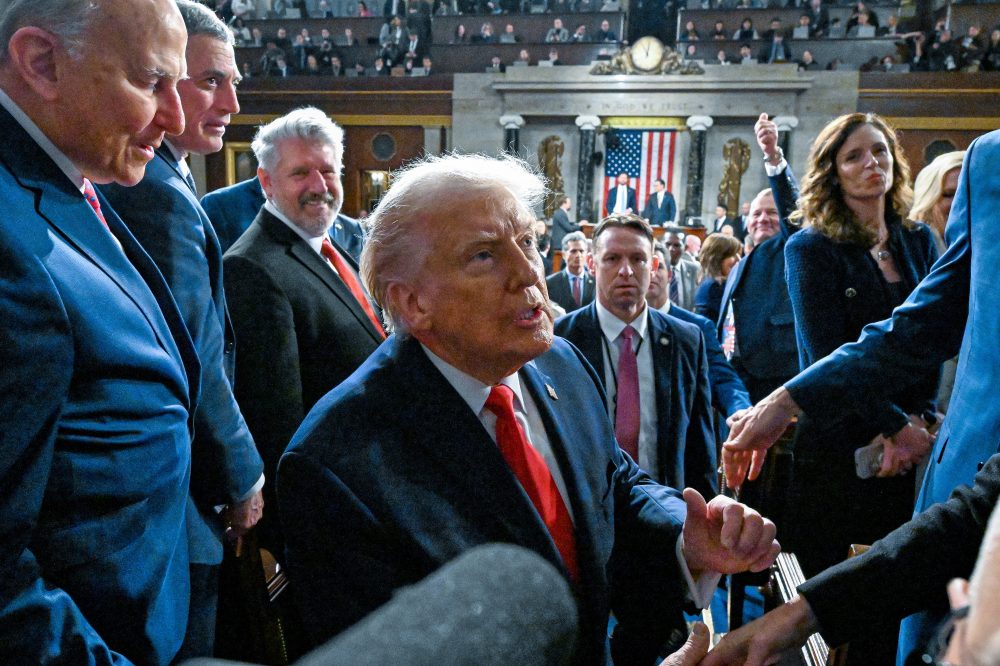

WASHINGTON — After delivering his State of the Union address Tuesday evening, President Donald Trump faces the challenge of ensuring his message resonates with voters across the nation.
Trump’s 108-minute speech served as a celebration of accomplishments during his second term’s early months, highlighting what he described as economic revival domestically and establishing new international leadership. He will first test this midterm election year messaging when he visits Texas later this week, targeting Latino voters who played a crucial role in his 2024 reelection victory and demonstrated his transformation of the Republican Party base.
The administration seeks to communicate this message to a wider voter base that remains largely skeptical of Trump’s performance, even as potential Middle East tensions could divert attention from his domestic agenda. Trump has shown a tendency to deviate from prepared remarks during campaign events, including a recent Georgia appearance where he claimed to have “solved” affordability issues despite ongoing voter concerns about high costs.
However, the economic growth and national security themes Trump highlighted during Tuesday’s lengthy address will form the foundation of the campaign message he and Republican colleagues plan to present to voters in November.
“This is going to be setting the tone for the following year,” Sen. Markwayne Mullin, R-Okla., who maintains close relationships with Trump, told The Associated Press.
Following State of the Union speeches, presidents typically embark on immediate travel to promote their priorities. President Joe Biden, for example, visited battleground states like Wisconsin and Pennsylvania the day following his addresses during his final two years in office.
Trump will remain in the Washington region until later this week before departing for Texas, where he plans to address economic matters and energy initiatives just before the state’s March 3 congressional primaries. Instead of immediate travel, the president will spend Wednesday in White House meetings, including policy discussions and a session with Transportation Secretary Sean Duffy.
Trump, who incorporated several social media-friendly surprises into his speech, demonstrates skill at capturing attention in today’s fragmented media landscape and will likely discover additional methods to maintain visibility beyond typical post-State of the Union activities.
“Donald Trump is a master at the big moments, so he obviously cares a lot about how the speech goes, but what he cares a lot about are the clips that get replayed over and over again from the State of the Union,” said Austin Cantrell, who served as an assistant White House press secretary in Trump’s first term.
Cantrell, now working with Chattanooga, Tennessee-based Bridge Public Affairs, added: “I don’t expect this to be some Aaron Sorkin-esque, perfectly choreographed post-State of the Union media fan-out.”
Six years earlier, Trump surprised audiences by presenting conservative radio personality Rush Limbaugh with the Presidential Medal of Freedom, the nation’s highest civilian recognition. Tuesday’s record-breaking lengthy address featured comparable headline-grabbing moments. He announced plans to bestow the same honor on Connor Hellebuyck, the U.S. men’s hockey team goaltender who recently won gold at the Milano-Cortina Winter Olympics. Trump invited Hellebuyck and teammates into the House chamber, where they received thunderous applause.
Trump also unveiled new proposals addressing affordability issues during his speech, while criticizing Democrats for opposing policies he credited with creating a more prosperous and secure America. Virginia Gov. Abigail Spanberger, delivering the Democratic response, countered that costs remain elevated for many Americans and families continue struggling under Trump’s policies.
Trump urged both parties to “protect American citizens, not illegal aliens,” advocating for restrictions on mail-in voting and stricter voter identification requirements while emphasizing dangers of uncontrolled illegal immigration.
“I do think a lot of the success outlined in the State of the Union will be a part of the Republican message in the fall,” Sen. Eric Schmitt, R-Mo., another Trump ally, told the AP, referencing GOP accomplishments in tax policy and border security. “As far as the president is concerned, I think he’ll be anxious to get on the road and talk about the success.”
Senior White House staff members have committed to regular Trump travel until the midterm elections. His economy tour has included crucial swing states like Michigan, Pennsylvania and North Carolina, plus traditionally conservative Iowa and former Georgia Rep. Marjorie Taylor Greene’s congressional district. He has supported candidates — in Rocky Mount, North Carolina, he engaged with Republican Michael Whatley and endorsed his Senate campaign — while occasionally straying from the economic focus these trips are designed to emphasize.
Simply leaving Washington can signal to voters that a president values connecting with them. Edward Frantz, a University of Indianapolis historian, noted that Herbert Hoover — an engineer, self-made millionaire and technocrat — believed he could address national problems by working with his team in isolation and rarely departing Washington. This created voter perception that Hoover was indifferent because they didn’t witness him engaging with Americans.
“If you think about a call and response … the call is the State of the Union, and if you really do care about being in touch with others, then what’s the response?” Frantz explained. “The best way to be able to see that is by hitting the road.”
American opinions about Trump have remained relatively consistent throughout his second term, making it improbable that a single speech will significantly alter public perception. His approval ratings have shown minimal change during his second term, with Associated Press-NORC Center for Public Affairs Research polling indicating only a slight decline from 42% in March 2025 to 36% in early February.
Despite this, the annual address provides Trump an opportunity to reshape his message, as it has for previous presidents.
Presidential historian Timothy Naftali noted that Bill Clinton used his 1996 State of the Union to establish themes for his Democratic reelection campaign. Following George W. Bush’s November 2006 midterm losses, the Republican adopted a notably more conciliatory approach toward newly empowered Democratic leadership on Capitol Hill.
“The State of the Union, they’re less important than they once were because with a president like Trump, he’s always available,” said Naftali, a senior research scholar at Columbia University’s School of International and Public Affairs. “But the State of the Union is an opportunity to reset the president’s agenda or to reaffirm it, and resetting an agenda in the social media era is different from resetting it in previous times.”