
JERUSALEM – Israeli Prime Minister Benjamin Netanyahu has accomplished a longtime goal of striking Iran’s leadership, but cracks are showing in his partnership with U.S. President Donald Trump as their combined military operation continues with potentially evolving objectives.
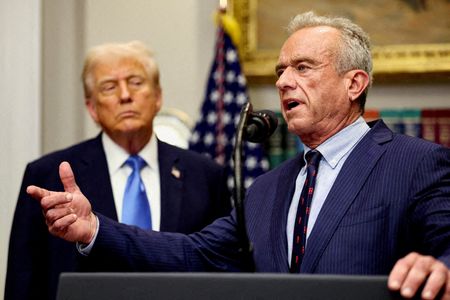
When the bombing operation began Saturday, both leaders initially stated that changing Iran’s government was their aim. However, during White House comments Monday – just two days after Israeli airstrikes eliminated Iran’s Supreme Leader Ayatollah Ali Khamenei and key leadership figures – Trump avoided mentioning government overthrow as his primary objective.
Instead, Trump outlined U.S. priorities as eliminating Iran’s missile arsenal and naval forces while preventing nuclear weapon development. Pentagon chief Pete Hegseth reinforced this position during a press briefing, stating the mission was not a “so-called regime-change war.”
Netanyahu maintains a different stance, continuing to urge Iranian citizens to rise up against their government as recently as Monday evening. “We’re going to create the conditions, first, for the Iranian people to get control of their destiny,” he stated during a Fox News interview.
When asked about the differing approaches, a White House official speaking anonymously to Reuters confirmed the two nations have separate military objectives. “Regime change is one of theirs,” the official explained.
Leading up to the conflict, Netanyahu successfully persuaded Trump this represented a critical moment to stop Tehran’s nuclear ambitions and eliminate ballistic missile threats. Trump indicated the operation might last “four or five weeks” or “whatever it takes.”
“I don’t get bored, I never get bored,” Trump responded Monday when questioned about maintaining sustained attention on the operation.
Israeli officials privately recognize that Trump will ultimately determine when hostilities end. Dan Shapiro, who served as U.S. ambassador to Israel during the Obama years, suggested Trump might seek an “early off-ramp” from the conflict.
“If President Trump decides that he’s reached the end of this operation before Netanyahu wants it to end, he’s still going to end it,” stated Shapiro, now with the Atlantic Council think-tank in Washington.
Domestic pressures could influence Trump’s decision-making as the war extends and expands. American public opinion opposes the operation, with Reuters/Ipsos polling showing only 25% support for U.S. strikes against Iran. Primary elections began Tuesday in crucial swing states Texas and North Carolina that may determine congressional control following fall midterm contests.
The crisis has disrupted shipping and energy sectors, with gasoline prices climbing 11 cents per gallon this week in the U.S., while global market spikes suggest further increases ahead. These rising costs could serve as daily reminders of affordability challenges facing many Americans.
Domestically, Israel support has become increasingly partisan, with 59% of Americans now viewing Israel’s government unfavorably – up from 51% one year ago, according to October Pew Research Center data.
Neither the White House nor Netanyahu’s office provided responses to comment requests.
Throughout most of the past thirty years in power, Netanyahu has frequently disagreed with American presidents, particularly when he publicly criticized former Democratic President Barack Obama’s Iran nuclear negotiations. The Biden administration also clashed with Netanyahu and restricted certain weapons deliveries during Israel’s Gaza military operations.
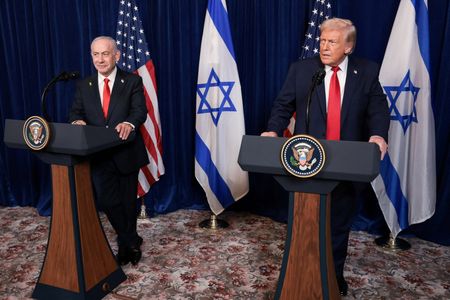
Following Trump’s 2025 return to office, Netanyahu held seven presidential meetings and used numerous phone conversations to redirect attention from Gaza toward Iran’s missile and nuclear programs, presenting Tehran’s religious leadership as a mutual threat, according to a U.S. official with direct knowledge of their discussions.
While Trump sent representatives to nuclear negotiations with Iran in Geneva and Oman, both countries had spent months preparing their military strategy, with attack timing determined weeks earlier, an Israeli official revealed.
Netanyahu’s final Trump meeting occurred during a hastily scheduled February 11, 2026 visit featuring a three-hour White House session unusually closed to media coverage. The following day, the USS Gerald Ford aircraft carrier – the world’s largest warship – left the Caribbean, where it supported Venezuelan military operations, heading for the Mediterranean.
“I have tried to persuade successive American administrations to take firm action, and President Trump did,” Netanyahu told Fox News Monday.
Trump dismissed suggestions that Israel forced America into war, telling White House reporters Tuesday: “Based on the way the negotiation was going, I think they were going to attack first, and I didn’t want that to happen. So if anything I might have forced Israel’s hand.”
For 76-year-old Netanyahu, leading a war that most Israelis support offers an opportunity to cement his political legacy before October elections, where he confronts significant challenges. His far-right coalition shows internal divisions, he faces corruption charges he denies, and Israelis continue processing a multi-front conflict that started in 2023, which Netanyahu promised would reshape Middle Eastern dynamics.
Israel’s longest-serving prime minister has demonstrated exceptional political survival skills previously. Although consecutive polls predict his October defeat, Netanyahu retains realistic victory chances if Israeli casualties and economic war costs stay minimal, according to Tel Aviv University political scientist Udi Sommer.
“If it succeeds, relatively quickly (like) in June 2025, it will work very much in his favour as Israel’s protector and the one who had woven a particularly successful relationship with the administration in Washington,” Sommer explained.
Netanyahu’s security reputation suffered devastating damage on October 7, 2023, when Iran-supported Hamas militants executed a surprise assault on Israel, killing over 1,200 people and capturing 251 hostages.
This triggered a two-year Gaza military campaign against Hamas – Israel’s longest war – which has resulted in at least 72,000 Palestinian deaths according to health officials, destroyed much of the territory, and caused Israel’s highest military casualties in decades.
Netanyahu has refused responsibility for October 7 security failures while highlighting Israel’s subsequent success in weakening Iranian proxies Hamas and Lebanon’s Hezbollah. Their Syrian ally Bashar al-Assad has also been removed from power.
Even achieving military success in Iran won’t eliminate anger among many Israeli voters, including within Netanyahu’s right-wing base, said political analyst Amotz Asa-el from Jerusalem’s Shalom Hartman research institute.
“The past three years’ events have been so traumatic and so dramatic and so revolting to that swing vote that I don’t think any kind of salvation in Iran will offset this,” he concluded.