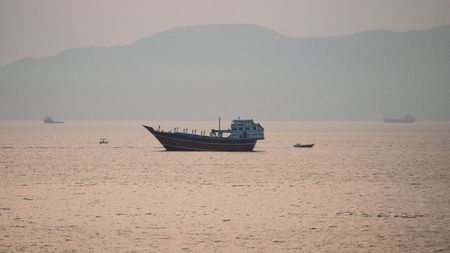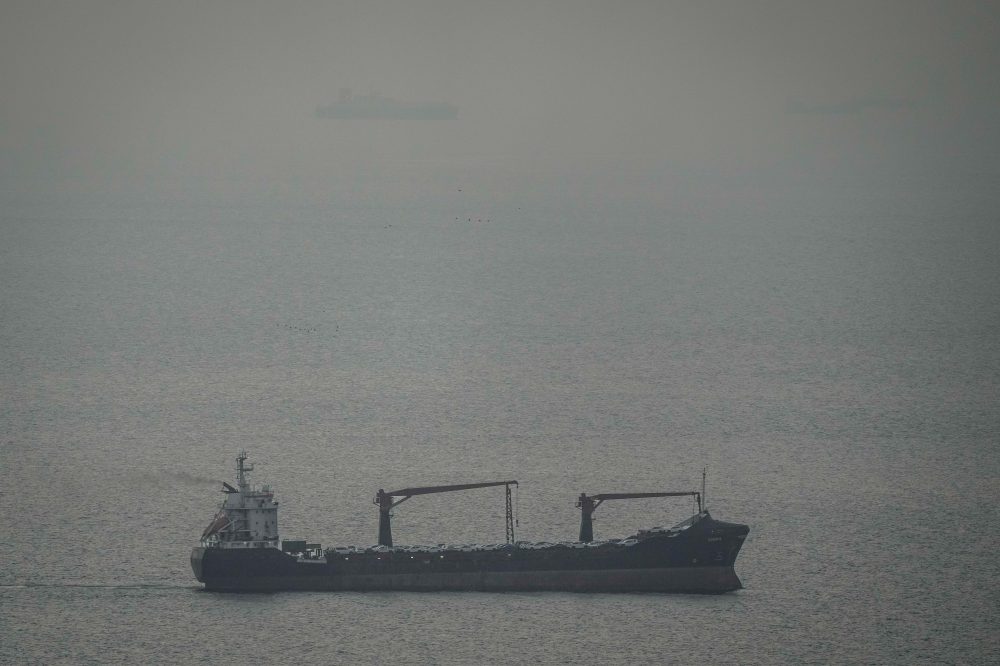

WEST PALM BEACH, Fla. — President Donald Trump is working through an increasingly frantic series of tactics as he seeks to resolve the ongoing crisis involving Iran’s blockade of the Strait of Hormuz. His approach has shifted from diplomatic negotiations to sanctions relief and now to direct threats against civilian infrastructure within Iran.
While Trump and his supporters maintain they were always ready for Iran to close the strategic waterway, the president’s inconsistent approach has drawn criticism that he lacks a coherent exit strategy after entering the conflict. His most recent move came Saturday in the form of an ultimatum to Iran: reopen the shipping lane within 48 hours or face the destruction of the nation’s electrical infrastructure.
Administration officials have characterized the threat as aggressive negotiating to force Iranian compliance. Critics view it as evidence of a president who underestimated the complexity of the situation.
“Trump has no plan to reopen the Strait of Hormuz, so he is threatening to attack Iran’s civil power plants,” said Sen. Ed Markey, D-Mass, adding: “This would be a war crime.”
“He’s lost control of the war and he is panicking,” said Sen. Chris Murphy, D-Conn., responding to Trump’s post.
Throughout approximately one week, Trump has continuously modified his strategy regarding the vital shipping route for international oil and natural gas. The president faces mounting pressure as rising fuel costs disrupt worldwide markets and burden American families ahead of crucial midterm elections.
Trump initially pursued diplomatic channels last weekend by proposing an international naval coalition to patrol the waterway.
When allies declined participation, Trump declared America could handle the situation independently. By Friday, he suggested other nations would need to assume responsibility as the U.S. considers withdrawal. Later that day, he implied the passage would somehow become accessible on its own.
“You can’t all of a sudden walk away after you’ve kind of created the event and expect other people to pick it up,” Sen. Thom Tillis, R-N.C. told ABC’s “This Week.”
The Treasury Department made another attempt Friday to address rising fuel costs by removing sanctions on certain Iranian oil exports for the first time in decades. This action reduced some of the economic pressure Washington typically employs against Tehran.
The objective was introducing additional millions of oil barrels to global markets. However, it remains unclear how significantly this would reduce consumer prices or how the government could prevent Iran from profiting from resumed sales.
The government previously removed sanctions temporarily on some Russian petroleum.
Trump’s weekend ultimatum from Florida represents a threat of extraordinary severity. His earlier communications primarily highlighted American military successes against Iran’s air force, naval forces, and weapons manufacturing. This latest threat targets the electrical system that supplies hospitals, residences, and other civilian facilities.
His social media message — containing 51 words, many in capital letters — appeared to lack the thorough legal review necessary to justify attacking civilian infrastructure, according to Geoffrey Corn, a military law professor at Texas Tech University and former Army lieutenant colonel who worked as a military attorney.
“It certainly has a feeling of ready, fire, aim,” Corn said of the Trump’s moving strategy.
“He overestimated his ability to control the events once he unleashed this torrent of violence.”
Such extensive attacks would likely constitute war crimes, Corn explained. Military commanders could face choosing between following orders to commit war crimes or refusing and risking criminal charges for insubordination.
International warfare regulations don’t specifically prohibit power plant attacks, but permit them only when analysis shows military benefits exceed civilian damage, according to legal experts. This represents a difficult standard because warfare laws fundamentally aim to distinguish between civilian and military objectives.
The administration has already encountered severe criticism after the U.S. was held responsible for a missile attack on an Iranian elementary school that resulted in over 165 deaths.
Trump offered minimal specifics about which facilities might be attacked and the methods involved. He established Monday as Iran’s deadline to reopen the strait or face American strikes on “various POWER PLANTS, STARTING WITH THE BIGGEST ONE FIRST!”
Trump’s advisors defended him Sunday, providing rationale for targeting Iran’s electrical network.
Mike Waltz, the U.S. ambassador to the United Nations, explained that Iran’s Revolutionary Guard operates much of the nation’s infrastructure and uses it to support military operations. He identified potential targets as including “gas-fired thermal power plants and other types of plants.”
During a Fox News appearance, Waltz said he wanted to address anticipated “hand-wringing” from international observers, describing the Revolutionary Guard as a terrorist group. “The president is not messing around,” he stated.
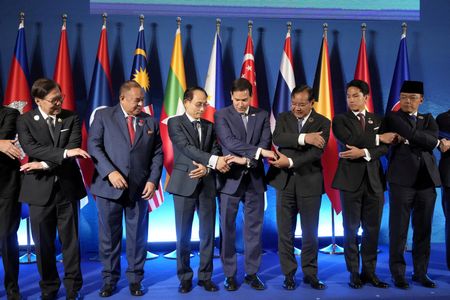
NATO’s secretary-general, Mark Rutte, who has maintained close ties with Trump, attempted to reduce tensions. He expressed understanding of Trump’s frustration and emphasized that over 20 nations are “coming together to implement his vision” of reopening the strait quickly.
Israel’s ambassador to Washington, Yechiel Leiter, advised against the comprehensive attack Trump threatened. “We want to leave everything in the country intact, so that the people who come after this regime are going to be able to rebuild and reconstitute,” he told CNN’s “State of the Union.”
Trump’s threat might backfire: Iranian officials stated they would completely seal the strait and attack American and Israeli infrastructure if the threat is executed.