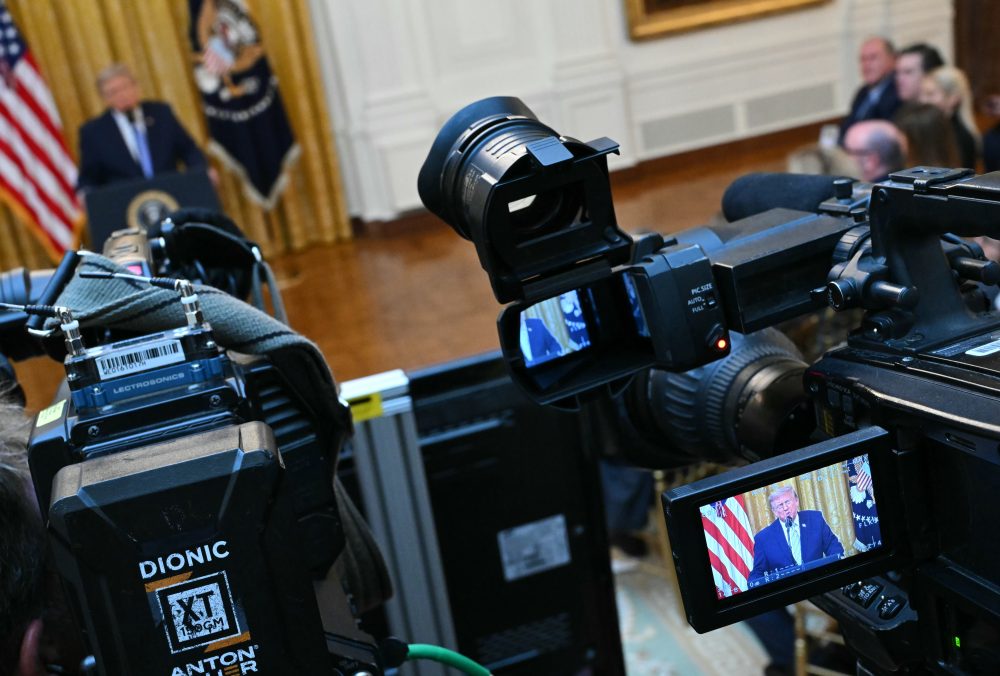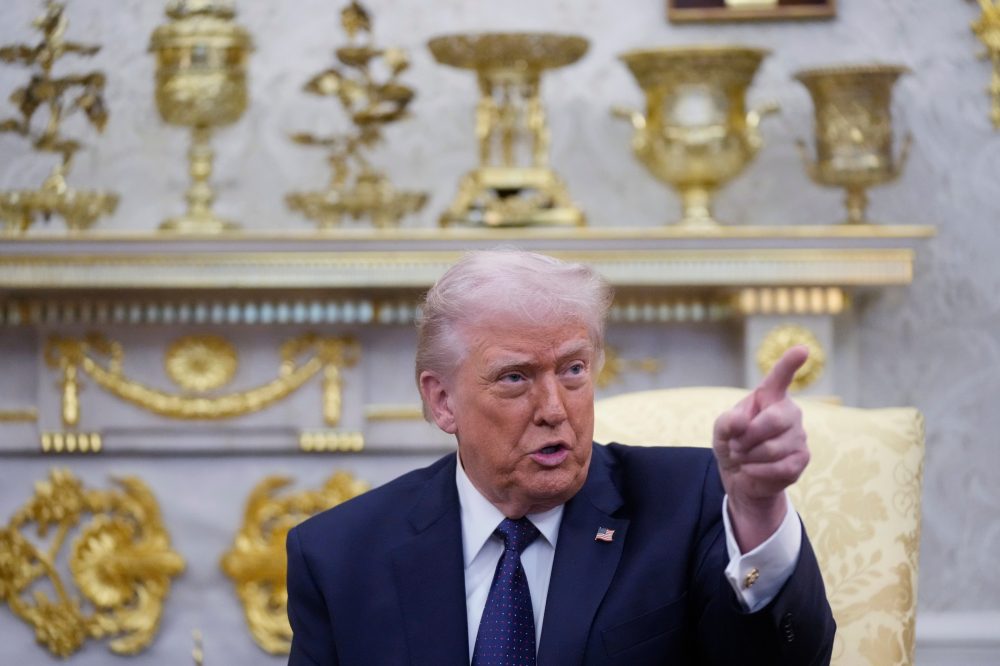

WASHINGTON — During Tuesday remarks at the White House, President Donald Trump indicated that an Iranian official already within the current government structure could be the most suitable candidate to assume leadership after U.S.-Israel military operations conclude, though he acknowledged that “most of the people we had in mind are dead.”
The president’s statements represent a shift from his previous position just four days earlier, when he strongly urged Iranian citizens to “take over your government” following the U.S.-Israel bombing campaign. His latest comments suggest movement away from the notion that ongoing military action could provide an opening to dismantle Iran’s religious leadership system established during the 1979 Islamic revolution.
According to Trump, numerous Iranian government figures his administration had considered as possible future leaders have been eliminated during the U.S.-Israeli operations that resulted in the death of Iranian Supreme Leader Ali Khamenei along with other senior officials.
The president has not revealed publicly any individuals he considers viable future Iranian leaders. Additionally, it remains unknown whether the White House has engaged in any communication with Iranian officials since military action began.
“Most of the people we had in mind are dead,” Trump told reporters during an Oval Office session. “Now we have another group, they may be dead also, based on reports. So you have a third wave coming. Pretty soon we’re not going to know anybody.”
When asked about Reza Pahlavi, the former shah’s exiled son who seeks to position himself for potential return should Iran’s Shiite religious government collapse, Trump said his administration has not seriously evaluated him for Iranian leadership.
“It would seem to me that somebody from within maybe would be more appropriate,” Trump stated, suggesting it might be logical for “somebody that’s there, that’s currently popular, if there is such a person” to fill the leadership void.
These remarks occurred while Trump welcomed German Chancellor Friedrich Merz for his initial face-to-face meeting with a foreign leader since the U.S. and Israel began their Iranian military campaign.
Trump expressed concern about a “worst case” outcome where “somebody takes over who’s as bad as the previous person.”
“That could happen. We don’t want that to happen,” Trump continued. “You go through this, and then in five years you realize you put somebody in who was no better.”
The White House has intensified efforts to address criticism regarding what some view as an unnecessarily rapid decision to initiate military action against Iran.
Trump’s strike authorization last week followed extended negotiations conducted by presidential envoy Steve Witkoff and son-in-law Jared Kushner with Iranian representatives — discussions the U.S. came to view as delaying tactics.
Following the latest negotiation round in Geneva, Switzerland last week, Witkoff and Kushner informed Trump that achieving a nuclear agreement resembling the 2015 deal negotiated under former President Barack Obama remained possible, according to a senior administration official.
The official, speaking anonymously to reporters, characterized it as a potential “Obama-plus deal” that Witkoff and Kushner believed would require months but was achievable.
However, while the negotiators expressed readiness to pursue diplomatic solutions and “fight for every point that we can” if Trump preferred that approach, they emphasized to the president that Iran remained unwilling to accept terms satisfactory to the United States.
Trump also delivered sharp criticism toward Britain and Spain regarding their hesitation to support U.S.-Israeli strikes against Iran.
“This is not Winston Churchill that we’re dealing with,” Trump said regarding British Prime Minister Keir Starmer.
Starmer initially prevented American aircraft from utilizing British military installations for Saturday’s Iranian attacks. He subsequently permitted U.S. use of English bases and Diego Garcia facilities in the Indian Ocean for strikes against Iran’s ballistic missiles and storage locations, but not for other targets.
Trump additionally announced plans to “cut off all trade with Spain” following Foreign Minister José Manuel Albares’ statement that Spain would not permit U.S. use of jointly operated southern Spanish bases for strikes not authorized under United Nations charter provisions.
The president also responded to criticism from close allies regarding the war decision — concerns that intensified after Secretary of State Marco Rubio said Monday that the U.S. chose to strike because “we knew that there was going to be an Israeli action.”
“And we knew that if we didn’t preemptively go after them before they launched those attacks, we would suffer higher casualties,” Rubio explained.
Trump disputed suggestions that Israel had pulled the White House into the conflict. “We were having negotiations with these lunatics, and it was my opinion that they were going to attack,” Trump said. “If anything, I might have forced Israel’s hand.”
During his Oval Office visit, Merz stated that Germany is “looking forward to the day after” the Iran conflict ends.
He indicated Berlin’s desire to collaborate with the U.S. on post-conflict strategy for when Iran’s current government no longer exists.
“We are having a high interest in common approach and common work and what we can do,” Merz said. “And this is important not just for the Americans. This is extremely important for Europe and extremely important for Israel and their security.”
Merz also highlighted rising oil costs as economic damage, presenting an argument for rapid conflict resolution.
Trump recognized that oil and gas prices would increase during continued U.S. strike involvement but argued the impact would be temporary.
“We have a little high oil prices for a little while, but as soon as this ends, those prices are going to drop, I believe, lower than even before,” Trump said.
According to AAA data, average U.S. gasoline prices jumped 11 cents overnight Tuesday to approximately $3.11 per gallon.