
Several days following California’s primary election, voters across the state find themselves in a routine waiting game — anticipating results for key contests including the gubernatorial and Los Angeles mayoral races.
The ongoing uncertainty in these high-stakes competitions, along with multiple tight congressional battles, comes as no shock since California consistently requires days or weeks to complete vote tallying. President Donald Trump’s complaints about the counting timeline and fraud allegations, which he voiced Thursday, also follow his established pattern of criticism.
However, Trump’s Thursday declaration that his Department of Justice was examining the count marked an unusual escalation: “Why the vote counting DELAY???,” the president wrote on his social media platform.
Trump implied that California’s Democrats were manipulating results to prevent two of his preferred candidates — Republican Steve Hilton seeking the governor’s office and Spencer Pratt running for mayor in the nonpartisan contest — from securing top-two positions needed to advance to November’s general election.
“You see what’s happening in California, they’re rigging the election,” he stated to reporters during a Thursday Oval Office event.
The president’s social media statements drew a reaction from Democratic Gov. Gavin Newsom, whose communications team shared a CNN segment detailing how the nation’s largest state emphasizes precision and voter access rather than rapid results, extending the counting period.
“For the record: we wish the votes were counted faster, too,” Newsom’s office responded.
A representative from the U.S. Attorney’s Office in Los Angeles refused to discuss whether any investigation into ballot counting was underway.
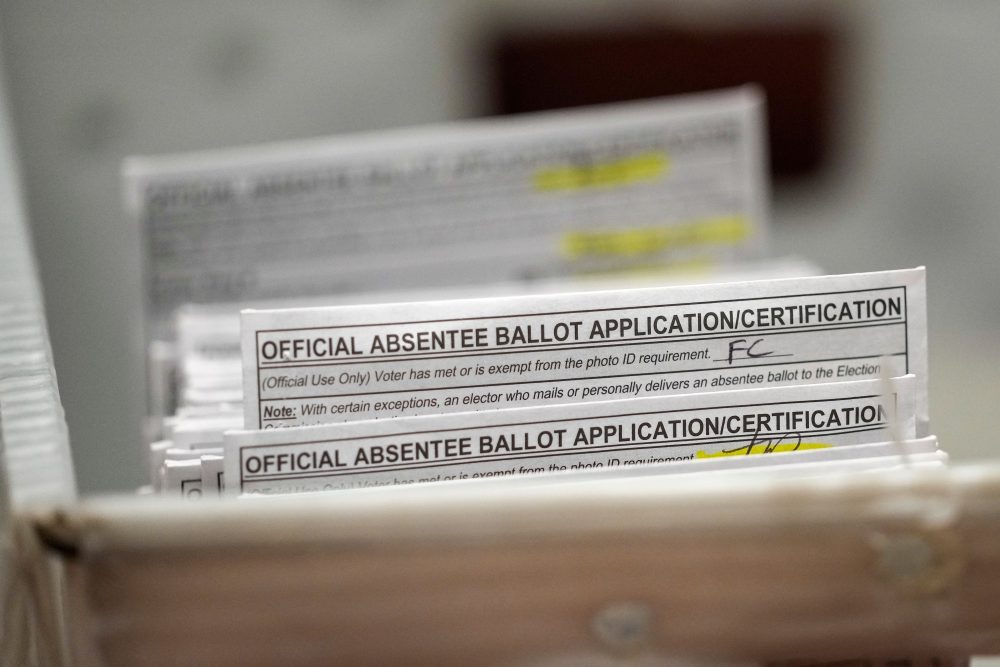
California’s legal framework essentially requires an extended counting process. Mail ballots go to all qualified voters — approximately 23 million people — and the state maintains flexible return policies. Ballots receive counting if postmarked by Election Day and delivered to election offices within a week.
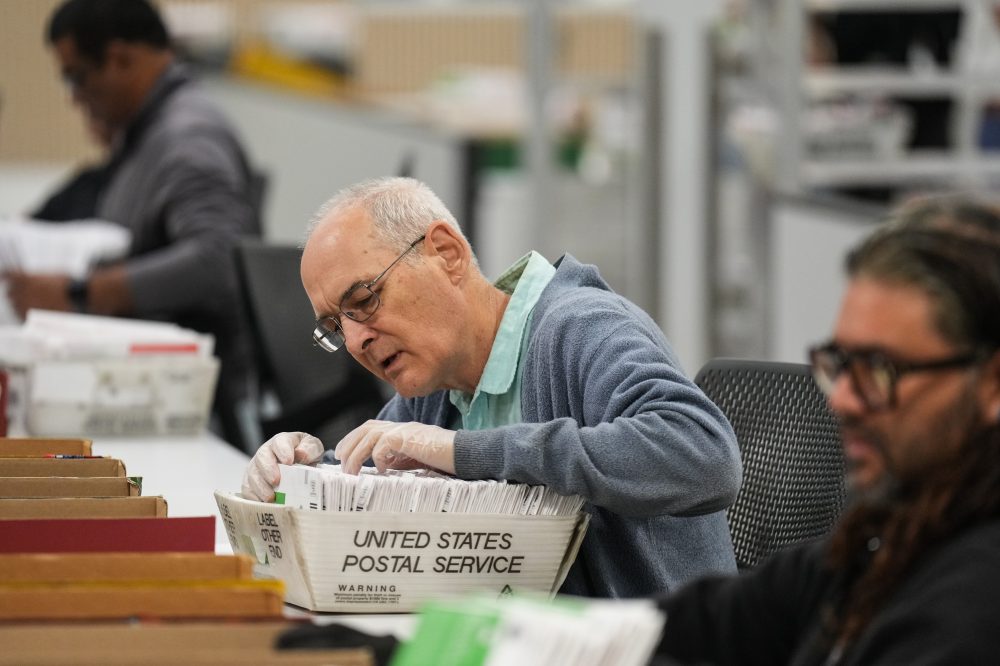
Local election workers can only begin the extensive process of confirming late mail ballot authenticity and counting them after polling locations close and most Americans have retired for the night.
When voter signatures on ballot envelopes don’t align with official records, election administrators must provide those voters opportunities to verify their identity for ballot inclusion, further extending final tallies.
“We might not like how California administers its elections (and I don’t),” Stephen Richer, a former Republican election official in Maricopa County, Arizona, posted on social platform X. “But that doesn’t make it fraud.”
Newsom approved legislation last year mandating vote counting completion within 13 days instead of the previous 30-day limit. Counties seeking extensions must notify the Secretary of State’s Office with justification for delays.
This timeline fails to satisfy the president: “The Dumocrats are at it again!” he posted on his social media account. “They are trying to STEAL THE GOVERNOR OF CALIFORNIA PRIMARY, AND THE MAYOR OF LOS ANGELES, PRIMARY, AWAY FROM TWO GREAT REPUBLICAN CANDIDATES. Here we go with the very late and massive numbers of MAIL IN BALLOTS.”
State Assemblymember Marc Berman, a Democrat who authored the accelerated counting legislation, called Trump’s statements disappointing and “a lie.”
“While Trump is laser focused on lying about our elections and undermining voters’ faith in our democracy, so that Republicans can then try to pass policies like Voter ID laws that make it harder for people to vote, our priority is to make sure that every validly cast ballot is counted,” he declared in a statement.
Several analysts cautioned that Tuesday’s primary tallying might extend longer than previous election cycles.
“What compounds things this time around is that Democrats have been holding on to their ballots,” explained Rick Hasen, a UCLA law professor.
California’s millions of Democratic voters demonstrated unusual reluctance to submit ballots early this year, seemingly delaying decisions until final moments in the continuously shifting gubernatorial contest. The state uses a primary system where the leading two vote recipients, regardless of party affiliation, proceed to the general election, and Democrats had spent months worrying that numerous Democratic candidates would divide support, potentially allowing two Republicans to claim both advancing positions.
Democratic voters seemed to postpone choices until seeing which candidates gained momentum. The substantial volume of late ballots will likely extend the delay in obtaining complete results even further.
Although millions of votes have been processed, remaining uncounted ballots carry the greatest significance for tight competitions.
Despite California’s overwhelming Democratic lean, the state has hosted some of America’s closest congressional contests, occasionally determined by mere hundreds of votes, making winner determination impossible until the weeks-long counting concludes. In 2024, one House contest remained undecided until December.
Primary elections like Tuesday’s create additional complexity. The crucial information includes not just the leading vote recipient but also the runner-up. Determining true race outcomes requires sufficient vote tallies to definitively identify first and second place finishers.
The massive influx of late mail ballots counted last creates another consequence: final vote totals become increasingly Democratic. This occurs because Republicans more frequently return ballots early or vote in person on Election Day, with those ballots counted first.
The progressive shift toward Democratic candidates as counting continues has generated various conspiracy theories.
Republicans have consistently criticized California’s counting methods, despite GOP success in close House races statewide in 2024. The Republican National Committee has pursued legal challenges in other states questioning the validity of counting mail ballots arriving after Election Day, with the U.S. Supreme Court expected to address the matter this month.
However, concerns about California’s vote counting extend beyond partisan lines. Voting rights advocates have pressed state legislators to increase funding for local election offices to process the flood of late ballots more quickly.
“The Legislature needs to throw a lot more money to get the count quicker,” Hasen stated.