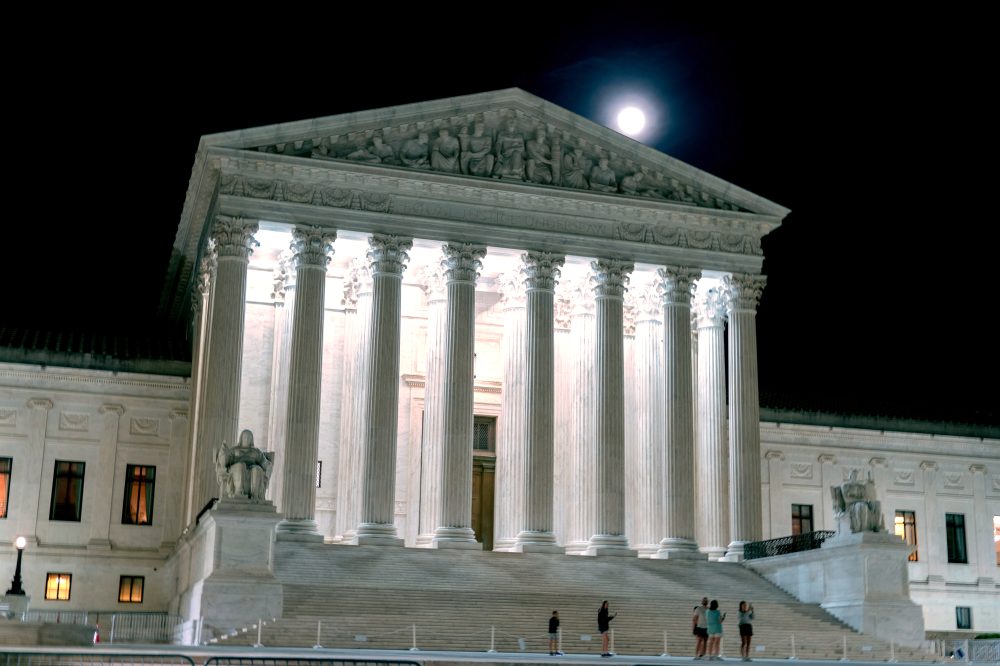

WASHINGTON — The nation’s highest court examined one of this term’s most significant cases Wednesday as justices considered President Donald Trump’s executive order challenging birthright citizenship. The order declares that children born to undocumented immigrants or temporary residents would not automatically receive American citizenship.
During Wednesday’s proceedings, the justices reviewed Trump’s challenge to a New Hampshire federal court decision that invalidated the citizenship restrictions. Multiple courts across the nation have issued similar blocks, preventing the order from being implemented anywhere in the country.
The court is anticipated to deliver a final decision by early summer.
Trump made history by becoming the first sitting president to personally attend oral arguments at the Supreme Court.
This case represents another examination of Trump’s use of executive authority that challenges established legal precedent. The court has generally supported the president’s positions, though some significant exceptions have prompted Trump to issue harsh personal attacks against the justices.
Trump signed the birthright citizenship directive on his first day back in office as part of his administration’s comprehensive immigration enforcement strategy.
This marks the first Trump immigration policy to reach the Supreme Court for a definitive ruling. The justices previously rejected global tariffs that Trump had implemented using emergency powers legislation in an unprecedented manner.
Trump expressed intense anger over the late February tariffs ruling, stating he felt embarrassed by the justices who opposed him and labeling them unpatriotic.
On Sunday, he launched a preemptive attack against the court through his Truth Social platform. “Birthright Citizenship is not about rich people from China, and the rest of the World, who want their children, and hundreds of thousands more, FOR PAY, to ridiculously become citizens of the United States of America. It is about the BABIES OF SLAVES!,” the president posted. “Dumb Judges and Justices will not a great Country make!”
Trump’s directive would overturn the established interpretation that the Constitution’s 14th Amendment, adopted in 1868, and federal statutes since 1940 grant citizenship to all individuals born on U.S. territory, with limited exceptions for children of foreign diplomats and those born to foreign occupying forces.
The 14th Amendment was designed to guarantee citizenship for Black Americans, including formerly enslaved people, though the Citizenship Clause uses broader language. “All persons born or naturalized in the United States, and subject to the jurisdiction thereof, are citizens of the United States and of the State wherein they reside,” the amendment states.
Through multiple rulings, federal courts have invalidated the executive order as unconstitutional and illegal under federal law. These decisions have referenced the Supreme Court’s 1898 Wong Kim Ark case, which determined that a child born in America to Chinese immigrants was a U.S. citizen.
The Trump administration contends that the prevailing understanding of citizenship is incorrect, claiming that children of non-citizens are not “subject to the jurisdiction” of the United States and thus ineligible for citizenship.
The court should use this opportunity to correct “long-enduring misconceptions about the Constitution’s meaning,” wrote Solicitor General D. John Sauer.
No court has endorsed this interpretation, and attorneys representing pregnant women whose children would face impact from the order urged the Supreme Court not to become the first to accept it.
“We have the president of the United States trying to radically reinterpret the definition of American citizenship,” stated Cecillia Wang, the American Civil Liberties Union legal director who will argue against Sauer before the Supreme Court.
Research conducted by the Migration Policy Institute and Pennsylvania State University’s Population Research Institute indicates that more than 250,000 babies born annually in the United States would face consequences under the executive order.
Although Trump’s public statements and policies have primarily targeted undocumented immigration, the birthright restrictions would also impact individuals legally present in the United States, including international students and green card applicants seeking permanent residency.