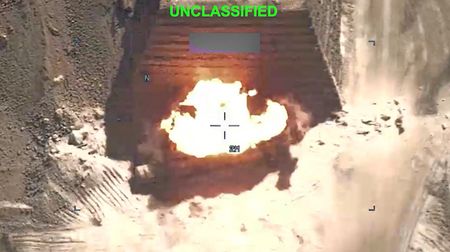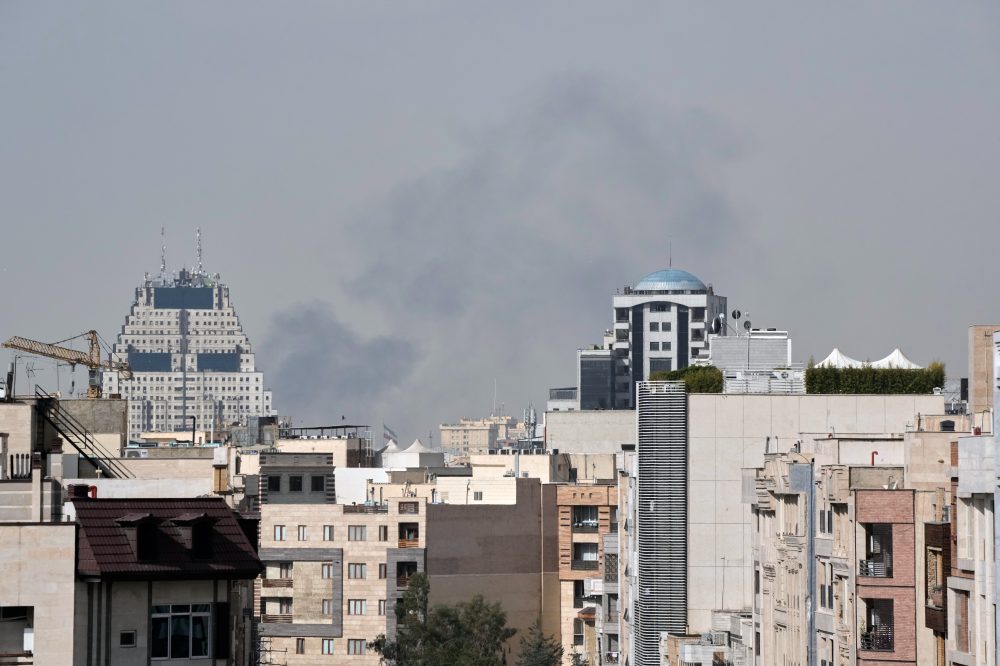

President Donald Trump announced on Saturday that American and Israeli forces conducted extensive military strikes against Iran, describing the operation as aimed at dismantling the nation’s military infrastructure and preventing nuclear weapons development.
Tehran’s Foreign Ministry vowed to protect Iranian territory while the Revolutionary Guard launched retaliatory strikes, sending drones and missiles toward Israeli targets and attacking American military facilities in Bahrain, Kuwait and Qatar.
The military action followed Trump’s ongoing pressure campaign for nuclear negotiations with Tehran, which included positioning a significant naval presence in the region amid Iran’s internal unrest from widespread demonstrations.
Iranian state media outlet IRNA reported that Israeli-American strikes killed at least 40 individuals at a girls’ educational facility in southern Iran. Additionally, debris from an Iranian missile strike in the United Arab Emirates capital resulted in one fatality, according to state reports.
Israeli officials confirmed their participation in the Iranian operation after Saturday morning explosions echoed through Tehran. Initial strikes occurred near Supreme Leader Ayatollah Ali Khamenei’s administrative offices, though his whereabouts remained unknown as he had not appeared publicly for several days.
Israeli Defense Minister Israel Katz characterized the military action as necessary “to remove threats.” A briefing official, speaking anonymously about classified details, indicated that Iranian military installations, government symbols and intelligence facilities were primary targets.
Warning sirens activated throughout Israel to alert civilians about potential incoming missile threats.
Bahrain reported missile strikes directed at the U.S. Navy’s 5th Fleet command center on the island nation. Kuwait residents heard warning signals and explosions near U.S. Army Central facilities, while Qatar experienced blasts close to Al Udeid Air Base, which houses thousands of American personnel.
Both Iraq and the United Arab Emirates suspended air traffic operations, and Jordan activated emergency sirens.
Northern Israel sustained damage to residential buildings with debris scattered across multiple locations, media and law enforcement reported. However, Lt. Col. Nadav Shoshani stated that Israel avoided major strikes, and emergency responders confirmed no injuries from the nationwide missile bombardment.
Iranian-supported Houthis in Yemen pledged to restart attacks on Red Sea commercial shipping and Israeli targets, two senior Houthi sources revealed anonymously due to the absence of official leadership statements.
Trump delayed his public confirmation of American participation in what he called “major combat operations” for more than an hour.
Through an 8-minute social media video, Trump explained that U.S. motivations extended well beyond nuclear concerns, citing complaints dating to Iran’s 1979 revolution that transformed the country from a key American Middle East partner into a primary adversary.
Trump advised Iranians to seek shelter but encouraged them to eventually overthrow their Islamic government.
“When we are finished, take over your government,” Trump said. “It will be yours to take. This will be probably your only chance for generations.”
The strikes occurred one day after Trump expressed dissatisfaction with stalled negotiations regarding Iran’s nuclear weapons capabilities.
Israeli officials stated they coordinated with American counterparts for months to develop the attack strategy.
Prior to Geneva-based U.S.-Iran diplomatic talks, America had positioned extensive air and naval forces regionally to pressure Iran toward nuclear agreements.
The USS Abraham Lincoln aircraft carrier and three guided-missile destroyers arrived in January to strengthen regional naval presence. The USS Gerald R. Ford, the world’s largest aircraft carrier, and four escort destroyers later departed the Caribbean for Middle East deployment and currently operate in Mediterranean waters.
This naval buildup added over 10,000 American military personnel to the region.