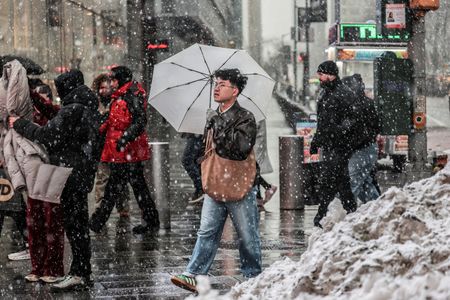

A massive winter storm is wreaking havoc across the northeastern United States, forcing students to stay home Monday as educational institutions shut down and transportation systems scramble to adjust to emergency protocols amid warnings of dangerous conditions.
The severe weather system has created widespread travel chaos from Washington D.C. through New England, with airlines grounding thousands of flights while authorities strongly advise residents to avoid roadways. Mail and package delivery services will also face significant delays due to the harsh winter conditions, according to postal officials.
New York City’s public school system, the country’s biggest, announced a complete closure of all campus facilities Monday, canceling both in-person classes and extracurricular activities without offering virtual learning alternatives.
Mayor Zohran Mamdani issued an emergency declaration and banned non-essential vehicles from city streets starting Sunday evening through Monday midday, explaining that snow removal equipment and emergency responders required clear access as precipitation intensified. The metropolitan area is experiencing its first blizzard alert since 2017.
Municipal buildings will remain closed to the public, while non-critical city workers have been authorized to work from home. “I’m urging every New Yorker to please stay home,” Mamdani stated.
New York Governor Kathy Hochul mobilized 100 National Guard personnel to provide assistance in Long Island, New York City, and the Lower Hudson Valley regions, which are anticipated to experience the most severe snowfall and coastal wind impacts. The severe weather also prompted the closure of the United Nations headquarters facility in Manhattan Monday.
Weather forecasters predict certain northeastern regions could receive as much as 24 inches of snow, while wind speeds may reach 70 mph, creating significant risks for downed trees and electrical outages, the Department of Homeland Security reported.
In a Sunday briefing, the department confirmed that despite current funding interruptions, the Federal Emergency Management Agency continues its disaster response operations without disruption, including personnel deployment, emergency coordination, and vital assistance for disaster victims, with public safety and property protection remaining primary concerns.
Previous reports indicated that President Donald Trump’s administration had directed FEMA to halt the deployment of hundreds of relief workers to disaster zones nationwide during the DHS shutdown.
Massachusetts Governor Maura Healey issued an emergency proclamation and instructed state employees to remain home. Connecticut prohibited commercial trucks from controlled-access roadways Sunday evening, making exceptions only for emergency and essential supply deliveries.
New Jersey Governor Mikie Sherrill announced a statewide emergency beginning Sunday at noon and emphasized the storm’s severity to residents. “People need to take this very seriously,” she told CNN.
Aviation suffered immediate impacts, with flight tracking services showing over 5,000 Monday flights already grounded. Industry analysts noted that more than 25,000 flights were originally scheduled to depart U.S. airports Monday, with Tuesday cancellations also increasing, particularly at major northeastern hubs.
NJ TRANSIT ceased bus, light rail, and accessibility services Sunday evening and discontinued all rail operations by Sunday night, with service restoration dependent on improved conditions.
Throughout New England, the Rhode Island Public Transit Authority announced complete service suspension, including specialized transportation programs, from Sunday night through Monday, stating they would only announce resumption plans when weather conditions permit.