
The Trump administration announced Tuesday that it is holding back more than $1 billion in Medicaid funding intended for Minnesota and California, citing what it called “suspected fraud and noncompliance.” The move is the latest in a string of actions the administration has taken against mostly Democratic-led states over alleged misuse of federal health dollars.
Health Secretary Robert F. Kennedy Jr. said the payment deferrals — which follow earlier funding holds already announced for both states — reflect a shift in strategy. Rather than waiting to recover misspent money after bad actors face prosecution, as prior administrations had done, Kennedy said the goal is now to intervene early.
“We have a duty to stop the payments, demand answers and then follow the evidence wherever it leads,” Kennedy said at a news conference.
The approach is part of a wider administration effort to demonstrate it is combating fraud and protecting taxpayer money, particularly as rising healthcare costs have become a major concern heading into November’s midterm elections.
Back in March, Vice President JD Vance launched a new anti-fraud task force at President Donald Trump’s request, pulling together officials from multiple federal departments to use data and technology to root out suspected misuse of federal funds.
However, Minnesota officials say the federal government has not given the state any explanation for how the deferral amount was calculated. John Connolly, the temporary commissioner and state Medicaid director for Minnesota’s Department of Human Services, said the state was left without any supporting data.
“Today’s actions show that the federal government is acting again in unprecedented and punitive ways as part of their war on Medicaid and its recipients,” Connolly said in a statement. “Partnership — not politics — is required to stop criminals and protect services for the people who need them.”
Minnesota’s Democratic Gov. Tim Walz suggested the withheld funds were being used to finance tax cuts for wealthy Americans under the Trump administration. California’s Democratic Gov. Gavin Newsom accused the administration of targeting his state for political motives.
The Trump administration had previously ramped up immigration enforcement operations in Minnesota, deploying a large contingent of Immigration and Customs Enforcement officers whose activities sparked weeks of counterprotests and resulted in the shooting deaths of two civilians. Trump has also repeatedly criticized California as a poorly managed state.
The administration’s fraud-focused strategy has not been without missteps. In April, the Centers for Medicare & Medicaid Services admitted to The Associated Press that it had made a significant error in the figures it used to support a fraud investigation in New York. Last month, California’s Medicaid director told a congressional committee that CMS had still not provided the state with “any instances of fraud, waste or abuse” to back up a $1.3 billion Medicaid funding deferral announced in May.
In Minnesota, state officials have been carrying out a detailed corrective action plan in response to CMS concerns that have already led to the deferral of roughly $260 million in federal funds, with threats of additional cuts looming.
“We have cooperated in good faith and proactively engaged the Centers for Medicare and Medicaid Services to first raise the alarm on fraud in Minnesota’s Medicaid program, to effectively investigate fraud and to institute further safeguards against future misuse of funds,” Connolly said.
Kennedy did not clarify in Tuesday’s announcement whether the latest deferrals — $867.5 million to California and $199 million to Minnesota — are separate from or overlap with funding holds already announced earlier this year.
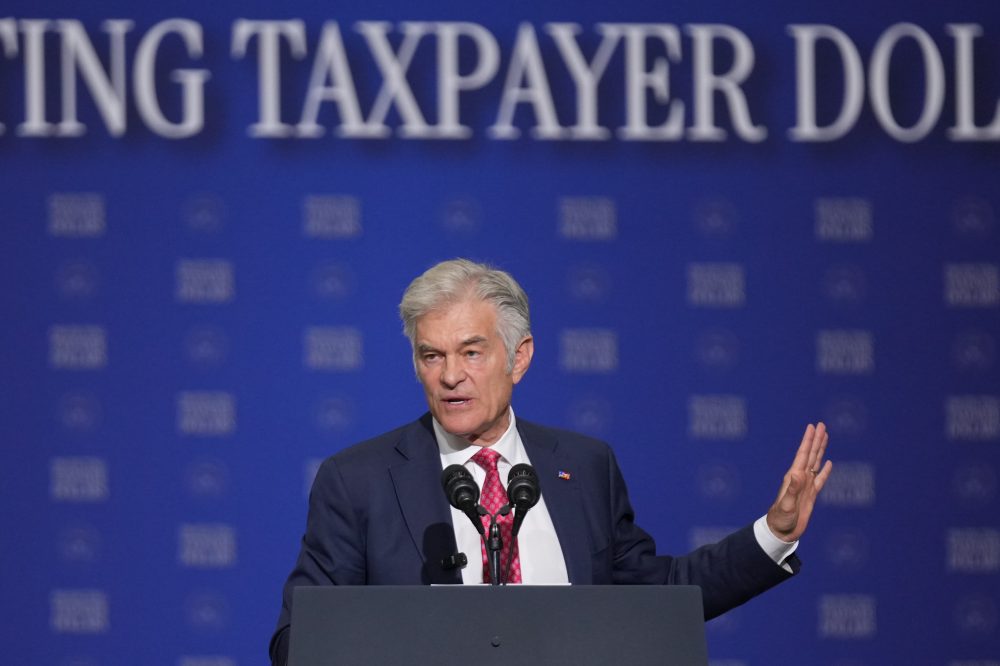
CMS Administrator Dr. Mehmet Oz did not point to specific examples of fraud in either state when explaining the decision. He did describe certain billing patterns the agency found suspicious, such as providers billing for four or more patients simultaneously or submitting claims after a Medicaid recipient had died.
Oz also raised concerns about the rapid growth of California’s home care program. California officials have disputed that concern, saying the program expanded intentionally as a strategy to keep residents out of more costly nursing home settings.
Both Kennedy and Oz said states can restore the flow of federal funding by submitting documentation showing that the questioned payments were legitimate.
A spokesperson for California’s Medicaid program did not immediately respond to a request for comment, though state officials have previously said they are working to provide the information requested by the federal government.
Oz noted that Minnesota had already returned documents to federal officials, which he said were being “reevaluated very carefully.”
Kennedy also indicated Tuesday that he plans to extend the authority to ban providers from Medicaid, Medicare, and other federal health programs to CMS — a power that has historically belonged solely to his department’s Office of the Inspector General.
“This is going to be a full force multiplier,” HHS Inspector General Thomas March Bell said at the news conference. “It’s going to create additional momentum, and it’s going to exclude additional bad actors.”