
PHOENIX (AP) — Standing at 6-foot-7 “and some change,” San Francisco Giants newcomer Bryce Eldridge recently had his measurements recorded for Major League Baseball’s new Automated Ball-Strike System.
While that creates a large strike zone for the young slugger, it also means a more precisely defined one.
“I think they told me I’m the tallest guy they’ve measured, position player-wise,” Eldridge mentioned during spring training. “So I got that going for me, at least. So I’ve got the biggest zone, the biggest ABS.”
Following extensive testing in minor league play, the robotic umpire technology for evaluating ball and strike decisions will make its debut in major league regular season contests this year. While the system goes by ABS, the most significant aspect of this change may relate to S-I-Z-E — specifically how it affects the strike zone for baseball’s most towering athletes.
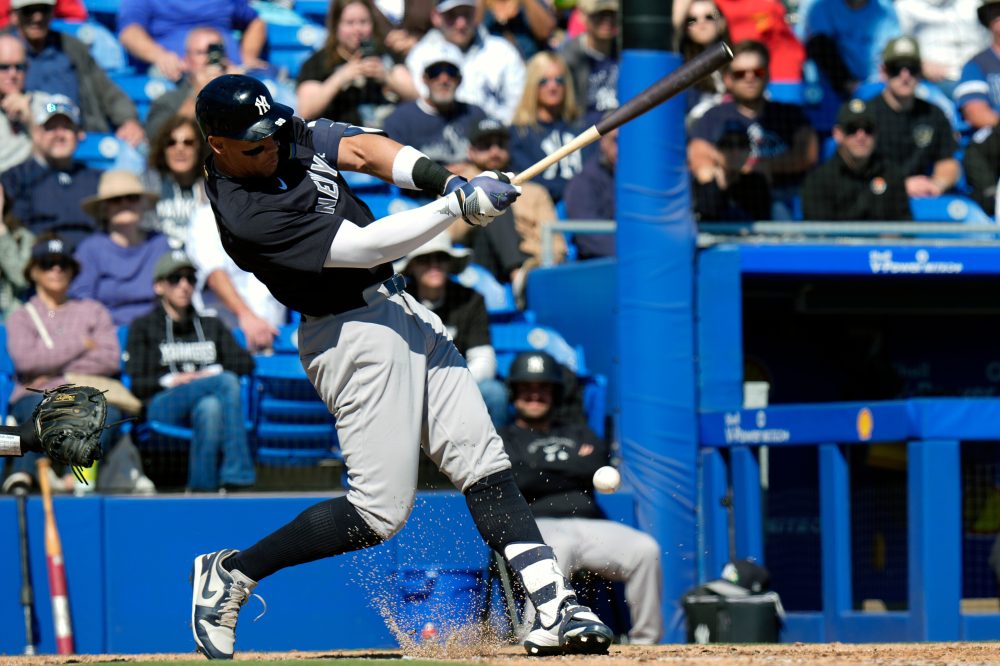
“I got a lot of respect for the umpires and what they do behind the plate,” New York Yankees slugger Aaron Judge said. “So I can usually pride myself in not showing them up or putting on a show or doing anything like that because they got a tough job back there. So we’ll see. I’ll find the right time to use it. If they’re pretty outrageous calls, I think I’ll use it.”
Judge, who stands 6-foot-7 and captured his third American League MVP trophy last season, appeared even more enthusiastic about how the system might help his 6-5 teammate Giancarlo Stanton.
“His whole career has been kind of getting screwed over. And also now, this kind of changes everything,” Judge said. “He’s so routine oriented to where you get a bad call, you get a good call, whatever, it’s kind of about flushing to get to the next pitch. Well, now you got 2 seconds to try to make up your mind.”
The dimensions of strike zones change based on each player’s stature — with the upper boundary set at 53.5% of a batter’s height and the lower edge at 27% of their height. For baseball’s tallest athletes — including 6-7 center fielder Oneil Cruz from the Pittsburgh Pirates and 6-6 left fielder James Wood of the Washington Nationals — these upper and lower boundaries have historically presented challenges for umpires to judge accurately.
However, the ABS technology offers the chance for more precise evaluation.
Teams will be allowed to dispute two decisions per contest. Successfully challenging a call allows a team to keep its challenge opportunity, following similar rules to video replay reviews. Teams that exhaust their challenges in games extending beyond nine innings will receive one additional challenge for each extra frame.
Challenge requests can only come from batters, pitchers or catchers, who signal by tapping their helmet or cap, and dugout assistance is prohibited.
“Specifically with Aaron Judge, I think like his zone I think is higher than most, right? Because he’s taller,” Chicago Cubs catcher Carson Kelly said. “So you might catch one at the knees that feels like a normal strike, but it’s low on him. So I think it’s another aspect of catchers is we’re going to have to understand who’s at the plate, what the zone is like. I mean, if it’s a smaller zone, that ball that might feel like it’s a strike at the top, it’s probably a ball.”
Eldridge, the 21-year-old who experienced ABS during his minor league career, believes the technology benefits the sport.
“I had a situation last year where we were in the ninth and we were down by two, I want to say, and I struck out looking,” Eldridge said. “I challenged it. It was a ball, and I hit a home run like the next pitch or something to tie it. The game can change just like that with this, so it’s pretty cool.”