
KYIV, Ukraine — Two very different personalities have collided at the center of Ukraine’s latest political storm, exposing deep divisions within the country’s military and government leadership.
On one side stands a 35-year-old former tech entrepreneur with no military background who became Ukraine’s youngest-ever defense minister just six months ago. On the other is a 60-year-old general shaped by Soviet military tradition who has commanded Ukraine’s armed forces through some of the war’s most pivotal moments.
When their visions for how to fight Russia’s four-year-old invasion came into direct conflict, President Volodymyr Zelenskyy stepped in — and chose to remove the younger man, Defense Minister Mykhailo Fedorov. The decision triggered protests across Ukraine.
Fedorov built his reputation by pushing Ukraine’s drone program into the modern era and overhauling military procurement rules to combat corruption. He argued that the traditional military establishment was standing in the way of changes the evolving war demanded.
As a former tech entrepreneur, Fedorov championed innovative drone technology that has recently reshaped battlefield conditions and drawn attention from countries including the United States, as well as nations in Europe and the Middle East.
After losing his position last week in Zelenskyy’s government overhaul, Fedorov took to social media with a pointed statement: “We transformed Ukraine into a global tech leader and a defense powerhouse.”
He also claimed credit for cutting off Russian military access to Elon Musk’s Starlink satellite internet services. Before taking the defense ministry post in January, Fedorov had led Ukraine’s digital transformation efforts and launched widely praised e-government platforms.
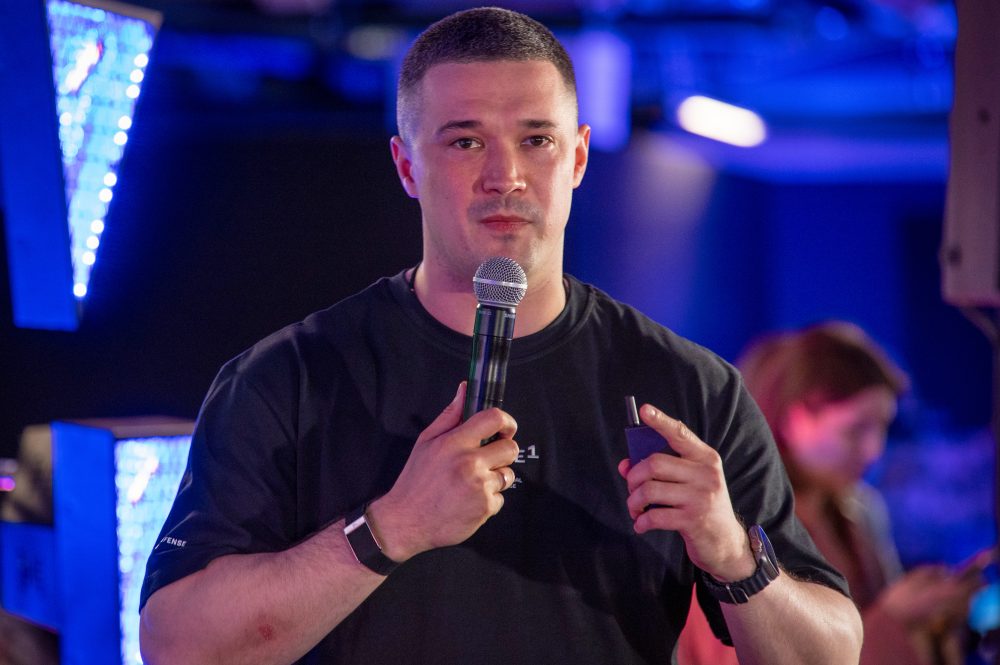
Following his removal, Fedorov publicly blamed Gen. Oleksandr Syrskyi — the commander of Ukraine’s armed forces — for obstructing military reforms and clinging to outdated command structures. At a news conference, dressed in a dark T-shirt and jeans, Fedorov charged that Syrskyi was blocking changes urgently needed because “the war has changed completely” due to advances in technology.
That criticism struck a chord with soldiers and veterans who had long complained about heavy casualties resulting from costly frontal assaults.
Protesters who took to the streets framed Fedorov’s ouster as evidence that Zelenskyy had sided with an entrenched military old guard over a forward-thinking reformer.
Syrskyi, born when Ukraine was still part of the Soviet Union, trained at Moscow Higher Military Command School and served in the Soviet Artillery Corps. He has long been identified with a top-down, Soviet-style approach to military command.
Despite criticism, Syrskyi’s record includes some of Ukraine’s most significant battlefield successes. He oversaw the defense of Kyiv in the early weeks of the Russian invasion in February 2022, and seven months later directed the counteroffensive in the Kharkiv region — one of the most consequential Ukrainian victories of the war.
In a column published Monday in the Ukrainian military outlet Militarnyi, Syrskyi pushed back against the attacks on his leadership. “I’m not fighting the (defense) ministry. I’m fighting Russia,” he wrote.
He added: “The General Staff has never opposed the ministry — we have cooperated and will keep cooperating with whichever minister the state appoints. Because in the army, you don’t get to choose who you serve with. In the army, you follow orders and do your job.”
Within military circles, Syrskyi carries the nickname “Butcher,” a label that gained wider recognition during his command of the defense of Bakhmut — one of the war’s longest and deadliest battles, which claimed tens of thousands of lives.
His standing suffered another blow after the Ukrainian outlet Babel published an investigation last month detailing allegations of abuse within the Skelia assault regiment, a unit closely linked to Syrskyi. The unit reportedly suffered higher-than-average losses, and the investigation documented dozens of deaths among recruits.
The backlash from Fedorov’s removal reached deep into the military. The air force’s deputy commander resigned, warning that the turmoil would weaken Ukraine’s air defenses. Veterans and off-duty soldiers joined the street protests, with many demonstrators calling for a new generation of military leaders who would place greater value on preserving soldiers’ lives.
The political stakes are significant for Zelenskyy. The uproar left him vulnerable to accusations that the dismissal was motivated by a desire to eliminate a potential political rival rather than military necessity. The episode has threatened to erode his authority at a critical moment in the war.
In Russia, war bloggers reacted to Fedorov’s removal with satisfaction, noting his central role in orchestrating long-range drone strikes on oil facilities — attacks that have triggered a fuel crisis — as well as midrange strikes that disrupted Russian military logistics. Some Russian commentators acknowledged, with reluctant respect, that Syrskyi has constructed a series of defensive lines that have slowed Russian advances. Many in Moscow expressed hope that the political infighting would weaken Ukraine’s overall war effort.