
LIVIGNO, Italy — Team USA made Olympic history on Saturday by shattering its previous Winter Games gold medal record, claiming their 11th victory with the possibility of adding another when the men’s hockey squad faces Canada in Sunday’s championship match.
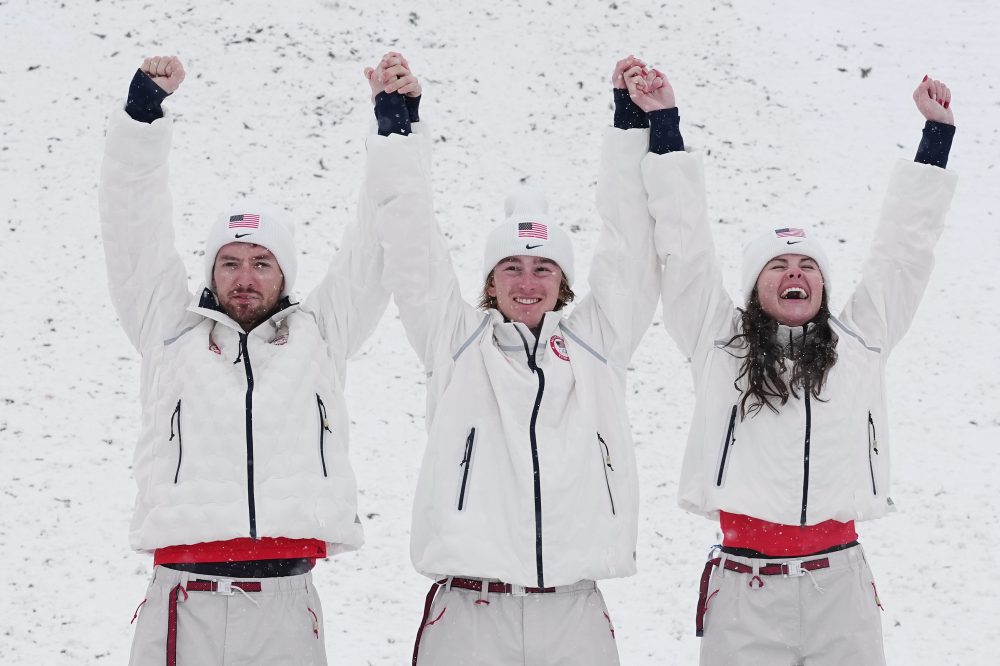
The record-setting achievement came courtesy of athletes Kaila Kuhn, Connor Curran, and Chris Lillis, who secured America’s second consecutive mixed aerials championship to push the country past its previous best performance.
Saturday’s triumph surpassed the previous benchmark of 10 gold medals established during the 2002 Salt Lake City Olympics, which marked a pivotal moment for America’s winter sports program after years of underwhelming results.
Officials believe this Games could represent another watershed moment, not merely due to medal totals but because of the diverse range of disciplines contributing to success. American athletes earned medals across 12 of the 17 winter sports categories featured in these Olympics.
“Our focus and our strategy has always been about breadth,” said Sarah Hirshland, the CEO of the U.S. Olympic and Paralympic Committee. “We want to win in everything. We want to make every sport better. Some could argue there are countries that go a mile deep in certain sports and really dominate. Our goal has been to improve Winter sport across the board.”
Following the aerials victory and Mia Manganello’s bronze medal performance in speedskating later Saturday, the American delegation reached 31 total medals with competition still remaining.
Norway currently leads the overall standings with a record-breaking 18 golds among 40 total medals through Saturday evening. Nearly three-quarters of Norway’s gold medals originated from endurance disciplines including cross country skiing, biathlon, and Nordic combined events. America’s strongest gold medal performances came evenly distributed across Alpine skiing, freestyle skiing, figure skating, and speedskating, with two victories apiece representing 18% of the total haul.
The current Olympic program features 38 additional medal opportunities compared to the 2002 Games. Many new events center around snowpark competitions including halfpipe, slopestyle, and big air disciplines that previously favored American athletes but now see Japanese dominance, as evidenced by Japan’s nine snowboarding medals versus just two for the United States.
“We stated we wanted to be a podium nation,” Fin Kirwan, the USOPC’s chief of Olympic sport, said of the U.S. goal of being top-three on the medals table. “We said it will likely take 30 medals and we got after it. The athletes delivered on their potential and, by turn, we hit the record on gold-medal performance, which shows that our very best were able to execute.”
The American gold medal collection spans multiple inspiring stories: a halfpipe skier completing his Olympic medal set while maintaining his “Hotdog Hans” streaming persona, an athlete overcoming a knee injury on the same mountain where she claimed victory, a moguls specialist nicknamed “Lizard” continuing America’s tradition in the sport, a 20-year-old figure skater who rediscovered her passion after stepping away, a 41-year-old becoming the oldest Winter Olympic gold medalist at her sixth Games, skiing’s most decorated athlete finally capturing Olympic slalom gold, a speedskater joining Eric Heiden as only the second American man to win both 500 and 1,000-meter events, a figure skating team earning consecutive gold after navigating previous doping controversies, and a dramatic women’s hockey final featuring Hilary Knight’s late equalizer and Megan Keller’s overtime winner.