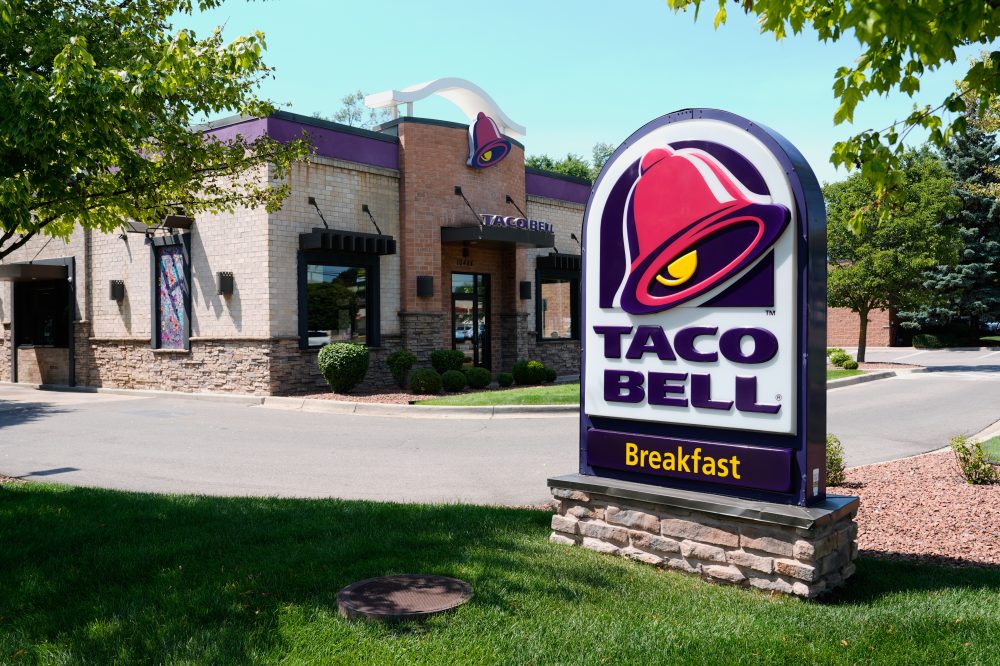

Federal health officials have pinpointed shredded iceberg lettuce imported from Mexico and served at Taco Bell restaurants as the origin of a large-scale outbreak of cyclospora, a parasite that causes severe diarrhea.
The Centers for Disease Control and Prevention announced late Thursday that consumers should avoid shredded iceberg lettuce at Taco Bell locations operating in Indiana, Kentucky, Michigan, Ohio, and West Virginia.
An investigation by the Food and Drug Administration traced the contaminated lettuce back to a single supplier, though federal authorities have not publicly named that company.
“FDA is working with the supplier of iceberg lettuce to determine if potentially contaminated shredded iceberg lettuce remains on the market,” the CDC stated, adding that the agency is also looking into whether the lettuce may have reached additional states. The CDC further noted that “Taco Bell has committed to stop using any lettuce from the supplier identified by FDA’s traceback investigation.”
Prior to the federal government’s official confirmation, Taco Bell released a statement on Tuesday saying the chain had “voluntarily and temporarily removed limited ingredients at select restaurants as a precautionary measure,” pledging to monitor the situation and follow guidance from public health authorities.
Health agencies at both the federal and state levels have been jointly investigating this multi-state cyclospora outbreak. Infections have been reported in more than 30 states this year, and current figures already exceed the previous U.S. record of roughly 4,700 cases set in 2019.
Cyclospora is a tiny, round parasite that attacks the intestines and is known to cause watery diarrhea with, according to the CDC, “frequent and sometimes explosive bowel movements.” Outbreaks most commonly occur during late spring and summer months. The parasite spreads through feces and has historically been linked to fruits and vegetables exposed to irrigation water contaminated with fecal matter.
The illness resulting from cyclospora infection, known as cyclosporiasis, is less frequently encountered than foodborne illnesses caused by germs like salmonella or E. coli. It is not typically life-threatening and can usually be treated with antibiotics. For many years, few U.S. outbreaks were reported, but case numbers began climbing about a decade ago, with a particularly sharp increase in 2018 and 2019.
Health experts believe cyclospora infections were historically undercounted, partly because standard food poisoning tests were not designed to detect this specific parasite. Researchers point to climate change and improved detection methods as key factors driving the upward trend in reported cases.