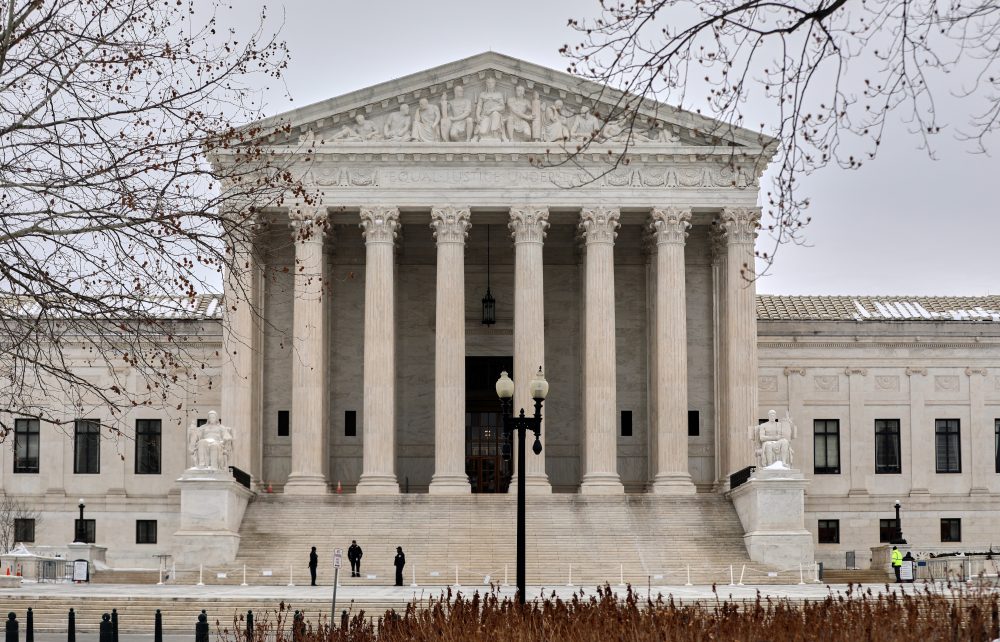

WASHINGTON — Despite the Supreme Court’s rejection of President Trump’s global tariff program, the administration maintains several pathways to continue imposing aggressive import taxes on foreign goods.
The high court rejected Trump’s broad assertions of emergency authority to levy tariffs on virtually every nation worldwide. However, the president can still utilize tariff mechanisms from his previous administration and tap into additional powers, including legislation dating to the Great Depression era.
“It’s hard to see any pathway here where tariffs end,” Georgetown trade law professor Kathleen Claussen explained. “I am pretty convinced he could rebuild the tariff landscape he has now using other authorities.”
Trump had asserted extensive authority to impose tariffs through the 1977 International Emergency Economic Powers Act. However, challengers successfully argued to the Supreme Court that such emergency powers were unnecessary since Congress had already provided the executive branch with tariff authority through multiple other laws, albeit with specific limitations on presidential use.
Import taxes have served as a fundamental element of Trump’s international and economic strategy during his second presidency, featuring substantial “reciprocal” tariffs on most nations. The administration has defended these measures by declaring America’s persistent trade deficits a national emergency.
Yale University’s Budget Lab calculations show average U.S. tariff rates have surged from 2.5% when Trump resumed office in January to approximately 17% one year later — the steepest level since 1934.
The president implemented these measures unilaterally, despite the Constitution explicitly granting taxation and tariff powers to Congress.
One powerful tool available to the United States targets countries accused of “unjustifiable,” “unreasonable” or “discriminatory” trade practices through Section 301 of the Trade Act of 1974.
Trump utilized this authority extensively during his first term, particularly targeting China. He invoked Section 301 to implement comprehensive tariffs on Chinese goods amid disputes over Beijing’s aggressive tactics to challenge American technological leadership. The U.S. continues employing these powers to address what officials characterize as unfair Chinese shipbuilding industry practices.
Section 301 tariffs face no size restrictions and last four years with possible extensions. However, the trade representative must complete an investigation and typically conduct public hearings before implementation.
While experts consider Section 301 effective against China, it presents challenges when addressing smaller nations that Trump targeted with reciprocal tariffs.
“Undertaking dozens and dozens of 301 investigations of all of those countries is a laborious process,” noted trade expert Veroneau.
When the U.S. Court of International Trade invalidated Trump’s reciprocal tariffs in May, judges determined the president couldn’t invoke emergency powers to address trade deficits.
This ruling partly reflected Congress’s specific grant of limited authority to address trade imbalances through Section 122 of the Trade Act of 1974. This provision permits presidential imposition of tariffs up to 15% for maximum 150 days responding to unbalanced trade, without requiring preliminary investigations.
However, Section 122 authority has never been implemented for tariff purposes, creating uncertainty about its practical application.
Throughout both terms, Trump has aggressively exercised Section 232 authority from the Trade Expansion Act of 1962 to impose tariffs on imports deemed national security threats.
In 2018, he implemented tariffs on foreign steel and aluminum, expanding these measures since returning to office. He also applied Section 232 tariffs to automobiles, auto parts, copper, and lumber.
Last September, the president extended Section 232 tariffs to kitchen cabinets, bathroom vanities, and upholstered furniture.
While Section 232 tariffs lack legal limitations, they require Commerce Department investigations. Since the administration conducts its own investigations — similar to Section 301 cases — “they have a lot of control over the outcome,” Veroneau observed.
Nearly a century ago, during the collapse of U.S. and global economies, Congress enacted the Tariff Act of 1930, imposing substantial import taxes. These Smoot-Hawley tariffs, named for their congressional sponsors, have faced widespread criticism from economists and historians for restricting international commerce and worsening the Great Depression. They also received memorable recognition in the 1986 film “Ferris Bueller’s Day Off.”
Section 338 of this legislation authorizes presidential imposition of tariffs up to 50% on imports from countries discriminating against U.S. businesses. No investigation is necessary, and no time limits exist for these tariffs.
These tariffs have never been implemented — U.S. trade negotiators historically preferred Section 301 sanctions — though the United States employed their threat as leverage during 1930s trade negotiations.
Last September, Treasury Secretary Scott Bessent informed Reuters that the administration was evaluating Section 338 as an alternative if the Supreme Court rejected Trump’s emergency powers tariff approach.