
Across the United States, state governments are pushing back against the powerful companies that manage prescription drug benefits for health insurers, hoping to drive down the cost of medications for everyday Americans.
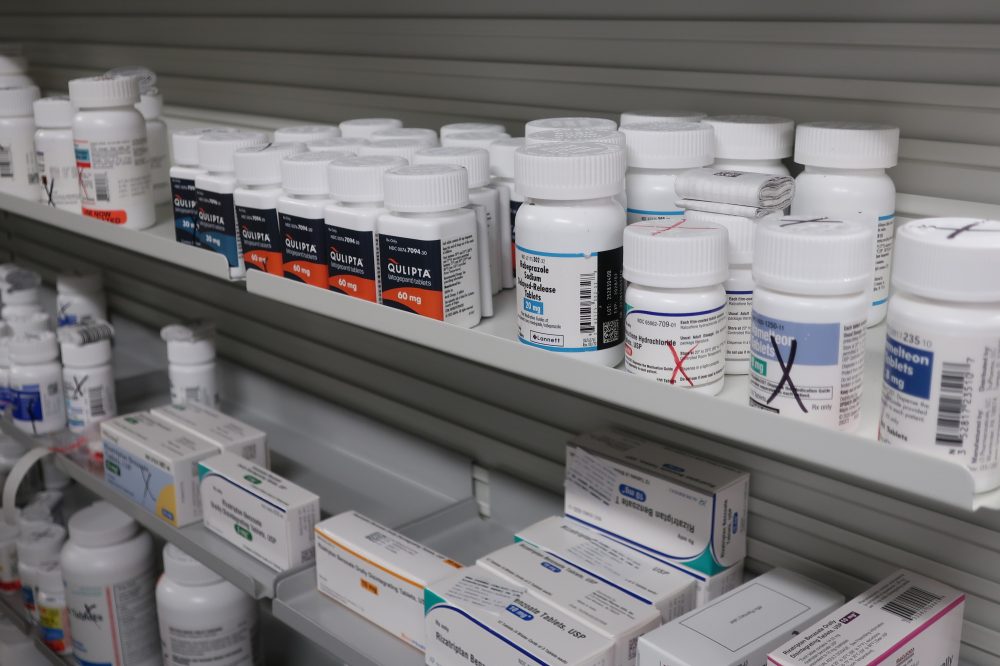
These companies, known as pharmacy benefit managers, or PBMs, play a major role in determining what drugs are covered and how much pharmacies get paid. Some of them also own their own pharmacies — and at least one of those companies has poured millions of dollars into fighting new state regulations.
With drug affordability shaping up as a major issue heading into this year’s midterm elections, lawmakers in at least a dozen states passed new laws this year designed to limit how much these companies can earn, set minimum payment amounts to pharmacists, and force the companies to be more transparent with clients, state governments, and the public.
A new law in Tennessee will prohibit pharmacy benefit managers from also running retail pharmacies, effective July 1, 2028. CVS Health Corp. has responded by filing a federal lawsuit, seeking to avoid being forced to shut down its 136 pharmacies in that state.
The financial pressure on patients is real. A poll conducted earlier this year by KFF, a nonprofit focused on healthcare research, found that roughly 6 in 10 American adults were at least somewhat worried about being able to pay for their prescriptions. About 4 in 10 said that cost concerns had caused them to deviate from their prescribed medications in the past year — whether by taking smaller doses, buying over-the-counter alternatives, or skipping refills altogether.
CVS and two other large pharmacy benefit managers handle the vast majority of prescription drug claims in the United States.
Lawmakers in at least 26 states introduced more than 120 bills this year targeting PBMs, according to an Associated Press review using the bill-tracking software Plural. About a quarter of those bills advanced through at least one legislative chamber.
These companies manage pharmacy claims on behalf of health insurers and negotiate with drug manufacturers over pricing and coverage decisions. Even critics acknowledge that the sheer size of the largest PBMs gives them bargaining power that individual health plans simply couldn’t match on their own.
The PBMs themselves argue that they are the only part of the drug supply chain specifically designed to push costs lower, and they point to the widespread use of generic drugs — now accounting for 90% of U.S. prescriptions — as evidence of their impact.
Prem Shaw, president of the CVS Health division that oversees its pharmacy and PBM operations, defended the industry in a recent interview: “If PBMs already didn’t exist, you’d need to invent one. Blaming PBMs for high drug prices is like blaming umbrellas for the rain.”
Drug companies, PBMs, and their allies have collectively spent at least $24 million on broadcast and digital advertising since the beginning of 2025 to shape public opinion on the issue, according to the ad-tracking firm AdImpact. CVS alone spent $4 million this year on ads opposing Tennessee’s new law.
CVS also sued Arkansas last year after that state passed similar legislation, and a federal judge blocked that law from taking effect. Additionally, CVS settled three lawsuits brought by Louisiana accusing the company of unfair trade practices and deceptive conduct in its lobbying efforts against legislation there last year. CVS agreed to pay $45 million in that settlement without admitting any wrongdoing.
In its Tennessee lawsuit, CVS — which operates 9,000 pharmacies across the country — claims the law amounts to “naked protectionism” by lawmakers who themselves own independent pharmacies, including the bill’s lead sponsor, state Sen. Bobby Harshbarger, and co-sponsor Sen. Shane Reeves.
In Knoxville, a CVS pharmacy manager named Seth White faces the prospect of losing his job if the Tennessee law survives legal challenges. He also expressed concern about the hundreds of customers who would need to find a new place to fill their prescriptions.
Nearly 900 miles away in Coldwater, Kansas, Lisa Gales and her husband run the Main Street Pharmacy — and she sees things very differently. Gales said she depends heavily on sales of non-pharmacy products to make up for the low reimbursements she receives from pharmacy benefit managers. By her own calculations, she lost money on 86% of the prescriptions she filled last year.
A new Kansas law will require PBMs to pay a $10.50 dispensing fee per prescription. Gales called it a “great win,” though she added, “It’s still way under what it’s costing us.”
Louisiana has enacted a similar measure, setting an $11.81 dispensing fee per prescription. A separate Louisiana law requires PBMs to act in the best interests of the health insurers they serve and the patients enrolled in those plans.
Opponents of these mandatory fees call them an added “pill tax” that will ultimately raise costs for consumers. Supporters push back, arguing the laws also cap what PBMs can charge health plans for the medications themselves — often keeping those prices well below wholesale.
PBMs negotiate significant discounts from drug manufacturers, but have faced criticism for pocketing a portion of those savings rather than passing them on. Some states are now requiring that all such discounts be forwarded directly to health plans and patients.
The ongoing squeeze on independent pharmacies worries consumers in smaller communities, who fear they could lose access to local pharmacies if reimbursement rates become too low to keep those businesses open.
In southeastern Kansas, 79-year-old retired nursing home administrator Faith Sanders said the pharmacy in her hometown of Cedar Vale is essential — without it, residents would need to drive 35 miles to find another option. “We get to the point where it’s hard for us to get out of town,” she said, speaking of her elderly neighbors.
Even some critics of PBMs have questioned whether states are the right level of government to address the problem. During a Tennessee legislative debate, state Rep. Robert Stevens, a Republican from the Nashville area, told his colleagues that regulating PBMs “needs to be done by Congress and not by us.”
Congress did take action in February, passing new PBM regulations that include a provision preventing these companies from keeping any rebates they negotiate on drug prices for health plans that supplement federal Medicare coverage for Americans over the age of 64.