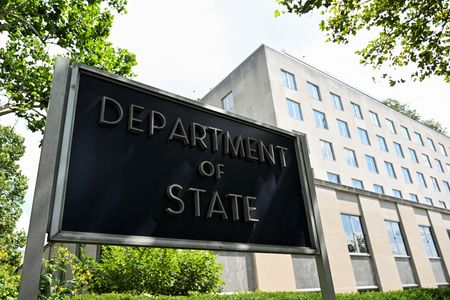

The United States has evacuated dozens of diplomatic personnel from its embassy in Lebanon as tensions with Iran continue to escalate, raising fears of potential military confrontation in the region.
A high-ranking State Department official announced Monday that non-essential government workers and their eligible family members have been withdrawn from the Beirut facility as a precautionary measure.
“We continuously assess the security environment, and based on our latest review, we determined it prudent to reduce our footprint to essential personnel,” the official told reporters while requesting anonymity.
The official emphasized that operations will continue with skeleton staffing. “The Embassy remains operational with core staff in place. This is a temporary measure intended to ensure the safety of our personnel while maintaining our ability to operate and assist U.S. citizens,” they explained.
Sources indicate approximately 50 individuals were evacuated, with airport officials in Beirut confirming that 32 embassy employees and their family members departed on flights Monday.
This diplomatic pullback comes as the United States has assembled one of its largest military presences in the Middle East in recent years. President Trump issued stern warnings last Thursday, stating that “really bad things will happen” without progress on resolving the ongoing nuclear dispute with Tehran. Iranian officials have countered with threats to target American military installations throughout the region if attacked.
Internal State Department communications obtained by news outlets detailed instructions for remaining staff, advising those in critical roles to coordinate coverage arrangements and consult with regional offices before considering departure.
The State Department also revised its Lebanon travel guidance Monday, maintaining its recommendation against all travel to the country. Current embassy staff face restrictions on personal travel and may encounter additional limitations “with little to no notice due to increased security issues or threats,” according to the updated advisory.
Lebanon holds particular significance for American security concerns, as U.S. interests faced repeated attacks during the country’s 1975-90 civil conflict. The Iran-supported Hezbollah organization was blamed for devastating strikes, including the 1983 bombing of Marine barracks that claimed 241 American lives and a separate embassy attack that same year killing 49 diplomatic personnel.
Despite rising tensions, diplomatic efforts continue. Secretary of State Marco Rubio maintains plans to visit Israel this Saturday for discussions with Prime Minister Benjamin Netanyahu, though officials note scheduling could change based on developments.
The nuclear standoff remains at the heart of U.S.-Iran relations, with Washington demanding Tehran abandon its atomic program while Iran maintains its activities are peaceful and refuses to halt enrichment operations. American officials view Iran’s uranium enrichment as a potential route to weapons development.
Iranian Foreign Minister Abbas Araqchi expressed cautious optimism Sunday, confirming plans to meet with Trump’s special representative Steve Witkoff in Geneva Thursday. Araqchi suggested “a good chance” exists for diplomatic resolution.
However, significant disagreements persist between the nations, particularly regarding sanctions relief timing and scope, following two previous negotiation rounds. A senior Iranian source indicated both sides remain far apart on key issues.
Recent reporting suggests the situation is deteriorating rapidly, with diplomatic sources across the Gulf and Europe warning that military conflict appears increasingly likely as peaceful solutions seem less achievable.
Witkoff commented Sunday that President Trump questions why Iran has not yet “capitulated” and agreed to nuclear program restrictions.
Any potential military action would mark the second time within twelve months that U.S. and Israeli forces have struck Iranian targets, following coordinated attacks on military and nuclear sites last June.