
Our planet faces a continuous bombardment from outer space. Countless space rocks race toward Earth daily, crashing into our atmosphere and frequently bursting into brilliant fireballs that captivate and sometimes worry observers.
Fortunately, nearly all of these cosmic visitors pose no threat as they get crushed into tiny particles or small pieces during their atmospheric journey.
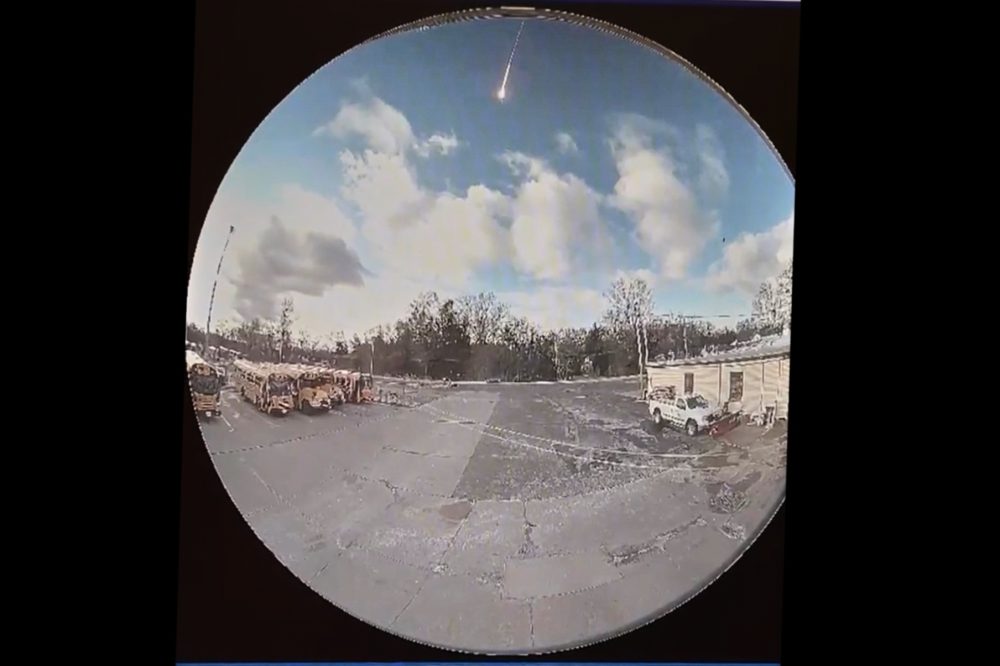
This week, a spectacular fireball blazed across Cleveland’s sky, created by what scientists believe was a space rock measuring approximately 6 feet (1.8 meters) wide and weighing 7 tons. Witnesses spotted the event from Wisconsin all the way to Maryland, the American Meteor Society reported.
The object journeyed over 34 miles (55 kilometers) through Earth’s upper atmosphere before fragmenting, NASA confirmed. Researchers have not yet located any remaining pieces.
While this event seemed extraordinary, such occurrences happen with remarkable frequency. Here’s what you should understand:
Space rocks called asteroids are remnants of ice, metal, and stone left behind when our solar system formed 4.6 billion years ago. Meteoroids are smaller pieces broken off from larger space objects like asteroids or comets. When these objects burn up in our atmosphere, they create the bright streaks we call meteors. When a meteor shines brighter than Venus appears in dawn or dusk skies, scientists classify it as a fireball. Any fragments that reach the ground become meteorites.
Bright streaks from meteoroids appear frequently overhead, and during special periods known as meteor showers, observers can spot them every few minutes on clear nights. NASA considers the Perseids meteor shower, occurring each year in mid-August, the finest display of all.
According to the meteor society, “several thousand” meteors bright enough to qualify as fireballs enter Earth’s atmosphere daily. The challenge is that most appear over oceans or uninhabited areas, or daylight makes them impossible to detect.
Nevertheless, many people do witness these events. The American Meteor Society and International Meteor Organization encourage observers to report sightings for scientific investigation. Through 2026 so far, 10 fireballs have generated over 100 witness reports each, averaging almost one weekly.
These space objects race through the vacuum at tremendous velocities, ranging from 25,000 mph (40,233 kph) up to 160,000 mph (257,495 kph). Upon suddenly encountering Earth’s atmospheric gases, they experience extreme stress while compressing air ahead of them, heating the objects until they begin melting and fragmenting.