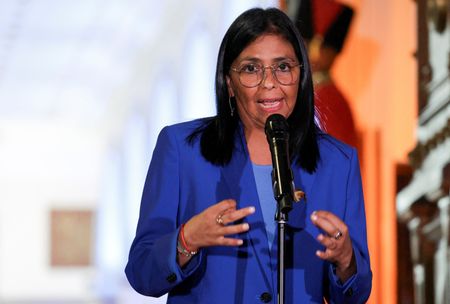

MADRID – Spain’s top diplomat called on the European Union Friday to remove sanctions targeting Venezuela’s interim president, Delcy Rodriguez, following the South American nation’s passage of a prisoner amnesty measure.
Rodriguez assumed leadership last month following the U.S.-backed removal of President Nicolas Maduro. Since taking power, she has complied with Trump administration oil policy requirements and freed hundreds of individuals that human rights organizations consider political detainees, working toward improved U.S.-Venezuela relations.
Spanish Foreign Minister Jose Manuel Albares argued the EU should “send a signal that (Venezuela) is heading down the right path in this new phase.”
“Sanctions are never an end in themselves. They are a means to achieve ends so that this broad, peaceful and democratic dialogue can take place,” Albares told reporters in Barcelona.
When asked about Spain’s request later Friday, EU Commission spokesperson Anouar El Anouni avoided directly responding to Madrid’s suggestion, stating: “We do stand ready to use every tool at our disposal in our toolbox to support a transition towards democracy in Venezuela.”
The European Union first implemented various sanctions against Venezuela in 2017, including restrictions on arms sales and surveillance technology, after regional voting processes the bloc deemed flawed and irregular.
The following year, the EU expanded its punitive measures to include economic sanctions against 11 high-ranking Venezuelan officials, including Rodriguez, who served as Maduro’s vice president. The bloc cited their role in human rights abuses and efforts to weaken democratic institutions and legal frameworks.
Human rights advocates argue the amnesty legislation passed unanimously Thursday by Venezuela’s ruling party-dominated parliament doesn’t provide adequate relief for the hundreds of political prisoners still detained. Venezuelan authorities have consistently rejected claims they hold political prisoners, maintaining that all incarcerated individuals have been convicted of criminal offenses.