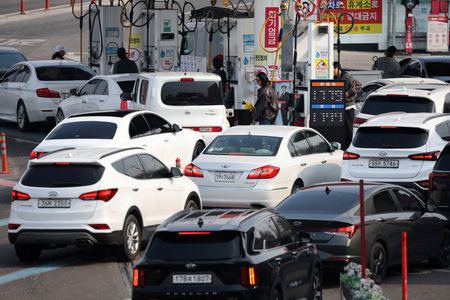

Officials in South Korea are evaluating whether to implement widespread driving limitations for all citizens as global crude oil costs continue climbing due to Middle East conflicts involving the U.S., Israel, and Iran.
Finance Minister Koo Yun-cheol announced Sunday that the government might broaden current vehicle usage restrictions beyond government agencies if oil prices reach approximately $120-130 per barrel, compared to today’s $100-110 range.
Such widespread restrictions would represent the nation’s first comprehensive driving limitations since 1991’s Gulf War, when officials implemented a 10-day vehicle rotation program to preserve energy resources.
“If the Middle East situation worsens, the crisis alert would have to move up to the ‘warning’ stage, and around that point we would need to curb consumption,” Koo stated during a local television appearance, describing a potential escalation to the third level of the nation’s four-tier resource security warning system.
The finance minister also indicated officials might pursue additional fuel tax reductions to help households manage rising costs.
Monday’s statement from the finance ministry clarified that mandatory vehicle restrictions for private citizens haven’t been finalized, noting that officials will evaluate energy supply situations and economic conditions before making decisions.
The nation relies on Middle East imports for approximately 70% of its crude oil supply, creating significant vulnerability to regional supply interruptions and price fluctuations from area conflicts.
Last week, officials implemented mandatory five-day vehicle rotation requirements for government agencies, limiting vehicle usage according to license plate numbers.
Energy Minister Kim Sung-whan stated Thursday that officials are examining stricter demand control policies if warning levels increase further, potentially expanding driving restriction enforcement while encouraging voluntary corporate and financial sector participation.
Large corporations including Samsung Electronics and SK Group have supported these initiatives, encouraging workers to reduce personal vehicle usage and implement fuel conservation practices.
Political leaders and legislators have utilized social media platforms to demonstrate public transportation and bicycle usage, encouraging citizens to participate in energy conservation initiatives.