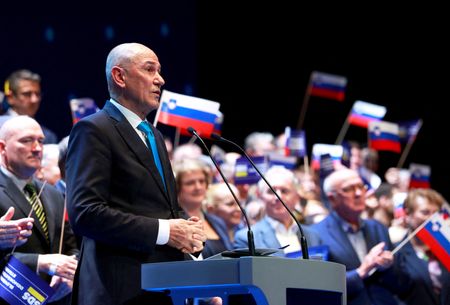

Slovenia’s citizens head to the polls Sunday for a parliamentary election that will determine whether liberal Prime Minister Robert Golob retains power or loses to populist challenger Janez Jansa, a Trump supporter, following a contentious campaign shadowed by claims of international interference and corruption allegations.
Polling data shows conflicting results, but political experts anticipate a close contest between Jansa’s Slovene Democratic Party (SDS) and Golob’s Freedom Movement (GS). Neither party appears positioned to secure a majority in the 90-member parliament, meaning smaller coalition allies may ultimately decide the winner.
The election results will shape both domestic and international policy directions for this European Union and NATO member nation of 2 million citizens, which declared independence from Yugoslavia in 1991.
During Golob’s leadership, Slovenia became among the rare European nations to acknowledge Palestinian statehood and implemented an arms embargo against Israel during its Gaza military operations last year. These positions would likely reverse under Jansa, the former prime minister who supports Israel and maintains close ties with Hungary’s longtime nationalist leader Viktor Orban.
Jansa has pledged to completely restructure Golob’s domestic policies by implementing business tax reductions while slashing government support for civil society organizations, social programs and media outlets.
“These are … perhaps the most important elections ever in Slovenia because they will decide if Slovenia remains a democratic welfare state or it aligns with illiberal democracies,” said Robert Botteri, a long-time editor at the Mladina weekly.
Slovenia’s strong industrial foundation helped it transition more successfully after Yugoslavia’s collapse compared to other former Yugoslav republics like Serbia or Bosnia, which struggled with warfare, economic penalties and political discord.
However, challenges persist. While Golob’s GS achieved an overwhelming victory in 2022, public support has declined partly due to voter perceptions that his administration failed to deliver promised improvements to public services, particularly healthcare.
The campaign intensified this month when anonymous online videos surfaced allegedly revealing government corruption, claims that Golob refutes.
Additionally, reports emerged this week suggesting Jansa held meetings with representatives from Israeli private intelligence company Black Cube, sparking concerns about foreign electoral interference. Jansa acknowledges meeting with a Black Cube consultant but denies any misconduct.
Golob indicated he has addressed these concerns with fellow European leaders.
French President Emmanuel Macron informed reporters Thursday that he was aware of what he characterized as “clear and documented interference, disinformation and meddling from third countries” before Slovenia’s election.
“Europeans must absolutely mobilise to protect our democracies from this kind of interference,” he said.
Throughout the campaign, Golob’s party and supporters have also reported incidents of dead animals being suspended from their campaign materials nationwide. Reuters could not verify the perpetrators of these acts.
“This has certainly been a dirty campaign,” said Tereza Novak, a GS lawmaker campaigning on the main square in the capital Ljubljana.
Miha Kovac, a university lecturer, expresses concern that the circulating allegations may discourage voter participation.
“At the end of the day nobody will believe anybody. There will be a huge erosion of trust in society,” he said.