
LOS ANGELES — A California ballot initiative targeting the state’s wealthiest residents is creating a political rift between prominent Democrats at a time when party unity is crucial for upcoming midterm elections.
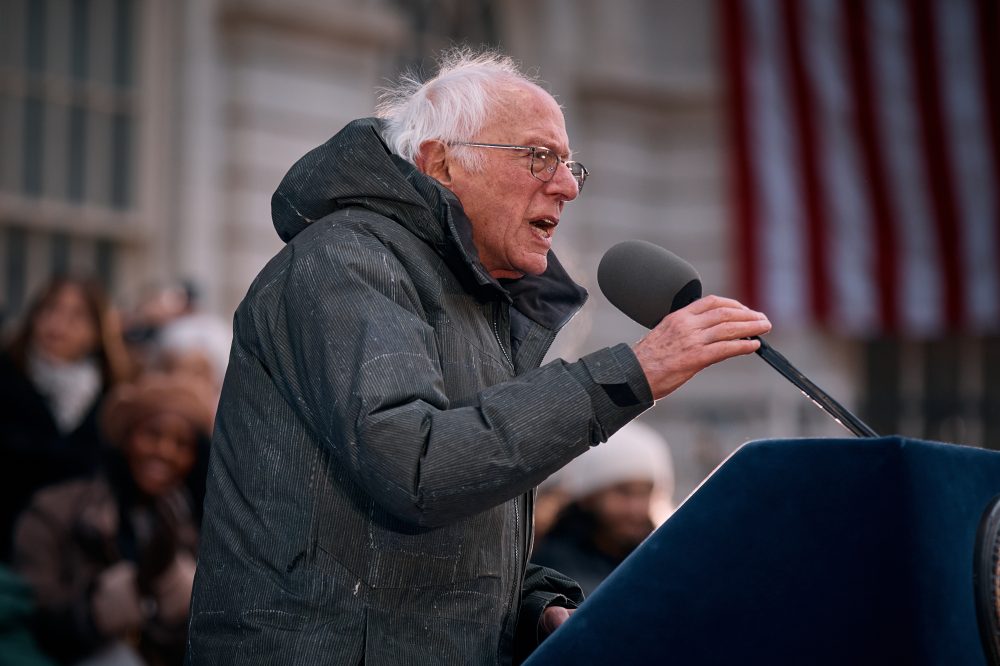
Vermont Senator Bernie Sanders is scheduled to hold a rally Wednesday afternoon in Los Angeles, advocating for a controversial tax measure that would impose a 5% levy on billionaire assets. The proposal has sparked fierce opposition from California’s tech industry, with some executives threatening to relocate if the measure passes.
Governor Gavin Newsom stands firmly against the initiative, expressing concerns that it could destabilize state revenues and damage California’s economic competitiveness on a national scale.
The progressive senator from Vermont, known for his democratic socialist views, has maintained strong support in California since winning the state’s 2020 Democratic presidential primary by a wide margin. Sanders has spent decades criticizing wealthy elites and highlighting income inequality.
A major healthcare union is spearheading efforts to get the November ballot measure approved, which would create a one-time 5% assessment on billionaire holdings including stocks, artwork, businesses, collectibles and intellectual property. Revenue would help replace federal healthcare funding for low-income residents that was eliminated under former President Trump’s administration.
Sanders expressed his backing for the tax on social media platform X, stating he “strongly supports” the measure “at a time of unprecedented and growing wealth and income inequality.”
“Our nation will not thrive when so few own so much,” Sanders wrote.
The debate emerges as Americans across party lines express anxiety about economic conditions and the country’s direction amid deep political divisions. Public skepticism toward government effectiveness remains high.
This disagreement has placed Newsom at odds with Sanders and other progressive Democrats, who view the California tax as a model for similar initiatives nationwide.
Brian Brokaw, a veteran Newsom advisor leading opposition efforts, argued the proposal wouldn’t address key Democratic priorities. “The issues that are really going to be motivating Democrats this year, affordability and the cost of health care and cuts to schools, none of these would be fixed by this proposal. If fact, they would be made worse,” Brokaw said.
Historical patterns show midterm elections typically favor the party not holding the presidency, with Democrats working to gain enough House seats to flip the chamber’s narrow Republican control. California’s newly drawn congressional districts could potentially deliver up to five additional Democratic seats, leaving the GOP with minimal representation.
University of California, Berkeley political science professor Eric Schickler noted the political challenges. “It is always better for a party to have the political debate focused on issues where you are united and the other party is divided,” Schickler explained. “Having an issue like this where Newsom and Sanders — among others — are on different sides is not ideal.”
However, Schickler acknowledged that billionaire taxation resonates with many voters, potentially helping Democratic candidates “rally that side and break through from the pack.”
The measure has already influenced gubernatorial and down-ballot races. Republican candidates Chad Bianco and Steve Hilton have criticized the tax as job-destroying, while Democratic San Jose Mayor Matt Mahan argues inequality issues should be addressed through federal tax code reforms.
Opposition groups are launching targeted digital campaigns and email outreach to influence party leaders, timing their efforts with Sanders’ visit and this weekend’s state Democratic convention.
Whether voters will see the proposal remains uncertain, as supporters must collect over 870,000 petition signatures to qualify for the ballot.
The campaign has already attracted substantial financial backing on both sides, with millions flowing into competing political committees.
Newsom has consistently opposed state wealth taxes, viewing them as harmful to California’s status as the world’s fourth-largest economy. Facing budget constraints and considering a potential 2028 presidential campaign, the governor is working to prevent the measure from reaching voters.
Policy experts warn that wealthy residents leaving the state could cost California hundreds of millions in tax revenue. Supporters counter that the funding is essential to maintain vital services that would otherwise be lost due to federal budget cuts.