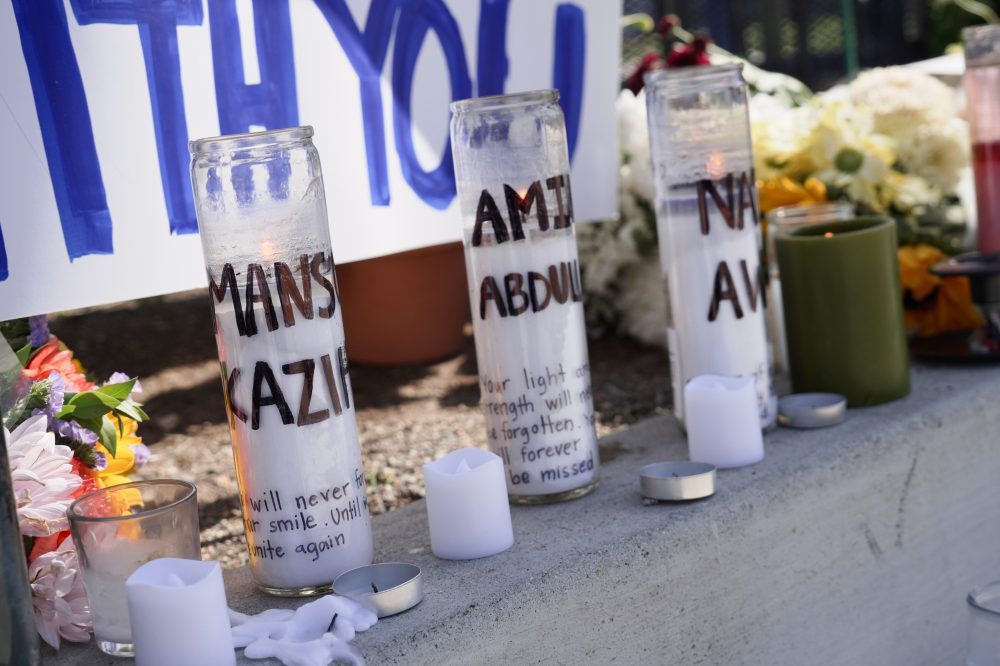

Court documents reveal that one of two teenagers responsible for a deadly San Diego mosque attack this week had previously drawn police attention for troubling conduct and Nazi worship, leading authorities to remove his family’s firearms a year prior to the violence.
Law enforcement officials conducting a wellness visit at Caleb Vazquez’s residence documented that he was “involved in suspicious behavior idolizing nazis and mass shooters,” and secured a judicial order on Jan. 29, 2025, to confiscate 26 firearms through a 2014 California statute permitting weapon removal from individuals deemed threatening.
According to an affidavit from Marco Vazquez, the teen’s father, the family had willingly given up the weapons several days before the court action.
Law enforcement officials report that Vazquez, 18, connected with Cain Clark, 17, through internet platforms where both became radicalized. Investigators have not released additional information about their relationship or identified which weapons were utilized in the attack.
On Monday, Cain Clark’s mother contacted police about missing weapons from their residence, initiating an extensive manhunt for the teenagers before they carried out the assault at the Islamic Center of San Diego and subsequently took their own lives, authorities stated.
Legal documents indicate Vazquez’s parents chose to “secure all sharp knives in the home” and turn over firearms previously stored in a locked gun safe after learning of unspecified serious accusations against their son. He had also been previously subjected to involuntary mental health hospitalization. The court papers, initially disclosed by The New York Times, did not detail the reason for his psychiatric admission.
In a Thursday statement, the Vazquez family revealed that Caleb Vazquez was diagnosed with autism and had developed resentment toward certain aspects of his identity, though they did not elaborate on specific challenges.
“Coming from a diverse family that not only includes immigrants but Muslims as well, we always taught the importance of acceptance, compassion, and love for one another. We are proud of the different backgrounds, cultures, ethnicities, and religions within our family and community,” their statement said.
“We believe this, combined with exposure to hateful rhetoric, extremist content, and propaganda spread across parts of the internet, social media, and other online platforms, contributed to his descent into radicalized ideologies and violent beliefs,” said their statement, released through their attorney Colin Rudolph.
The family encouraged him to pursue treatment and he attended rehabilitation facilities, according to their statement. Vazquez’s parents did not respond immediately to Associated Press interview requests. Legal counsel who represented Vazquez’s parents during the weapon confiscation also did not return calls.
Written materials from Vazquez and Clark containing white supremacist ideology showed Vazquez describing “some mental health issues” and romantic rejection. The documents indicate both teenagers admired previous attackers who died during mass shooting incidents. Their writings displayed animosity toward Jewish people, Muslims, Black people and various other communities.
Vazquez departed San Diego Unified School District in June 2018 following attendance at Washington Elementary through fifth grade, district spokesperson James Canning informed The Associated Press. His subsequent educational placement remains unknown.
Clark was registered in a virtual high school within the district, Canning confirmed.
The search for the teenagers began Monday when Clark’s mother reported her son was suicidal and had fled. She informed authorities he wore camouflage clothing, had stolen multiple weapons from their home, and was accompanied by an associate, San Diego Police Chief Scott Wahl stated earlier this week.
Officers were continuing to question the mother about potential locations when the shooting commenced at the county’s primary mosque.
In a 2025 court filing, Vazquez’s father described his family’s dedicated attempts to redirect Caleb Vazquez toward positive behavior. He explained that when they relinquished their weapons, they maintained contact with his educational institution, closely supervised his social media activity, and ensured he attended therapy sessions twice weekly.
“We observe all of his online activities, who he talks to, what he talks about, and who he is friends with,” Marco Vazquez wrote, stressing that he rejected his son’s beliefs.
Specialists note growing challenges in assisting individuals attracted to the type of extremism demonstrated by Vazquez and Clark.
Samira Benz works for the Violence Prevention Network, which conducts interventions when people are radicalized into believing in violent extremism. Benz said the work has become increasingly complicated as the internet blurs ideologies and creates niche, meme-based languages that can be fleeting and hard to decipher.
“Even if a parent is looking at the phone of their child, they don’t necessarily see something bad is going on,” Benz said.