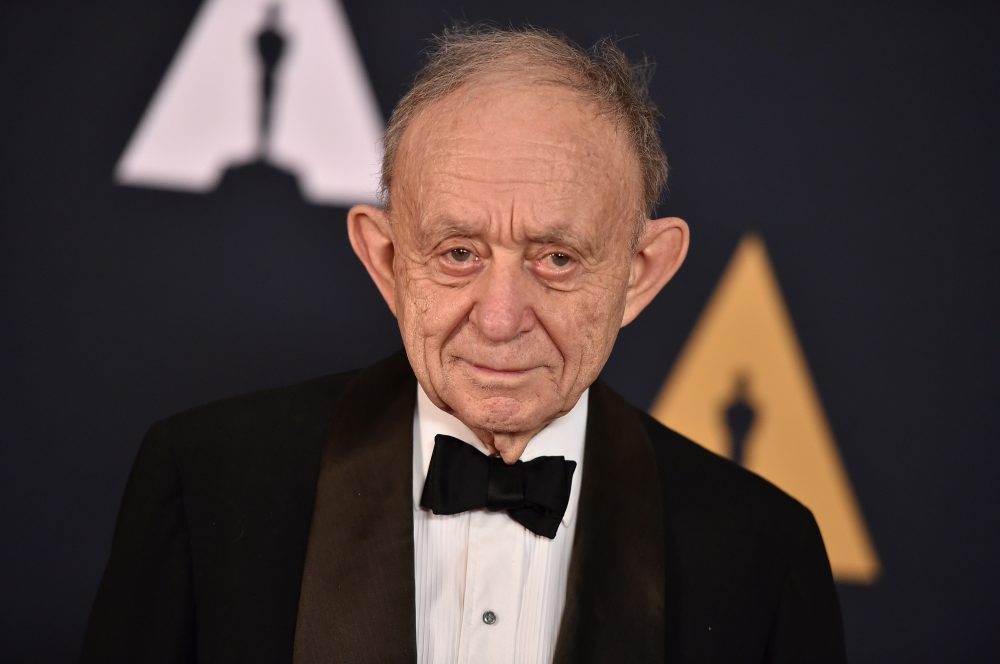

NEW YORK — Frederick Wiseman, the distinguished documentary filmmaker renowned for “Titicut Follies” and more than three dozen other films that provided an unprecedented examination of American institutional life, passed away Monday at the age of 96.
His family and production company Zipporah Films confirmed the filmmaker’s death in a joint announcement, though specific details surrounding his passing were not disclosed.
“He will be deeply missed by his family, friends, colleagues, and the countless filmmakers and audiences around the world whose lives and perspectives were shaped by his unique vision,” according to the released statement.
Wiseman stood among cinema’s most respected and impactful documentary makers, receiving an honorary Oscar in 2016 after creating more than 35 films, many running several hours in length. His projects examined everything from suburban educational facilities to horse racing venues, finding homes on public broadcasting, film festivals, and retrospective screenings while earning widespread critical acclaim. Though he didn’t begin feature filmmaking until his mid-thirties, Wiseman quickly earned recognition alongside—and sometimes surpassing—notable contemporaries like D.A. Pennebaker and Robert Drew in establishing documentary cinema as a compelling artistic medium.
Beginning with “High School” and the controversial “Titicut Follies,” Wiseman developed a distinctive, powerful approach using minimal crews, often handling sound recording duties himself. His work generated praise, controversy, debate, criticism, and in the case of “Titicut Follies,” extensive court battles.
“I don’t set out to be confrontational, but I think sometimes the content of the movie runs against people’s expectations and fantasies about the subject matter,” Wiseman explained to Gawker in 2013.
The filmmaker’s goal involved creating “as many films as possible about different aspects of American life,” frequently choosing straightforward titles like “Hospital,” “Public Housing,” “Basic Training,” and “Boxing Gym.” Beyond institutional examination, he captured individual human experiences: elderly citizens seeking welfare assistance, military recruits facing mistreatment, medical professionals treating drug-affected patients, and retail employees practicing customer service techniques.
“The institution is also just an excuse to observe human behavior in somewhat defined conditions,” Wiseman explained to The Associated Press in 2020. “The films are as much about that as they are about institutions.”
“Titicut Follies,” which debuted in 1967, documented conditions at Massachusetts’ Bridgewater State Hospital for the criminally insane. Wiseman captured disturbing scenes of naked patients being tormented by cruel staff members and one individual being force-fed through nasal tubing while restrained. The shocking content proved so damaging that Massachusetts authorities successfully limited the film’s distribution, creating legendary status among those seeking to view it.
His 1968 release “High School” chronicled everyday experiences at a Philadelphia-area suburban school. The film showed students being interrogated about phone call permissions, English instructors analyzing Simon & Garfunkel’s “The Dangling Conversation,” and uncomfortable health education sessions where boys were told that increased activity indicated greater insecurity.
“What we see in Fred Wiseman’s documentary … is so familiar and so extraordinarily evocative that a feeling of empathy with the students floods over us,” wrote The New Yorker’s Pauline Kael. “Wiseman extends our understanding of our common life the way novelists used to.”
Wiseman created films without voice-over narration, pre-recorded music, or explanatory text. However, he strongly rejected association with the “cinema verite” movement of the 1960s and ’70s, dismissing it as a “pompous French term that has absolutely no meaning.”
Academy Award winner Errol Morris called him “the undisputed king of misanthropic cinema,” though Wiseman rejected characterization as an activist filmmaker seeking to expose wrongdoing. He viewed himself as a subjective yet fair-minded observer who developed opinions through the filmmaking process itself, reviewing hundreds of hours of material to construct narratives that could be either discouraging or uplifting. “High School II” examined an East Harlem educational facility in the 1990s, where he found inspiration in educators’ dedication.
“I think it’s as important to document kindness, civility and generosity of spirit as it is to show cruelty, banality and indifference,” Wiseman stated during his honorary Oscar acceptance.
Even in his eighties and nineties, Wiseman maintained his adventurous filmmaking spirit, producing “Crazy Horse” about Parisian erotic entertainment, the four-hour “At Berkeley” examining the California university system, and the two-and-a-half-hour “Monrovia, Indiana” exploring rural community life. He also maintained extensive theater involvement, directing works by Samuel Beckett and William Luce while adapting his “Welfare” film into operatic form. In 2025, he appeared in acting roles in “Jane Austen Wrecked My Life” as a poet and provided voice work as a radio announcer in “Eephus.”
Much of his filmography was produced through Zipporah, the company named after his wife, who died in 2021. The couple had two children together.
Born in Boston to a prominent lawyer father and a mother who worked in children’s psychiatric care while harboring acting ambitions, Wiseman received elite education at Williams College and Yale Law School despite attending institutions with Jewish enrollment restrictions. His diverse professional background proved invaluable for his future filmmaking career.
During the 1950s and early 1960s, he served in various roles including the Massachusetts attorney general’s office, court reporting in Fort Benning, Georgia, and Philadelphia, research work at Brandeis University, and teaching at Boston Law School. Military service in Paris in 1955 provided early film experience through street photography with a Super 8 camera.
“I reached the witching age of 30 and figured I better do something I liked,” Wiseman told the AP in 2016. “It was just a few years after the technological developments that it made it possible to shoot synchronous sound … so that opened up the world for filmmaking. And there were so many good subjects that hadn’t been filmed, as there still are.”
His film career began with narrative drama after reading William Miller’s “The Cool World,” a novel about young Black individuals in Harlem. Wiseman contacted the author, secured rights, and produced the low-budget 1964 adaptation directed by Shirley Clarke, gaining confidence in his ability to manage film projects independently.
While teaching at Boston Law School, Wiseman arranged student visits to the nearby Bridgewater facility. In 1965, he contacted officials proposing a film that would eventually become “Titicut Follies,” promising to provide “audience factual material about a state prison but will also give an imaginative and poetic quality that will set it apart from the cliche documentary about crime and illness.”
Following the film’s New York Film Festival screening, Massachusetts pursued legal action claiming Wiseman violated prisoner privacy rights. For over twenty years, “Titicut Follies” could only be shown in restricted venues like libraries and colleges. The prohibition was gradually lifted when Superior Court Judge Andrew Meyer first required face blurring for public screenings, then completely removed all restrictions in 1991.
“I have viewed the film and agree that it is a substantial and significant intrusion into the privacy of the inmates shown in the film,” Meyer wrote in his 1989 decision. “However, I also regarded ‘Titicut Follies’ as an outstanding film, artistically and thoughtfully edited with great social and historical value.
“Another observation about the film: It is true.”