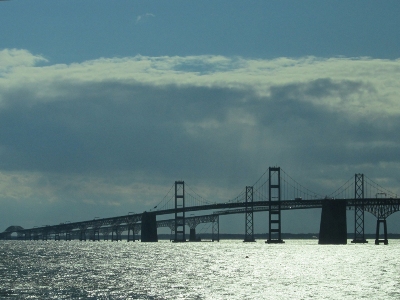

Maryland transportation officials have set dates for community meetings where residents can weigh in on a major proposal to completely rebuild the Chesapeake Bay Bridge crossing that connects our region to the western shore.
The Maryland Transportation Authority has revealed plans for public sessions in February 2026 focusing on their Draft Environmental Impact Statement and their preferred construction option, known as Alternative C, which they unveiled last December. Following these community input sessions, officials will continue their analysis before making final decisions.
Federal highway officials are anticipated to release their final environmental review and official decision by fall 2026.
During February, transportation authorities will conduct both online and face-to-face community meetings, giving residents chances to examine the various options and environmental effects outlined in the draft study, understand the agency’s preferred choice, and share their opinions.
Community members can access the draft environmental study at baycrossingstudy.com or visit designated locations for in-person viewing. Those needing help accessing the document can call 1-667-203-5408 for support.
Online Community Meeting
Monday, February 9, 2026, 6-8 p.m.
www.baycrossingstudy.com
Anne Arundel County Community Meeting
Tuesday, February 10, 2026, 5-8 p.m.
Broadneck High School
1265 Green Holly Drive, Annapolis, MD 21409
Queen Anne’s County Community Meeting
Thursday, February 12, 2026, 5-8 p.m.
Kent Island High School
900 Love Point Road, Stevensville, MD 21666
All community sessions will begin with a short presentation before opening for public comments. People wanting to speak should register in advance at baycrossingstudy.com. Those unable to use the website can call 1-667-203-5408.
Face-to-face meetings will start with an informal viewing period at 5 p.m., giving attendees time to examine project information and displays. Public comment periods will start at 6 p.m. All meeting materials can be found at baycrossingstudy.com.
Should weather force venue closures, updated meeting information will be posted at baycrossingstudy.com.
The transportation authority’s preferred plan, Alternative C, encompasses:
Construction of two new four-lane bridge spans featuring full shoulders spanning the Chesapeake Bay, improving safety while adding transportation capacity, dependability and traffic flow;
Demolition of the current Bay Bridge spans, resolving existing road problems including cramped lanes and missing shoulders, avoiding major repair projects and related lane shutdowns and traffic delays, and increasing clearance height to satisfy U.S. Coast Guard standards. The clearance height will reach 230 feet, permitting larger vessels to reach Baltimore’s port;
Expansion of US 50/301 to eight lanes (four each direction) from west of Oceanic Drive to east of Cox Creek to handle connections to the new crossing;
Funding commitments for public transportation improvements; and
A possible bicycle and pedestrian pathway, which the transportation authority will study further to decide whether to include.
The transportation authority is collecting feedback on the draft environmental study and their preferred alternative until March 9, 2026. Input can be provided through mail, email, the project website, public or private comments, or by calling 1-667-203-5408. All feedback will receive equal review and will be incorporated into the final environmental study and decision.
Working alongside federal highway officials, the transportation authority is following federally required environmental review procedures to assess options that address current and future transportation needs across the Chesapeake Bay and along the U.S. 50/301 approaches to the bridge from the MD 2/MD 450 interchange near Arnold to the U.S. 50/301 split near Grasonville. Environmental review is mandatory for all major federal projects, including those using federal money or requiring federal approval.
People needing special assistance under the Americans with Disabilities Act or requiring translation services at no charge should contact the transportation authority at 410-537-1000 (711 for MD Relay) at least five business days before their chosen meeting.
The Maryland Transportation Authority manages funding, ownership, operations, security and improvements for the state’s eight toll facilities. The authority operates using toll revenue without depending on state tax money.