
President Donald Trump is requesting that allied countries deploy naval vessels to protect the vital Strait of Hormuz shipping lane, while Iran promises to intensify its military response following recent U.S. airstrikes on Iranian energy infrastructure.
The strategic waterway serves as a critical route for global oil and gas transportation, and Iran’s capability to halt maritime traffic through the passage creates substantial challenges for America and its partners as they confront rising energy costs amid unprecedented disruptions to oil supplies.
“The Countries of the World that receive Oil through the Hormuz Strait must take care of that passage, and we will help — A LOT!” Trump posted on social media Saturday. “The U.S. will also coordinate with those Countries so that everything goes quickly, smoothly, and well.”
As hostilities enter their third week, both nations seem prepared for prolonged warfare. Three individuals with knowledge of diplomatic efforts informed Reuters that Trump’s team has rejected attempts by Middle Eastern partners to initiate peace talks to resolve the conflict.
Iran has maintained its defiant stance, dismissing any possibility of a ceasefire while American and Israeli aerial bombardments continue.
Iranian military forces have maintained their offensive operations. A drone assault disrupted a significant United Arab Emirates energy facility Saturday, and American officials advised U.S. nationals Saturday to depart Iraq following a missile strike on the Baghdad embassy Friday night.
The conflict began when Israel and America launched air campaigns against Iran on February 28, resulting in over 2,000 deaths, predominantly Iranian casualties, based on official government reports and state media accounts. At least 15 people died when an airstrike struck a refrigeration and heating equipment factory in Isfahan, central Iran, according to the semi-official Fars news agency Saturday.
Iran instructed civilians in the UAE to evacuate ports, docks and “American hideouts,” claiming U.S. forces had launched attacks on Iran from those locations. The UAE rejected allegations that Friday night’s strikes on Iran’s Kharg island originated from UAE territory.
Designating any facility connected to America as a “legitimate target,” Iran’s Islamic Revolutionary Guard Corps demanded all U.S. businesses withdraw from the region.
Energy market disruptions appear likely to continue. Several oil-loading activities were halted in the UAE’s Fujairah emirate, an important global ship-refueling center, following a drone attack, according to industry and trade sources Saturday.
The emirate’s media office confirmed a drone was intercepted, though civil defense teams were still working late Saturday to extinguish fires caused by falling wreckage.
Trump remained at his Mar-a-Lago Florida resort over the weekend, maintaining a low public presence Saturday while posting updates on his Truth Social platform.
In one message, the Republican president expressed hope that China, France, Japan, South Korea, Britain and other nations would dispatch warships to the Strait of Hormuz. None of these countries provided immediate confirmation of such plans.
French officials stated Friday their government continues efforts to build a coalition for securing the Strait of Hormuz once regional security conditions improve.
A British Ministry of Defence representative said Saturday: “As we’ve said previously, we are currently discussing with our allies and partners a range of options to ensure the security of shipping in the region.”
Iranian Supreme Leader Mojtaba Khamenei, who succeeded his deceased father, has declared the Strait of Hormuz should remain closed.
Additionally, Iranian Foreign Minister Abbas Araqchi rejected claims from U.S. Defense Secretary Pete Hegseth suggesting Khamenei was injured and possibly disfigured. “There is no problem with the new supreme leader. He sent his message yesterday, and he will perform his duties,” Araqchi told MS Now.
Khamenei has not made public appearances, instead releasing a Thursday statement read by a television presenter.
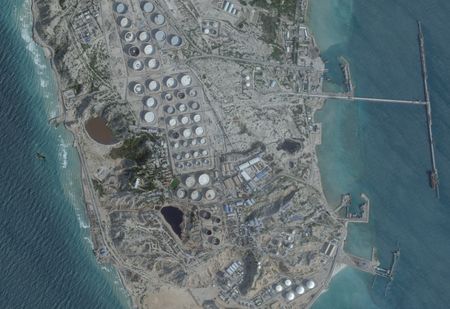
Iran minimized damage reports from Kharg Island. America stated it targeted military rather than energy industry facilities on the island, located approximately 15 miles off Iran’s Gulf coastline.
U.S. Central Command reported striking over 90 locations on Kharg, including naval mine storage areas, missile storage bunkers and additional military installations.
Araqchi stated Iran would retaliate against any assault on its energy infrastructure. Iran’s Ministry of Defense announced Saturday that nine ballistic missiles and 33 drones were fired from Iran toward the UAE.
Iran warned residents to evacuate areas near Dubai’s Jebel Ali port, Abu Dhabi’s Khalifa port and the UAE’s Fujairah port, stating it was targeting U.S. bank branches throughout the Gulf.
Fujairah, positioned outside the Strait of Hormuz, serves as the export point for approximately 1 million barrels daily of the UAE’s Murban crude oil — representing roughly 1% of global demand.