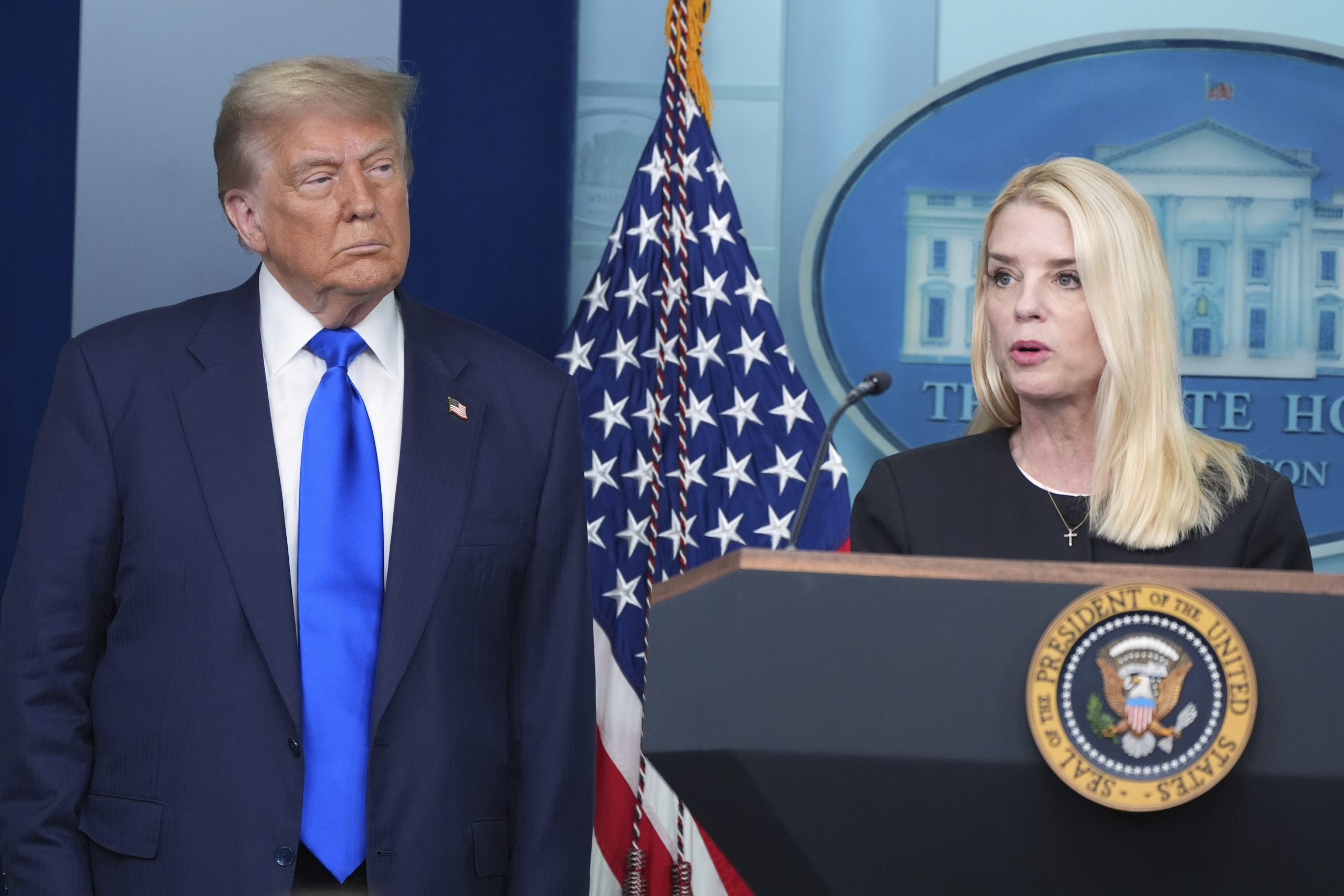

President Donald Trump announced Thursday that Attorney General Pam Bondi will no longer serve in her role, bringing to a close a turbulent period during which the former Florida attorney general dramatically altered the Justice Department’s traditional independence from presidential influence and conducted widespread dismissals of career staff while aggressively pursuing investigations into Trump’s political adversaries.
The decision comes after months of intense criticism surrounding the Justice Department’s management of documents connected to Jeffrey Epstein’s sex trafficking case, which drew harsh condemnation from conservative supporters despite Bondi’s loyalty to Trump. Additionally, Bondi faced challenges in fulfilling Trump’s expectations to pursue criminal charges against his political opponents, with several investigations being dismissed by courts or grand juries, while others remain without filed charges.
Trump has designated Deputy Attorney General Todd Blanche to serve temporarily in the top position, although sources close to the matter indicate the president has privately considered Lee Zeldin, who currently leads the Environmental Protection Agency, for the permanent appointment.
When Bondi assumed leadership of the department last year, she promised to avoid political interference in Justice Department operations. However, she rapidly initiated investigations targeting Trump’s critics, prompting widespread concern that the law enforcement agency had become a weapon for settling political scores and advancing the president’s personal interests.
Her leadership brought unprecedented chaos to the department, including the termination of career prosecutors viewed as insufficiently devoted to Trump and the voluntary departure of hundreds of additional staff members. Her exit adds to a pattern of instability at the Justice Department that has characterized Trump’s presidency, with several attorneys general either forced out or stepping down after failing to satisfy his expectations for the position.
Bondi disputed claims that she had injected politics into the Justice Department, arguing her goal was to rebuild the institution’s reputation following what she characterized as excessive actions by President Joe Biden’s Democratic administration, which had pursued two federal criminal cases against Trump. Her supporters maintained she redirected the department’s focus toward addressing illegal immigration and violent crime, bringing necessary reforms to an agency they believed had unfairly targeted conservatives.
Bondi’s public support of the president represented a dramatic shift from previous attorneys general, who typically maintained careful distance from the White House to preserve the neutrality of investigations and prosecutions. Bondi positioned herself as Trump’s primary advocate and defender, offering praise and support during congressional testimony and displaying a banner featuring his image on the Justice Department building’s exterior.
She advocated for ending what she termed the “weaponization” of law enforcement that she claimed occurred during the Biden administration, despite assertions from Biden’s attorney general Merrick Garland and special counsel Jack Smith that their decisions were based on facts, evidence, and legal principles. Critics argued that Bondi herself had politicized the agency to serve the president’s agenda.
“You’ve turned the People’s Department of Justice into Trump’s instrument of revenge,” Rep. Jamie Raskin of Maryland, the top Democrat on the House Judiciary committee, said at a February hearing.
During that hearing, Bondi delivered an aggressive performance while providing limited substantive responses, angrily attacking Democratic questioners with personal insults, celebrating Trump’s impact on stock market performance — “The Dow is up over 50,000 right now” — and openly declaring her alignment with a president she portrayed as a victim of past impeachments and investigations.
Even Republican lawmakers eventually questioned her leadership, with the Republican-controlled House Oversight Committee issuing a subpoena last month requiring her to participate in a private interview regarding the Epstein documents.
During Bondi’s tenure, the department launched investigations into numerous Trump opponents, including Federal Reserve Chair Jerome Powell, New York Attorney General Letitia James, former FBI Director James Comey, and former CIA Director John Brennan. The prominent prosecutions of Comey and James ended quickly when a judge dismissed the cases, ruling that the prosecutor who filed them had been illegally appointed.
While Trump frequently praised and supported Bondi publicly, he also displayed signs of frustration with her progress in prosecuting his rivals. In one notable social media message last year, Trump urged Bondi to accelerate prosecutions of his opponents, including James and Comey, stating: “We can’t delay any longer, it’s killing our reputation and credibility.”
Bondi supervised the departure of thousands of career employees through both terminations and voluntary resignations, including attorneys who had prosecuted violent attacks against police during the January 6, 2021 Capitol incident, along with environmental, civil rights, and ethics enforcement officials, counterterrorism prosecutors, and others.
She faced significant difficulties managing early missteps involving the Epstein documents that frustrated conservatives hoping for explosive government revelations about the case, which has long captivated conspiracy theorists. Bondi herself contributed to conspiracy theories during a 2025 Fox News Channel appearance by suggesting that Epstein’s “client list” was available on her desk for examination. The department subsequently admitted that no such document existed.
Bondi faced ridicule after arranging to distribute binders of Epstein documents to conservative influencers at the White House, only for it to be discovered that the materials contained no new information. Despite promises that additional files would be made public, the Justice Department announced in July that no further releases would occur, leading Congress to pass legislation forcing the agency to comply.
The Epstein document mishandling prompted extraordinary public criticism from White House chief of staff Susie Wiles, a close personal friend of Bondi’s, who told Vanity Fair that the attorney general “completely whiffed.” The Justice Department’s eventual release of millions of pages of Epstein files did little to reduce criticism, prompting a House committee with support from five Republicans to subpoena Bondi for sworn testimony.
Bondi, who served as Trump’s defense attorney during his first impeachment trial, was his second choice to lead the Justice Department after former Rep. Matt Gaetz of Florida withdrew his nomination amid scrutiny over sex trafficking allegations.