
WASHINGTON — Recent polling data from Gallup reveals a historic transformation in American public opinion regarding the Middle East conflict, with citizens now showing nearly equal support for both Palestinians and Israelis after generations of strong pro-Israel sentiment.
The research indicates that just three years prior, more than half of Americans (54%) expressed greater sympathy for Israel, while less than one-third (31%) sided with Palestinians.
Current findings show a remarkable reversal, with 41% of respondents indicating stronger support for Palestinians and 36% expressing greater sympathy for Israelis.
These results highlight how Middle East policy has become increasingly divisive across America, creating significant consequences for both domestic politics and international relations. Democratic voters have primarily fueled this transformation, now showing substantially higher levels of Palestinian support. Israel aid has emerged as a major point of contention within Democratic primary contests this election cycle.
According to Gallup’s research, this opinion shift began before Hamas launched its October 7, 2023 assault on Israel, but gained momentum throughout Israel’s subsequent Gaza military campaign. The survey carries a margin of error of plus or minus 4 percentage points, indicating public sentiment toward both sides has reached statistical parity.
“It’s the first time they have reached parity, which is really quite striking,” said Benedict Vigers, a senior global news writer at Gallup. “In not many years, that very significant gap in public opinion has now completely closed.”
Approximately two-thirds of Democratic respondents now express primary concern for Palestinians, while roughly 20% show greater Israeli sympathy. This represents a dramatic departure from 2016 data, when approximately half of Democrats favored Israel and only 25% supported Palestinians.
This opinion evolution predates the current Israel-Hamas conflict that has created deep divisions within Democratic ranks. The initial Hamas assault resulted in approximately 1,200 deaths, predominantly civilians, plus 251 hostages taken, while Israel’s military response has been widely criticized as excessive. Gaza health authorities report over 72,000 Palestinian casualties, with nearly half being women and children, alongside widespread territorial destruction. Numerous progressive leaders and advocacy groups now characterize Israel’s military actions as genocidal — allegations Israel strongly rejects.
Gallup data shows Democrats expressing stronger Palestinian sympathy than Israeli support since 2023 — surveyed before the October 7 attacks occurred — but this trend toward Palestinian support and away from Israeli backing began around 2017.
Some early sympathy decline appeared connected to disapproval of conservative Israeli leadership under Prime Minister Benjamin Netanyahu, whose American favorability dropped nearly 15 percentage points from 2017 to 2024 in separate Gallup research.
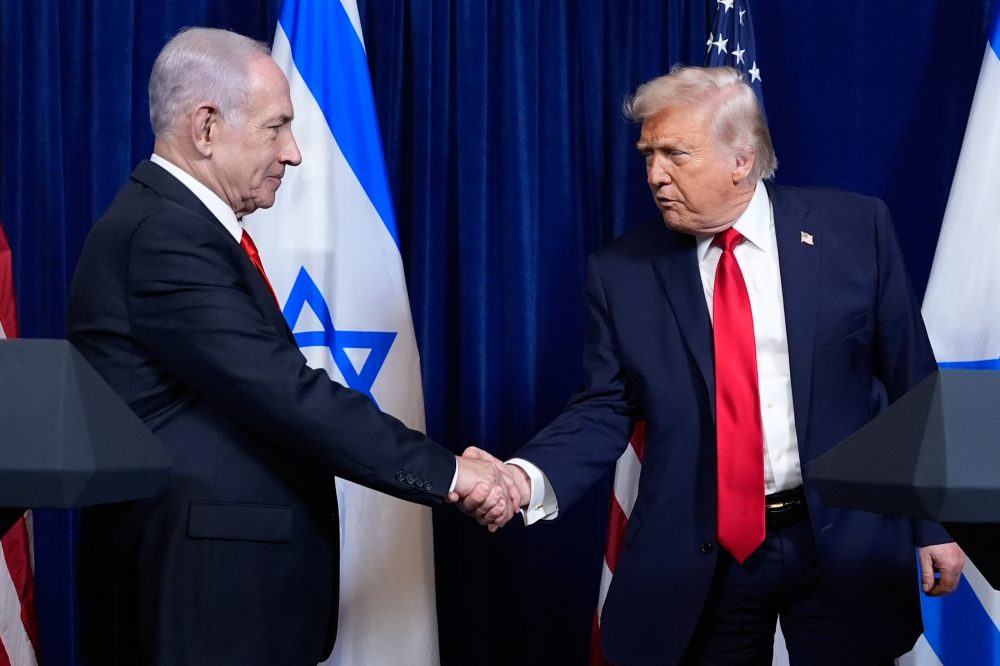
Netanyahu experienced tensions with former President Barack Obama during his administration’s final year, then developed closer ties with President Donald Trump, who provided Netanyahu several significant wins during his initial presidency, including Jerusalem capital recognition and Golan Heights sovereignty acknowledgment. Trump also facilitated diplomatic and commercial relationships between Israel and three Arab nations. The Trump-Netanyahu alliance has continued into Trump’s current term.
The Israeli-Palestinian situation created friction for Democrats throughout President Joe Biden’s tenure and during the 2024 election cycle. An AP-NORC survey from late 2023, conducted months into the Gaza conflict, revealed sharp Democratic divisions over whether America provided excessive Israeli support, while another 2024 AP-NORC poll found Democratic voters more likely to assign significant war escalation responsibility to Israel’s government.
Democratic Palestinian sympathy intensified as fighting continued, Gallup research demonstrates, with independent voters also shifting perspectives. Independent voters expressed stronger Palestinian than Israeli sympathy for the first time in Gallup’s tracking this year. About 40% of independents show greater Palestinian sympathy compared to roughly 30% favoring Israelis, representing a new low.
Most Republican voters maintain Israeli support — approximately 70% express stronger Israeli sympathy — though this reflects a slight decrease from roughly 80% before conflict began. Some figures within the Republican “America First” isolationist movement increasingly question traditional American Israeli support.
Young adults aged 18 to 34 demonstrate growing Palestinian sympathy according to the Gallup survey.
Younger American sympathies have trended toward Palestinians since approximately 2020, reaching new peaks this year. About half of 18-34 year-olds report stronger Palestinian sympathy, compared to roughly 25% expressing similar Israeli feelings.
Student demonstrations opposing the Israel-Hamas conflict emerged on campuses nationwide during the war, demanding colleges divest from Israel-supporting investments.
However, this shift represents only “partly a generational story,” according to Vigers.
The latest polling also found middle-aged Americans (35-54) expressing stronger Palestinian than Israeli sympathy for the first time — reversing last year’s pattern. While Americans over 55 maintain greater Israeli sympathy, that margin continues narrowing.
“With adults over 55, they are more sympathetic to Israelis, but it’s as low as it’s been since 2005,” Vigers said.
About 57% of American adults support establishing an independent Palestinian state in the West Bank and Gaza Strip, according to new polling. This figure remains consistent with recent years, as at least half of Americans have backed Palestinian statehood since 2020.
Vigers notes that “party polarization is at or near its record high” on this question, despite not showing sharp year-over-year increases.
Recent years have seen increased Democratic and independent support for two-state solutions. Currently, approximately three-quarters of Democrats and roughly 60% of independents support independent Palestinian statehood. Only about one-third of Republicans share this view.
Opinions among those directly affected by two-state solutions differ significantly. Only about 30% of Israelis living in Israel and Palestinians in the West Bank and east Jerusalem supported a two-state solution featuring an independent Palestinian state alongside Israel, according to the 2025 Gallup World Poll.
“On the ground, in the region, far fewer Israelis and Palestinians tell us that they are in favor of the two-state solution than Americans when asked a very similar question,” Vigers said. “There is that interesting sort of disconnect between the region itself and Americans’ views toward it.”
The Gallup poll was conducted February 2-16, 2026, among 1,001 American adults aged 18 and older, using Gallup’s probability-based panel sample. The margin of sampling error for all adults is plus or minus 4.0 percentage points.