
LIMA, Peru (AP) — Peru’s acting President José María Balcázar has postponed a major military procurement decision involving 24 fighter aircraft worth $3.5 billion, choosing to leave this significant purchase for the incoming administration following the country’s upcoming presidential runoff.
During a Friday evening broadcast on RPP radio, Balcázar revealed his decision to delay the acquisition. His caretaker administration, which started in February, will conclude in July when Peru’s presidential runoff takes place on June 7.
The acting president stated that the future government will possess “full legitimacy to decide” on whether to move forward with acquiring the F-16 Block 70 fighter aircraft from U.S. manufacturer Lockheed Martin.
“For us to commit such a large sum of money to the incoming government would be a poor practice for a transitional government,” Balcázar said.
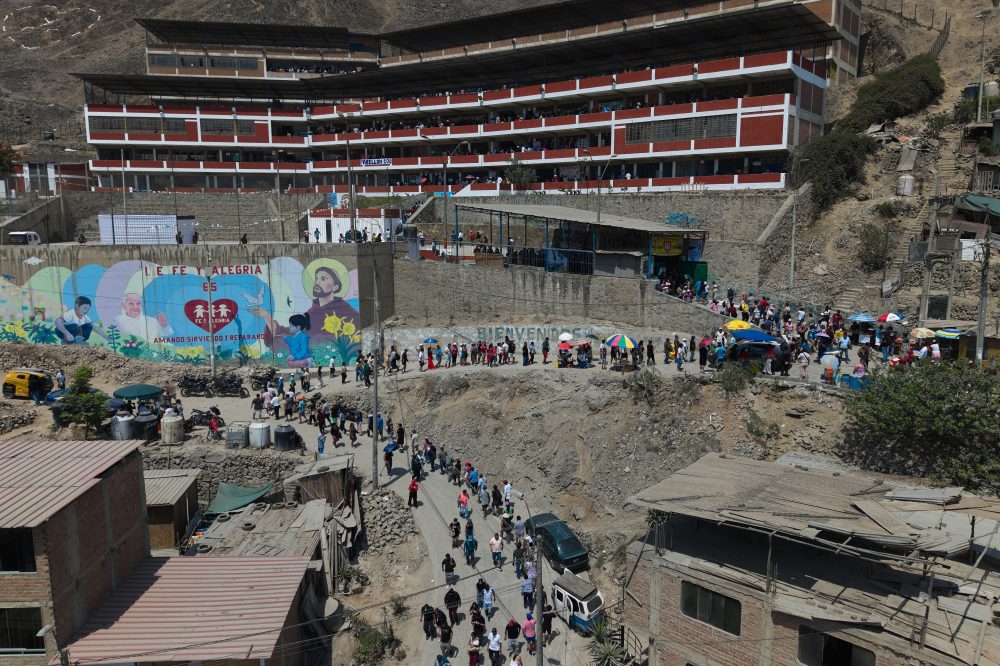
Peru held its presidential election this past Sunday, but no candidate secured sufficient votes for an outright victory. Election officials are still tallying ballots to determine which two candidates will compete in the runoff as vote counting continues.
Former conservative lawmaker Keiko Fujimori secured her position in June’s runoff after finishing first among 35 presidential contenders. However, the close competition for second and third positions may require several weeks to resolve.
The victorious candidate from the runoff will assume the presidency on July 28.
Last year, under President Dina Boluarte’s administration, Peru announced plans to spend $3.5 billion on 24 military aircraft, financing the purchase through domestic loans of $2 billion in 2025 and $1.5 billion in 2026. Besides Lockheed Martin, Sweden’s Saab and France’s Dassault Aviation also submitted proposals.
Peru’s legislature selected Balcázar as the nation’s eighth president in ten years this past February, replacing another interim leader who was removed the day before due to corruption charges after serving just four months.
This pattern of presidential turnover in the Andean country demonstrates an ongoing political crisis stemming from leaders’ inability to secure legislative majorities. Legislators have repeatedly used a broad interpretation of constitutional language regarding “permanent moral incapacity” to remove presidents from office.