
HILL AIR FORCE BASE, Utah — In a groundbreaking demonstration, federal officials completed the nation’s first aerial transport of a compact nuclear reactor, flying the device nearly 700 miles from California to Utah over the weekend.
The historic mission involved moving a 5-megawatt microreactor aboard a military C-17 aircraft, showcasing America’s capabilities for rapid nuclear power deployment in both military and civilian settings. The reactor, roughly the size of a minivan, was transported without nuclear fuel as part of the test.
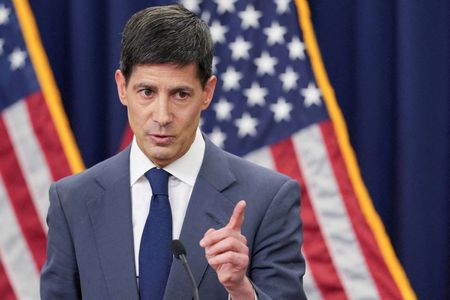
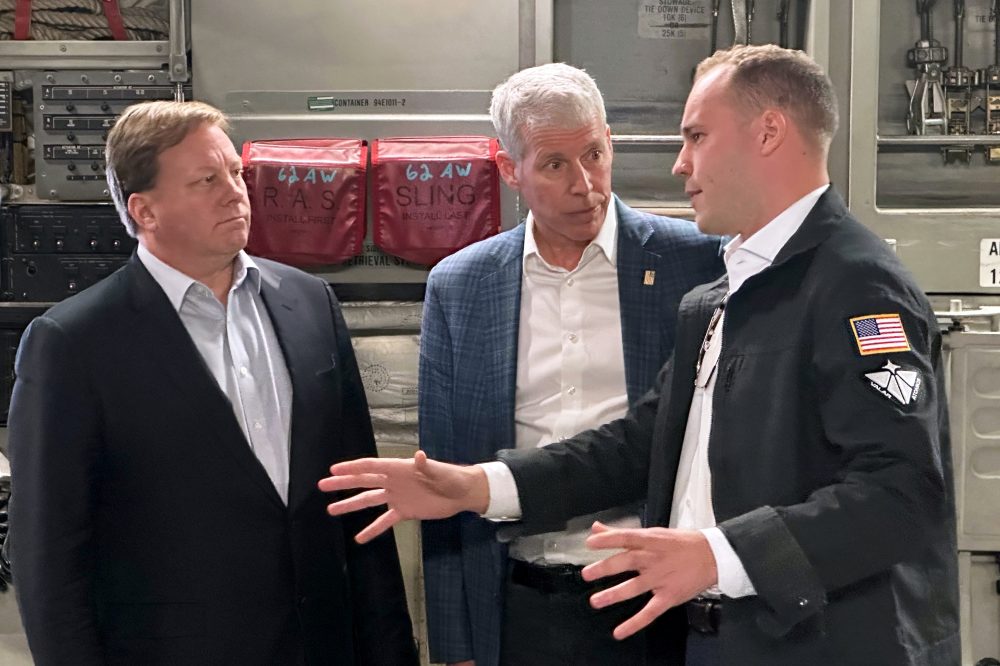
Energy Secretary Chris Wright and Defense Undersecretary Michael Duffey accompanied the February 15th flight, calling it a major milestone in efforts to fast-track commercial approval for these compact power systems. The initiative aligns with the Trump administration’s broader strategy to transform the nation’s energy sector.
“Today is history. A multi-megawatt, next-generation nuclear power plant is loaded in the C-17 behind us,” Wright declared before the two-hour journey from March Air Reserve Base to Hill Air Force Base.
The transport represents part of President Trump’s commitment to nuclear energy expansion, viewing it as a carbon-free electricity source that provides reliable power. This comes as the administration simultaneously promotes fossil fuels while showing skepticism toward renewable energy sources.
Wright announced that this reactor joins at least two others expected to achieve “criticality” — the point where nuclear reactions become self-sustaining — by July 4th, fulfilling Trump’s timeline promise.
“That’s speed, that’s innovation, that’s the start of a nuclear renaissance,” Wright stated.
The United States currently operates 94 nuclear reactors generating approximately 19% of national electricity, according to Energy Information Administration data. This represents a decline from 104 reactors in 2013, though it includes two recently completed commercial reactors in Georgia — the first large-scale reactors built from the ground up in decades.
Given the lengthy timelines associated with traditional reactor construction, industry leaders and government officials have shifted focus toward more efficient designs, including small modular reactors being developed by the Tennessee Valley Authority.
These portable microreactors can “accelerate the delivery of resilient power to where it’s needed,” Duffey explained. Military officials envision these mobile units eventually providing energy independence for bases without relying on civilian power grids.
“The demonstration flight gets us closer to deploy nuclear power when and where it is needed to give our nation’s warfighters the tools to win in battle,” Duffey said.
Isaiah Taylor, CEO of California startup Valar Atomics which manufactured the reactor, said the unit can produce enough electricity for 5,000 homes. The company plans to begin test power sales next year and achieve full commercial operation by 2028.
However, critics question the technology’s viability and safety. Edwin Lyman from the Union of Concerned Scientists dismissed the transport demonstration as “a dog-and-pony show” that simply proved the military’s ability to move heavy equipment.
The flight “doesn’t answer any questions about whether the project is feasible, economic, workable or safe — for the military and the public,” Lyman said.
Lyman argued that the Trump administration “hasn’t made the safety case” for securely transporting fuel-loaded microreactors to data centers or military installations. Additionally, officials haven’t resolved nuclear waste disposal issues, though Wright indicated the Energy Department is discussing potential reprocessing or permanent storage sites with Utah and other states.
The transported microreactor will undergo testing and evaluation at Utah’s San Rafael Energy Lab, with fuel supplied by Nevada’s National Security site, according to officials.
“The answer to energy is always more,” Wright concluded. Following what he characterized as four years of energy restrictions under the Biden administration, he said, “now we’re trying to set everything free. And nuclear will be flying soon.”