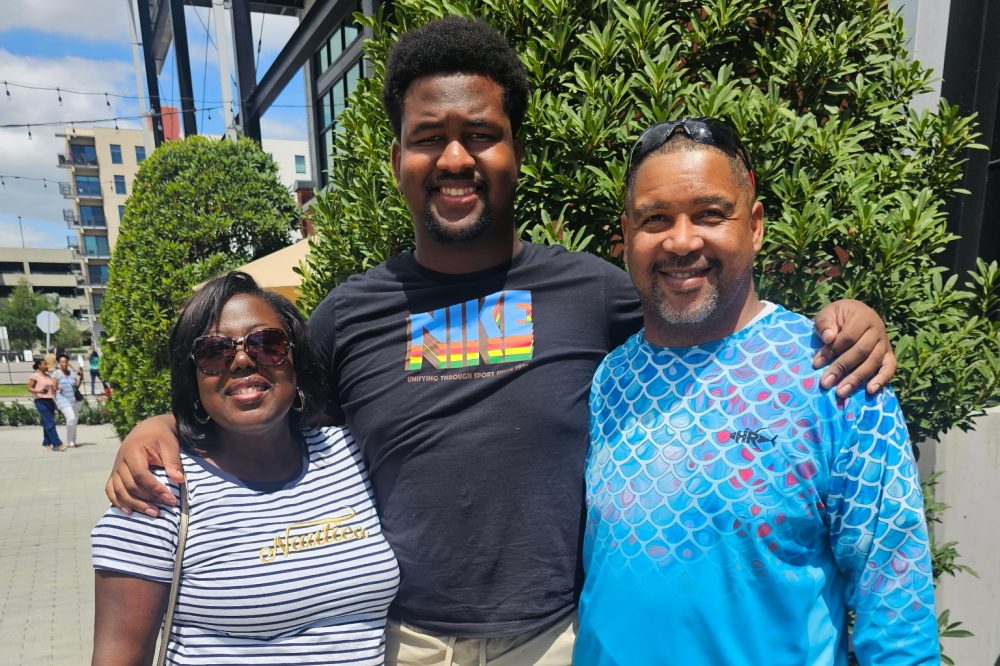

The family of a Bucknell University football player who lost his life after collapsing on the first day of training camp in 2024 expressed gratitude Tuesday following a decision by the Pennsylvania attorney general to pursue criminal charges against the strength and conditioning coach who ran the session.
Calvin “CJ” Dickey Jr. was a freshman in July 2024 when coach Mark Kulbis directed him and his teammates to complete 100 “up-downs” — also called “burpees” — along with full-body plank exercises, according to the attorney general’s office. Dickey had sickle-cell trait, a medical condition that can significantly raise the risk of serious injury or death when combined with extreme physical exertion.
“We’re at the point where we’re just glad that someone is being held responsible for our son’s death,” Calvin Dickey Sr., of Land O’ Lakes, Florida, told The Associated Press in a phone interview. “We just want to see the process through, and we’re going to leave it to the attorney general to continue following the evidence.”
On Monday, prosecutors announced that Kulbis had been charged with felony aggravated hazing, along with misdemeanor counts of involuntary manslaughter, reckless endangerment, and hazing.
Kulbis’s attorney, Barbara Zemlock, pushed back on the charges in a written statement. “While the death of Calvin Dickey is tragic, Mark Kulbis did not contribute to it and is not responsible for it,” she said. “The strength and conditioning program that was implemented was appropriate and in accordance with the training that Mr. Kulbis received, and with applicable standards.”
Sickle-cell trait is typically identified through a blood test and does not usually interfere with a person’s everyday life. However, under conditions of intense physical activity, dehydration, or elevated body temperature, it can restrict blood flow and cause muscle breakdown. In very rare instances, this can lead to collapse and death.
Following the deaths of other athletes with sickle-cell trait, the NCAA in 2010 began mandating that incoming Division I athletes be screened for the condition. The organization also began advising coaches that athletes who carry the trait should gradually increase workout intensity and be given sufficient time to rest and recover.
Dickey stood 6-foot-5 and weighed nearly 300 pounds. He grew up playing multiple sports before committing to football during his junior year of high school, his parents said. He lined up on both the offensive and defensive lines, meaning he was on the field for most of each game.
According to a federal lawsuit his family filed against Bucknell last year, they were unaware that their son had sickle-cell trait until he underwent the mandatory screening just weeks before training camp began. Calvin Dickey Sr. said that the day before camp started, the offensive line coach assured him his son would be kept safe.
Despite those assurances, Dickey Jr. began struggling and eventually passed out while performing exercises that Kulbis had assigned as punishment for players who failed to execute drills correctly, the lawsuit stated. He was taken to the hospital and died two days later.
Although it is uncommon for coaches to face criminal prosecution when athletes collapse and die, there have been prior cases. In Georgia, a girls basketball coach and an assistant were charged with murder after a 16-year-old named Imani Bell died from heat stroke in 2019 during an outdoor training session held despite an active heat advisory. That case has not yet been resolved. The school district settled the family’s lawsuit for $10 million and agreed to rename the gym in her memory.
In 2009, a former Kentucky high school football coach was found not guilty of reckless homicide and endangerment in connection with the heat-related death of 15-year-old Max Gilpin. Defense attorneys argued that medication Gilpin was taking for attention deficit hyperactivity disorder had contributed to his overheating.
Dickey Sr. and his wife, Nicole Dickey, described their son as someone who loved football but planned to use his Bucknell scholarship as a path toward a career in pharmacy. They said he became passionate about the field after talking with a family friend who worked as a hospital pharmacist.
Since their son’s death, the couple has channeled their grief into a foundation dedicated to raising awareness about sickle-cell trait in athletes and supporting the overall health of student-athletes. The foundation offers scholarships and runs a program for football linemen called the “50 Cal Big Man Camp,” named after the jersey number their son wore.
“Those are the kind of things right now that bring a smile to my face and touch my heart,” Nicole Dickey said. “We want to protect the next generation and share what we’ve learned.”