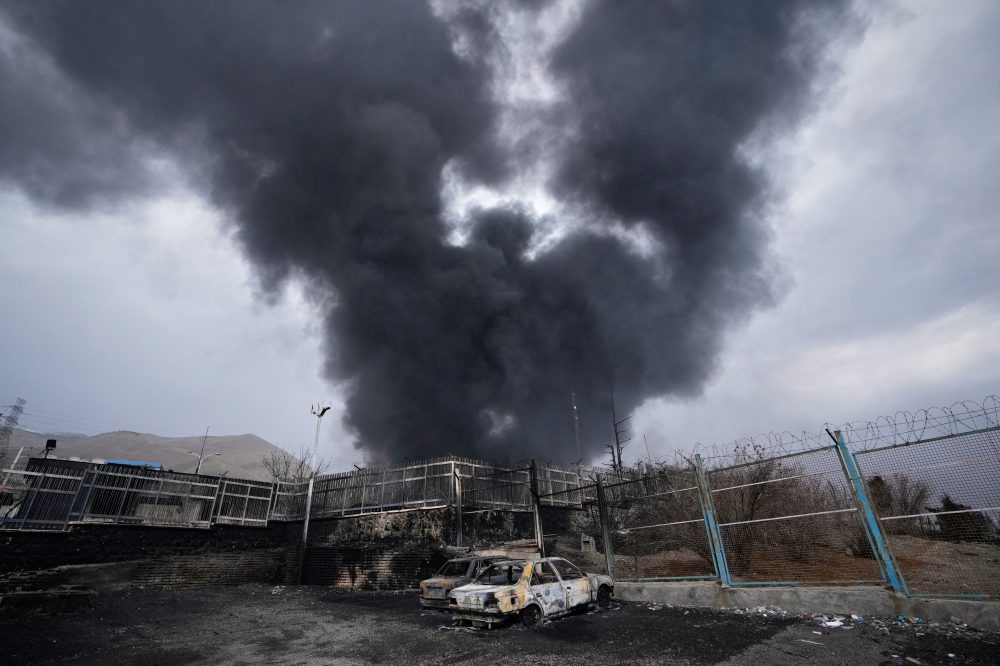

Energy markets are experiencing significant volatility as crude oil prices have broken through the $100 per barrel mark for the first time since 2022, driven by ongoing warfare in Iran that is severely disrupting oil production and transportation throughout the Middle East region.
Brent crude, which serves as the global benchmark, reached $101.19 during trading on the Chicago Mercantile Exchange, representing a 9.2% increase from Friday’s closing price of $92.69. Meanwhile, West Texas Intermediate crude, the domestic U.S. standard, climbed even higher to approximately $107.06 per barrel, marking a substantial 16.2% jump from its previous settlement of $90.90.
These dramatic price increases come after already significant gains last week, when U.S. crude surged 36% and Brent crude climbed 28%. The conflict, now entering its second week, has affected key nations and strategic locations essential for Persian Gulf oil and gas operations.
According to research firm Rystad Energy, approximately 15 million barrels of crude oil move through the Strait of Hormuz daily, representing roughly 20% of global oil supply. Iranian missile and drone threats have effectively halted tanker traffic through this critical waterway, which borders Iran to the north and facilitates energy exports from Saudi Arabia, Kuwait, Iraq, Qatar, Bahrain, and the United Arab Emirates.
The supply disruption has forced Iraq, Kuwait, and the UAE to reduce production as their storage facilities reach capacity due to limited export capabilities. Adding to supply concerns, Iran, Israel, and the United States have all targeted oil and gas infrastructure since hostilities began.
The last time U.S. crude futures exceeded $100 per barrel was June 30, 2022, when prices hit $105.76, while Brent crude last crossed this threshold on July 29, 2022, reaching $104.
The oil price surge, which began following the March 1 attacks by Israel and the U.S. on Iran, has created widespread concern in financial markets about potential inflation increases and reduced consumer spending, which could impact the broader economy.
American consumers are already feeling the effects at gas stations, where regular gasoline prices have risen to $3.45 per gallon as of Sunday, an increase of 47 cents from the previous week, according to AAA. Diesel prices have climbed even more dramatically, reaching approximately $4.60 per gallon after an 83-cent weekly increase.
Natural gas prices have also risen, though less dramatically than oil, gaining about 11% last week to close Friday at $3.19 per 1,000 cubic feet.
Market analysts and investors are expressing concern that sustained oil prices above $100 per barrel could prove too burdensome for the global economy to absorb.
Recent military action over the weekend saw Israeli forces target oil storage facilities in Tehran, along with four oil tankers and a petroleum transfer terminal.
Mohammad Bagher Qalibaf, Iran’s parliamentary speaker, warned that the conflict’s impact on the oil sector would continue to escalate, predicting that oil production and sales would become increasingly difficult.
Iran typically exports about 1.6 million barrels daily, primarily to China. Any disruption to these exports could force China to seek alternative suppliers, potentially driving energy prices even higher.