
Global financial markets are feeling the pressure this Monday as tensions between Iran and the United States escalate in the Gulf region, with Tehran claiming to have shut down the Strait of Hormuz — one of the world’s most important waterways for oil shipments.
President Donald Trump pushed back on that claim, stating the strait remains open to commercial vessels. U.S. officials added that 20 ships had been escorted through the waterway during the previous 24-hour period. However, the United Kingdom Maritime Trade Operations reported that transits had already slowed to just 10 by Friday, and ship tracking data showed no vessels appearing in the narrowest section of the strait on Monday — or at least none broadcasting their location signals.
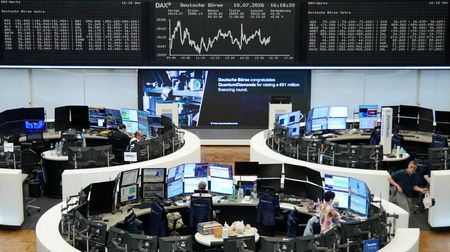
Even the possibility of disrupted shipping was enough to move markets significantly. Both Brent crude and U.S. crude oil prices climbed nearly 4%, 10-year bond yields edged up by 2 basis points, and the dollar gained ground broadly. Japan’s Nikkei index led Asian markets downward, and European share futures fell roughly 0.6%.
Nasdaq futures also dropped 0.6% as investors grow more focused on the approaching earnings season and whether the enormous expectations surrounding artificial intelligence companies and chipmakers can actually be delivered upon. Major banks are set to begin reporting results starting Tuesday, with Netflix and General Electric also scheduled to release their numbers.
Analysts at BofA cautioned that the massive wave of AI spending is cutting into cash generation, noting that large technology companies have already spent $234 billion this year on capital expenditures. Forward free cash flow is expected to turn negative for the first time since at least 2007.
Meanwhile, investors slightly increased their expectations for an interest rate increase from the Federal Reserve, just one day before Chair Kevin Warsh is scheduled to appear before Congress for the first time since taking the role.
Inflation data for June, due out Tuesday, may show some easing in the headline rate of 4.2%, partly due to falling gasoline prices — though that relief could be short-lived now that oil prices are climbing again.
On the currency front, the dollar strengthened to 162.05 yen, recovering some of the ground it lost Friday after Japanese Finance Minister Satsuki Katayama floated a proposal to encourage the $1.8 trillion Government Pension Investment Fund and similar retirement funds to repatriate some of their overseas holdings.
The British pound slipped to $1.3381 ahead of a significant week in UK politics, with Andy Burnham expected to be formally named Labour leader on Friday and appointed prime minister on July 20.
Key figures scheduled to speak Monday and potentially influence markets include Fed Board Governor Christopher Waller, Fed Vice Chair for Supervision Michelle Bowman, European Central Bank member Isabel Schnabel, and Bank of England Executive Director Ruth Smith.